
Pruning
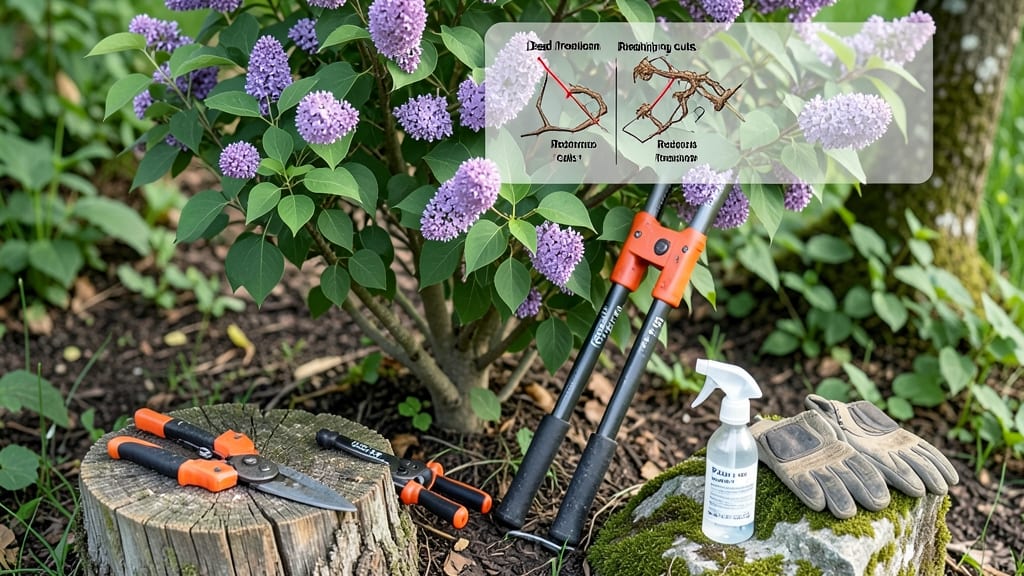
When a lilac tree pruning diagram guides your cuts like a map to purple perfection, you know you’ve done it right. ✨ The secret isn’t complicated—it’s timing, sharp cuts, and knowing where to stop.
My first attempt left a messy tangle, but after studying the growth patterns, I finally got it: prune after blooming, never before, and always at the right angles.
You’ll need basic tools—a pair of clean pruning shears, gloves, and a sketch of your tree’s shape. Most lilacs bloom on last year’s wood, so cutting too early means skipping next year’s flowers.
The diagram shows exactly where to make your cuts: just above a bud that faces outward, at a 45-degree angle. It’s like giving your tree a haircut that lets light reach every branch.
By summer’s end, you’ll see fresh green shoots pushing out where you cut, and next spring’s blooms will be thicker, fuller, and more fragrant. The key is patience—don’t overdo it in one season. A little pruning now means years of effortless, show-stopping fragrance.
Works for common lilacs, French hybrids, or dwarf varieties—just adjust the scale. Grab your shears and let’s turn that tangled mess into a fragrant masterpiece.
📚 In This Guide
- What you need
- Instructions
- Tips and common mistakes
- Wrapping up and next steps
What you need
- ● Pruning shears: Bypass pruners with sharp, clean blades (5–8 inches long) for cutting small branches (¼–¾ inch thick). Pro tip: 💡 Sanitize blades with rubbing alcohol before and after use to prevent disease spread!
- ● Loppers: A pair with long handles (20–24 inches) for thicker branches (¾–2 inches thick). Look for bypass-style loppers for cleaner cuts.
- ● Pruning saw: A curved-tooth saw for branches larger than 2 inches in diameter. A folding pruning saw is ideal for maneuverability.
- ● Gloves: Heavy-duty gardening gloves (leather or reinforced) to protect against thorns and rough bark.
- ● Ladder or step stool: A sturdy, extendable ladder (8–12 feet tall) if your lilac tree is tall. Safety first: ✨ Always secure the ladder on stable ground and avoid overreaching!
- ● Disinfectant spray: A 10% bleach solution (1 part bleach to 9 parts water) or commercial pruning sealant to sterilize tools between cuts.
- ○ Marking twine or flags: For labeling branches to remove (optional but handy for complex pruning plans).
- ● Trash bags or bucket: To collect pruned branches and debris for easy cleanup.
- ● Safety glasses: To shield your eyes from debris, especially when using a pruning saw.
- ● Timing: Prune lilacs immediately after flowering (late spring to early summer) to encourage new growth. Avoid pruning in fall or winter.
- ● Weather check: Choose a calm, dry day with temperatures between 50–75°F (10–24°C) for optimal conditions.
- ● Safety prep: Wear long sleeves and pants to protect against scratches, and avoid pruning near power lines.
Step-by-step lilac tree pruning for a full, fragrant canopy
Pruning lilacs isn't just about shaping—it's about unlocking next year's blooms. Here's how to do it right.
✂️ Step 1: Time Your Pruning for Maximum Blooms
Wait until right after flowering—never before buds open. Lilacs set next year's flower buds immediately after blooms fade, so cutting too early removes next season's potential. I usually prune in late June or early July, when spent flowers turn brown but new growth hasn't started yet.
If you missed the window, don't panic. Light pruning anytime during dormancy (fall or winter) is better than nothing, though you'll sacrifice some spring blooms. The key is to never remove more than one-third of the plant's total growth in any single season.
🌿 Step 2: Identify and Remove Dead or Weak Wood
Scan the entire tree for branches that are completely brown, brittle, or showing no green. These are dead and should be cut back to the main trunk. Next, look for branches growing inward or rubbing against others—these compete for energy and create weak spots. Use clean, sharp pruners to make 45-degree cuts just above an outward-facing bud.
I always make my cuts just outside the bud, about ¼ inch above it. This ensures new growth emerges in the right direction. If you're unsure which way a bud faces, look for the small bump on the side—new growth will emerge from there.
✂️ Step 3: Thin Out Overcrowded Branches
Lilacs naturally grow in clusters, and too many stems in one spot create a dense, shaded center where flowers can't develop properly. Select the thickest, healthiest branches and remove every other one, cutting back to the main trunk or a strong lateral branch. This opens up the center and lets light reach all parts of the tree.
Don't be afraid to make bold cuts—lilacs respond well to pruning and will reward you with stronger growth. I like to step back every few cuts to visualize the shape. The goal is a tree with an open center and branches spaced 6-12 inches apart.
☀️ Step 4: Shape for Light and Airflow
Lilacs grow best with good airflow, which prevents fungal diseases like powdery mildew. Start at the outer edges and work inward, removing branches that grow too close together or cross over others. Aim for a natural, rounded shape that allows sunlight to reach the center.
For older trees, you can also lightly shape the outer edges by cutting back the tips of branches by ⅓ to ½ their length. This encourages bushier growth and more flowers. Just avoid cutting into old wood—lilacs bloom on last year's growth, so never remove more than the current year's new shoots.
⏰ Step 5: Clean Up and Apply Finishing Touches
After pruning, rake up all fallen branches and debris to keep the area clean. I like to sterilize my pruners with rubbing alcohol between cuts to prevent spreading disease. Once finished, give the tree a light watering if the soil feels dry to the touch—this helps it recover from the stress of pruning.
Over the next few weeks, watch for new growth at the pruning sites. Healthy lilacs will sprout fresh green shoots within 2-3 weeks. If you see no new growth after a month, the cuts may have been too severe, and you'll need to adjust next time.
Tips & tricks for perfect lilac tree pruning
Here's what nobody tells you about getting that perfect pruned look while keeping your lilac thriving for years.
Timing is Everything: The late June to early July window is critical because lilacs set next year's flower buds immediately after blooms fade. If you prune too early, you're cutting off potential blooms for next spring. I've made the mistake of pruning too soon and ended up with a sparse spring display—don't let that happen to you. If you miss the ideal window, fall or winter pruning is better than nothing, but expect fewer blooms next season.
Bud Direction Matters: When making your 45-degree cuts just above buds in Step 2, pay attention to which way the bud faces. New growth will emerge from the side of the bud with the bump. This might seem like a small detail, but it's what gives your lilac that natural, full shape. I like to visualize where each cut will grow by imagining the direction of the bump before I make the cut.
The One-Third Rule: Never remove more than one-third of the plant's total growth in a single season. This might seem like a lot to remember, but it's the difference between a healthy, blooming lilac and one that struggles to recover. I've seen people cut back entire branches and end up with a stressed tree that takes years to recover. Think of it like haircuts—you wouldn't shave your head bald in one session!
Visualizing Your Cuts: Before you start pruning, step back and look at your lilac from all angles. This helps you visualize the shape you want to achieve. I like to imagine an open center with branches spaced about 6-12 inches apart. This spacing allows sunlight to reach all parts of the tree, which is crucial for healthy flower development. It's amazing how much difference this simple step makes in the final result.
Pro Tips for Lilac Tree Pruning Diagram
- Here's what nobody tells you about getting that perfect pruned look while keeping your lilac thriving for years.
- Timing is Everything: The late June to early July window is critical because lilacs set next year's flower buds immediately after blooms fade.
- Bud Direction Matters: When making your 45-degree cuts just above buds in Step 2, pay attention to which way the bud faces.
Frequently asked questions
Got questions about pruning your lilac tree? You’re not alone! Here are some of the most common queries—plus clear, actionable answers to keep your fragrant beauty thriving.
When is the best time to prune a lilac tree?
The ideal window is right after flowering (late spring to early summer) or in late fall to early winter. Avoid pruning in late winter or early spring—this removes next year’s blooms! For a second flush of flowers, prune lightly after the first bloom cycle. Pro tip: If your lilac blooms late, delay pruning until after the flowers fade.
How much should I cut back a mature lilac tree?
For established lilacs, aim to remove ⅓ of the oldest wood per year to encourage new growth. Cut back to a bud or branch collar (never leave stubs!). Avoid over-pruning—this can stress the tree and reduce flowering. If your lilac is leggy, focus on thinning out crowded branches to improve airflow and light penetration.
What if I prune at the wrong time and my lilac doesn’t bloom?
Don’t panic! Lilacs are resilient. If you pruned too late (after buds formed), you may lose that year’s flowers—but the tree will recover. Next steps: Prune correctly in late spring/fall, fertilize lightly, and water deeply. Most lilacs rebound within a season. For severe cases, apply a balanced fertilizer (10-10-10) in early spring to boost growth.
Can I prune a lilac tree in the first year after planting?
Yes, but minimally. Focus on shaping the tree and removing any dead, crossing, or weak branches. Avoid heavy pruning—the tree needs energy to establish roots. Wait until year 2 or 3 for more aggressive pruning. Pro tip: Use sterilized tools to prevent disease, especially if planting in a new location.
What’s the difference between pruning for flowers vs. shaping?
Pruning for flowers means cutting back after blooming to promote next year’s buds (focus on older wood). For shaping, prune in late winter/early spring to control size and improve form—just avoid cutting into this year’s flower buds! Use our lilac tree pruning diagram to visualize cuts for both goals.
Wrapping up and next steps
Mastering lilac tree pruning is all about patience and precision—your fragrant canopy will thank you! By following the right cuts at the right time, you’ll encourage healthier blooms and a stunning shape.
Now that you’re armed with a pruning diagram and expert tips, grab those shears and get to work with confidence.
Ready to transform your lilac tree? Mark your calendar for late winter or early spring—the best time to prune—and watch your garden bloom with newfound beauty! 🌸✂️