
Pruning
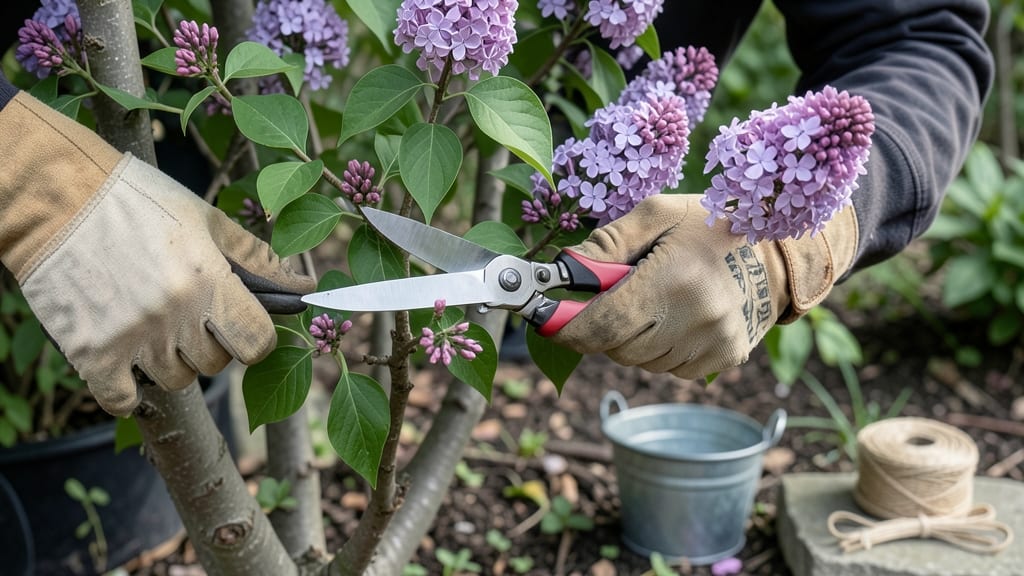
A lilac bush pruning diagram is your secret weapon for keeping those fragrant blooms thriving for years—but one wrong cut can leave your lilacs bare for seasons. The key lies in knowing where lilacs bloom (on last year’s growth) and when to prune (right after flowering).
One misplaced snip, and you’ll end up with leggy branches and sparse blooms next spring.
You’ll need sharp bypass pruners, a ladder (for tall bushes), and a clear plan: remove dead wood first, then thin out crowded branches to improve airflow. My bushes now burst with fragrant purple blooms every May, and the shape stays compact.
The key is patience—lilacs reward careful pruning with years of abundant flowers if you do it right.
After pruning, your lilac will push out fresh green growth within weeks, and next year’s flower buds will form along those stems. The bush stays healthier, blooms more reliably, and even resists pests better.
Just avoid cutting into old wood—you’ll know it by the lack of green pith inside the stems.
Works for all lilac varieties, from classic lavender to white and pink types. Here’s how to map out your cuts before you start—no guesswork, just confident pruning. Let’s get those blooms back on track!
📚 In This Guide
- What you need
- Instructions
- Tips and common mistakes
- Wrapping up and next steps
What you need
- ● Pruning shears – Sharp, bypass-style shears (for clean cuts on smaller branches). Size: 6-8 inches.
- ● Loppers – For thicker stems (½-inch to 1½-inch diameter). Size: 18-24 inches with ratcheting or bypass blades.
- ● Pruning saw – For stubborn, thick branches (1½+ inches). Type: Curved or folding saw.
- ● Gloves – Heavy-duty, cut-resistant gloves to protect hands from thorns and sharp edges.
- ● Disinfectant (70% isopropyl alcohol or bleach solution) – To sterilize tools between cuts and prevent disease spread.
- ● Garden twine or zip ties – For securing large branches post-pruning if needed.
- ● Lilac pruning diagram – Printed or digital reference (like ours!) to visualize cuts before making them.
- ● Trash bags or compost bin – For disposing of pruned branches (avoid composting diseased wood).
- ● Hand pruners with ergonomic grips – Reduces hand fatigue for long pruning sessions.
- ● Pole saw or extendable pruners – For high branches (if your lilac is tall!).
- ● Lilac fertilizer (balanced 10-10-10 or rose-specific) – Feed after pruning to boost recovery.
- ● Knee pads or stool – For comfort if you’re working on a large bush.
- ● Spray bottle with water – To dampen tools and reduce dust when cutting.
Step-by-step lilac bush pruning guide for vibrant spring blooms
Here's how to shape your lilac bush for maximum flowers and long-term health—no guesswork involved.
Identify Last Year's Blooms and Dead Wood
Start by examining your lilac bush in late winter or early spring before new growth appears. Look for old wood—the stems that produced flowers last year. These are typically thicker, woody branches with clusters of dried flower heads still clinging to them. Use sharp pruning shears to cut these stems back to within 2-3 inches of the ground or to an outward-facing bud. This encourages strong new growth from the base.
Next, scan the bush for any dead, diseased, or crossing branches. Dead wood is easy to spot—it's brittle, hollow, or lacks bark. Diseased branches may have dark spots or ooze. Remove these completely at their base. Crossing branches rub against each other, creating wounds that invite pests and disease. Cut these out first, as they’re the easiest to identify and prune.
Thin Out Overcrowded Branches for Better Airflow
Lilacs thrive when they receive plenty of airflow and sunlight. If your bush looks dense or has branches growing inward, it’s time to thin. Focus on removing one-third of the oldest stems—these are the thickest, often woody branches near the center. Cut these back to the ground or to a strong outward-facing bud. This opens up the center of the bush, allowing light and air to reach all parts.
As you work, step back occasionally to visualize the shape. Aim for a rounded, vase-like form rather than a flat-topped bush. Avoid cutting more than one-third of the branches in a single season—this can stress the plant and reduce flowering. If your lilac is young (under 3 years old), skip this step entirely and focus only on removing dead or crossing branches.
Shape the Bush for Balanced Growth
Now it’s time to refine the shape of your lilac. Start by identifying the strongest, most upright branches—these will form the framework of your bush. Use pruning shears to trim back any branches that are growing too long or leggy. Cut just above a bud that faces outward to encourage bushier growth. This step is where you’ll see the most dramatic transformation in the bush’s appearance.
For a more natural look, avoid making straight cuts across branches. Instead, angle your cuts slightly above the bud to prevent water from pooling and causing rot. If you’re unsure where to cut, look for the small bump or swelling on the stem—this is the bud, and cutting just above it ensures new growth will sprout in the right direction.
Clean Up and Prepare for New Growth
Once you’ve finished pruning, gather all the clippings and remove them from the area. Lilac branches can harbor pests or diseases, so never leave them on the ground near the bush. Dispose of them in a sealed bag or burn them if possible. This step is crucial for preventing future problems and keeping your lilac healthy.
After pruning, give your lilac a light application of balanced fertilizer to support new growth. Water deeply but gently to avoid disturbing the roots. Over the next few weeks, you’ll notice fresh green shoots emerging from the base and along the branches. These new growths will eventually bloom into vibrant lilac flowers, provided the bush receives full sun (6+ hours daily) and well-draining soil.
Monitor and Maintain Through the Growing Season
In the weeks following pruning, keep an eye out for any new signs of disease or pests. Lilacs are generally hardy, but stress from pruning can make them more vulnerable. If you notice yellowing leaves, black spots, or chewed foliage, address the issue promptly. For example, yellowing leaves often indicate overwatering or nutrient deficiency, while black spots may signal fungal issues.
Continue to monitor the shape of your lilac as it grows. If any branches grow too long or start to crowd the center again, trim them back in early summer after the flowering season. This second round of light pruning helps maintain the bush’s shape and encourages even more blooms next year. With proper care, your lilac will reward you with fragrant, abundant flowers for years to come.
Tips & tricks for perfect lilac bush pruning
Here's what I learned after years of shaping my own lilacs—these tricks make all the difference between a healthy bush and one struggling to bloom.
Timing is Everything: The late winter or early spring window before new growth appears is critical. This timing allows you to see last year's blooms clearly and prevents accidental cutting of fresh buds. If you miss this window, wait until after flowering when you can identify last year's wood by its dried flower clusters. I've learned the hard way that pruning too early can remove next year's blooms.
Tool Prep Matters: Always use sharp, clean pruning shears to make precise cuts. Dull blades crush stems instead of cutting cleanly, which invites disease. Before you start, wipe your shears with rubbing alcohol to sterilize them—this prevents spreading any potential infections between cuts. I keep a small bottle of alcohol handy specifically for this purpose.
Visualize the Shape: Step back frequently to visualize your lilac's final shape. The goal is a rounded, vase-like form that allows sunlight to reach all branches. If you're unsure where to make cuts, look for the small bump or swelling on the stem—the bud. Cutting just above this ensures new growth will sprout in the right direction. I find it helpful to sketch a rough outline of my ideal shape before starting.
Cleanup is Critical: Never leave pruned branches on the ground near your lilac. These can harbor pests and diseases that will infect your plant. I dispose of clippings in sealed bags or burn them immediately after pruning. For large bushes, I even wear gloves to handle the branches, as some lilac varieties can cause skin irritation.
Pro Tips for Lilac Bush Lilac Pruning Diagram
- Here's what I learned after years of shaping my own lilacs—these tricks make all the difference between a healthy bush and one struggling to bloom.
- Timing is Everything: The late winter or early spring window before new growth appears is critical.
- Tool Prep Matters: Always use sharp, clean pruning shears to make precise cuts.
Frequently asked questions
Got questions about pruning your lilac bush? You’re not alone! Here are some of the most common concerns—and straightforward answers—to keep your plant thriving.
When is the best time to prune a lilac bush?
The ideal time is right after flowering (late spring to early summer). This ensures you don’t cut off next year’s blooms, which form on old wood. Avoid pruning in fall or winter, as lilacs are dormant and more vulnerable to disease.
How do I know if I’ve pruned too much?
If you’ve removed more than one-third of the plant’s growth in a single session, you may have over-pruned. Signs include sparse foliage, weak stems, or no flowers the following year. Lilacs are resilient but thrive best with gradual, strategic cuts.
Can I prune lilacs in the fall or winter?
While lilacs can tolerate light pruning in late fall (after leaves drop), it’s not recommended for major shaping. Winter pruning risks exposing the plant to cold damage and pests. Stick to spring/summer for best results—unless you’re removing dead wood, which can be done anytime.
Why aren’t my lilacs blooming after pruning?
Lilacs bloom on old wood, so aggressive summer pruning (or cutting back to the ground) can stunt flowers. Focus on shaping and removing dead branches—never trim more than 20–30% of the plant at once. Patience pays off!
Are there alternatives to traditional pruning?
Yes! For a low-maintenance look, try the "wild" method: Remove only dead or crossing branches. Some gardeners also use selective thinning to improve airflow, reducing disease risk. Just avoid "rejuvenation pruning" (cutting back hard)—it’s stressful for lilacs.
Wrapping up and next steps
Pruning your lilac bush doesn’t have to be intimidating—with the right timing, tools, and technique, you’ll unlock vibrant blooms and a healthier plant year after year. 🌸 Remember, the key is patience: focus on shaping, removing dead wood, and encouraging airflow to prevent disease.
Now that you’re armed with a pruning diagram and expert tips, grab those shears and get ready to transform your lilac into a stunning centerpiece!
🌱 Next Steps:
- Mark your calendar for late spring (after blooming) to prune next year.
- Experiment with light shaping—your lilac will thank you!
- Share your progress (and blooms!) with fellow gardeners for extra motivation.