
Pruning
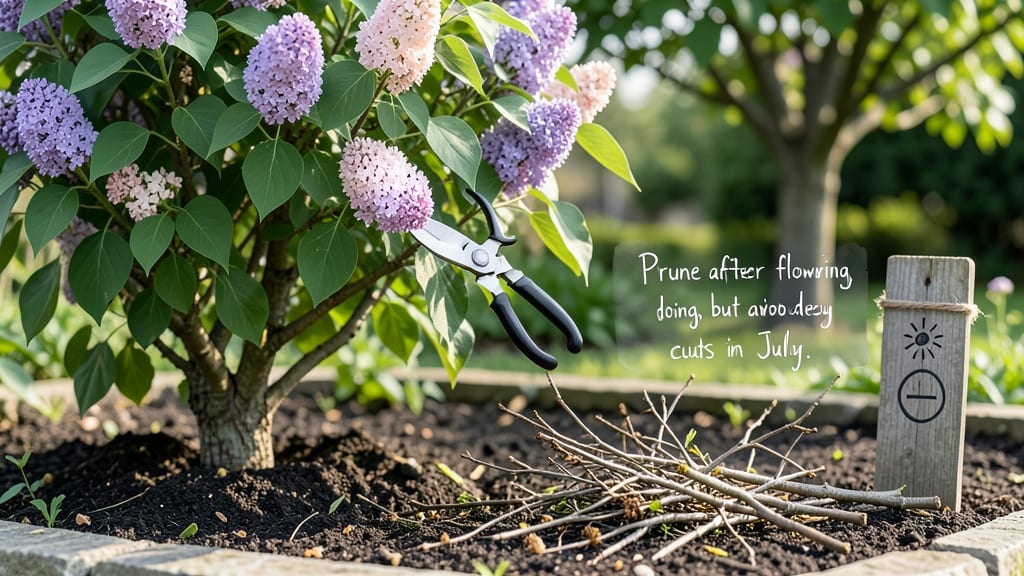
Pruning lilacs in July is too late to preserve this year’s blooms but can still shape next year’s growth—just avoid aggressive cuts and focus on light shaping to prevent stress before winter dormancy.
Lilacs set flower buds in late summer (around August), so pruning too early disrupts their bloom cycle. 🌸 When you trim in July, you risk cutting off next year’s potential flowers before they’ve formed.
That said, light shaping now can remove dead or overcrowded branches—just keep cuts minimal and avoid removing more than 20-30% of the plant’s foliage. The key is balancing aesthetics with the plant’s need to recover before winter.
If you must prune now, focus on deadheading spent blooms and thinning out crowded stems to improve airflow. Use clean, sharp pruners and make cuts just above outward-facing buds. This approach keeps the plant healthy enough to set buds later in the season while still looking tidy.
💡 In This Article
- How Lilac Pruning Timing Affects Flower Production
- July Pruning Workarounds for Lilacs: What to Cut and When
How lilac pruning timing affects flower production
Lilacs follow a precise biological timeline where flower buds form in late summer—typically between August and September—meaning any pruning before this window risks cutting off next year’s blooms.
The plant’s growth cycle depends on this timing: when you prune in July, you’re interrupting the natural process of bud formation, which occurs on last year’s wood.
This is why heavy pruning now can lead to sparse or no flowers the following spring, as the plant may not have enough time to develop new buds before winter dormancy sets in.
The key mechanism here involves the plant’s hormonal responses.
When lilacs experience stress from aggressive pruning, they produce more auxin—a growth hormone that promotes vegetative growth (leaves and stems) at the expense of floral buds. 🌿 This hormonal shift can delay or even prevent flower bud initiation, which is why light shaping is critical in July.
Think of it like giving your lilac a gentle haircut instead of a buzz cut—just enough to tidy up without shocking the system.
Dormancy plays a critical role too. Lilacs enter dormancy in late fall, and any new growth stimulated by late-season pruning may not harden off properly before winter. This weak growth is more susceptible to frost damage, further stressing the plant.
The ideal scenario is to let the plant focus on setting buds naturally in late summer, then prune immediately after flowering next year to maintain a healthy structure without disrupting the bloom cycle.
Consider this comparison: pruning lilacs in late spring (after blooms) allows the plant to recover and set buds over the summer, while July pruning forces it into a reactive mode.
For example, a lilac bush pruned in June might produce 70-80% of its usual flowers the next year, whereas one heavily pruned in July could see a 30-50% reduction in blooms. The difference lies in how much the plant can redirect its energy toward flower production versus new growth.
What most gardeners don’t realize is that lilacs are late bloomers in terms of bud formation. Many shrubs set buds in early spring, but lilacs wait until late summer—this is why timing is everything.
If you’ve already pruned too aggressively in July, don’t panic. The plant can still recover, but you’ll need to be patient and avoid further stress until next spring’s pruning season.
For a visual example, imagine a lilac branch: the old wood (last year’s growth) is where flower buds form, while the new wood (this year’s growth) won’t produce flowers until next year.
Cutting back into old wood in July removes potential blooms for next spring, while cutting back into new wood can stimulate weak, frost-sensitive growth. The goal is to trim only the outermost 1-2 inches of new growth to maintain shape without harming the plant’s ability to set buds.