
How To
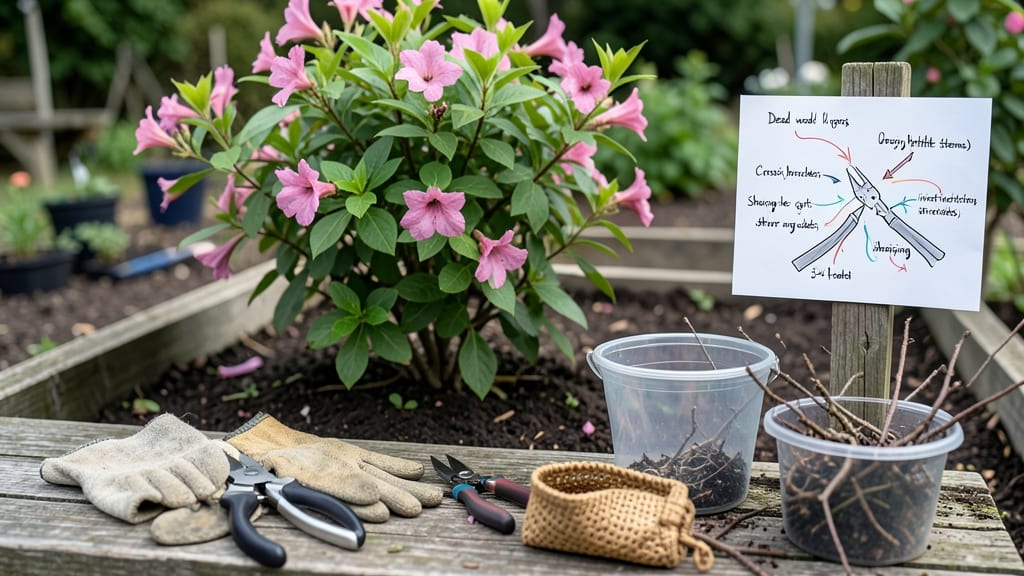
Pruning weigela in late winter unlocks its secret to vibrant summer blooms—and I’ve learned the hard way that timing is everything. ✂️ Last year, I pruned too late, and my shrubs put all their energy into leafy growth instead of flowers.
The difference between a bush covered in pink clusters and one with sparse blooms often comes down to when and how you cut. Start with clean tools and a clear plan: remove dead or crossing branches first, then shape by cutting just above outward-facing buds.
Weigela blooms on new growth, so don’t hesitate to trim back up to a third of the plant—it’ll rebound with fresh, flower-laden stems by June. Just avoid cutting into old wood, or you’ll lose next year’s blooms entirely.
📚 In This Guide
- What you need
- Instructions
- Tips and common mistakes
- Wrapping up and next steps
What you need
- ● Pruning shears: Sharp, bypass-style shears (4–6 inches) for clean cuts on small stems.
- ● Loppers: For thicker branches (8–10 inches), with a ratcheting or bypass mechanism.
- ○ Hand pruners (optional): For delicate trimming of tiny shoots (3–4 inches).
- ● Garden gloves: Heavy-duty, cut-resistant gloves (size L or XL) to protect hands.
- ● Disinfectant (70% isopropyl alcohol or bleach solution): Wipe tools between cuts to prevent disease spread.
- ● Rubbing alcohol or hand sanitizer: For cleaning up after pruning.
- ● Bucket or trash bag: To collect clippings (5–10 gallon capacity).
- ● Pruning saw: For stubborn, woody stems (if branches exceed 2 inches in diameter).
- ● Extension pole: For reaching high branches (adjustable 3–6 ft).
- ● Plant sealant: (e.g., pruning paste) to coat large cuts and prevent disease.
- ● Notebook & pen: To sketch a quick pruning plan before you start.
- ● Safety glasses: If working with thorny or overgrown Weigela varieties.
Step-by-step guide to pruning weigela for maximum blooms
Here's how I transform tangled weigela shrubs into vibrant, bushy beauties ready for summer's best flowering.
✂️ Step 1: Time Your Pruning for Best Results
Prune weigela in late winter, just as new growth begins but before buds swell. This is when the plant's energy is focused on new stems rather than seed production. I always aim for February or early March in my zone 6 garden—wait too long and you'll cut off next year's flowers.
Look for dormant buds along the stems. These are tiny bumps that will become next year's blooms. If you see green growth starting, it's time to grab your pruners. The key is to prune before the sap starts flowing heavily—this minimizes stress on the plant.
✂️ Step 2: Remove Dead, Weak, and Crossing Branches First
Start by eliminating any branches that are dead, diseased, or broken. These are easy to spot—they'll be brown, brittle, or completely devoid of leaves. Cut these back to healthy wood at a 45-degree angle, about ¼ inch above a bud facing outward.
Next, remove weak, thin stems that never seem to thicken up. These are energy vampires that never contribute to the plant's structure. Then tackle crossing or rubbing branches—where two stems grow against each other. These create wounds that invite pests and disease. Always cut back to a healthy bud or lateral branch.
✂️ Step 3: Thin Out Overcrowded Areas for Better Airflow
Weigela grows quickly and can become dense. Step back and look at the shrub's overall shape—you're aiming for an open vase shape that allows light and air to circulate. Remove 25-30% of the oldest wood from the center, cutting branches back to their origin point or to a strong lateral branch.
Watch for water sprouts—those vertical, skinny stems shooting up from the ground or lower branches. These never flower well and compete with your main stems. Cut these out completely at the base. You'll know you've done enough when you can see light filtering through the center of the shrub.
✂️ Step 4: Shape the Shrub for Optimal Growth
Now for the fun part—shaping! Weigela blooms on current season's growth, so you can be bold with your cuts. Start at the bottom and work your way up, cutting back 1/3 to 1/2 of last year's growth on each branch. This encourages new, vigorous growth from the base that will produce more flowers.
Make your cuts just above a bud or leaf node at a slight angle. Avoid leaving stubs—they can rot and invite disease. For branches that are too thick to cut with hand pruners, use your loppers or pruning saw. You'll know you're doing it right when you can see multiple buds along the remaining stem that will become next year's blooms.
⏰ Step 5: Clean Up and Apply Aftercare
After pruning, sterilize your tools with rubbing alcohol to prevent spreading disease. Remove all pruned material from the area—don't leave it on the ground where it can harbor pests. I always spread 2-3 inches of mulch around the base to retain moisture and protect new growth.
Water deeply right after pruning to help the plant recover. You'll see new green growth within 2-3 weeks if conditions are right. Avoid heavy fertilization right after pruning—wait until new growth appears. This ensures the plant directs energy to establishing roots rather than foliage.
Tips & tricks for pruning weigela like a pro
These game-changing techniques will transform your weigela pruning from stressful to satisfying—no green thumb required.
Timing is Everything: The late winter window (February to early March) is critical because weigela blooms on new growth. I've learned the hard way—if you prune too early, you risk cutting off next year's flower buds that haven't emerged yet. Look for those tiny dormant buds along the stems; they're your green light to start cutting. If you see green growth peeking through, it's time to grab your pruners before the sap starts flowing heavily.
Bud Biology: Always cut just above a bud or leaf node at a 45-degree angle—this is where new growth will emerge. I mark my cuts with my thumb before making them to ensure I'm positioning correctly. The outward-facing bud ensures the new growth will develop away from the center, creating that beautiful open vase shape. Remember, weigela blooms on current season's growth, so you can be bold with your cuts without sacrificing next year's flowers.
Equipment Essentials: Using the right tools makes all the difference. Hand pruners work for branches up to pencil thickness, but for anything thicker, break out your loppers or pruning saw. I keep rubbing alcohol handy to sterilize my tools between cuts—this prevents spreading disease from one branch to another. And here's a pro move: wrap your pruning tools in a damp towel when you're done to keep them sharp longer.
Visual Cues Matter: You'll know you've pruned correctly when you can see light filtering through the center of the shrub. This open vase shape isn't just for looks—it allows air to circulate, preventing fungal diseases. After removing 25-30% of the oldest wood from the center, step back and admire your work. You should be able to see multiple buds along the remaining stems that will become next year's blooms. If you're unsure, snap a photo before and after—you'll notice the dramatic difference in structure.
Pro Tips for Prune Weigela
- These game-changing techniques will transform your weigela pruning from stressful to satisfying—no green thumb required.
- Timing is Everything: The late winter window (February to early March) is critical because weigela blooms on new growth.
- Bud Biology: Always cut just above a bud or leaf node at a 45-degree angle—this is where new growth will emerge.
Frequently asked questions
Got questions about pruning your weigela? You’re not alone! Here are some of the most common queries—and their straightforward answers—to help you master the art of shaping your shrub for vibrant blooms.
When is the absolute best time to prune weigela?
Late winter (just before new growth starts) is ideal—typically February to early March in most climates. This timing ensures you don’t remove next year’s flower buds (which form on old wood) while still encouraging fresh, healthy growth. If you miss it, wait until right after blooming (early summer) to avoid sacrificing flowers.
Can I prune weigela in fall or early spring?
Pruning in fall risks encouraging tender new growth that may freeze in winter. Early spring pruning (before buds swell) is better than fall but still not optimal—you’ll likely cut off some flower buds. Stick to late winter for the best results, or prune right after blooming if you missed the window.
What if I prune too much? Will my weigela die?
Weigela is surprisingly resilient, but never remove more than 1/3 of the plant at once. Over-pruning can stress the shrub, leading to sparse blooms or leggy growth. If you’ve already trimmed too aggressively, focus on light shaping in the following years and fertilize to encourage recovery.
Why did my weigela stop blooming after pruning?
Weigela blooms on old wood, so pruning after flowering (or in late spring/summer) can reduce next year’s blooms. If this happens, prune only lightly in future years, removing dead or crossing branches. For a reblooming variety, prune immediately after the first flush of flowers to encourage a second bloom cycle.
Can I shape weigela like a hedge?
Weigela responds well to formal shaping, especially if you use reblooming cultivars (like ‘Wine and Roses’). For hedges, prune twice a year: once in late winter (for structure) and again right after blooming (for density). Use sharp shears and wear gloves—weigela can be thorny!
Wrapping up and next steps
Pruning your weigela in late winter is a game-changer—it unlocks vibrant blooms, healthier growth, and a bushier shape! By following the right steps (and timing), you’ll transform your plant into a showstopper for summer. 🌸
Ready to see those stunning flowers? Grab your pruners, mark your calendar, and get pruning! For extra tips, check out our Weigela care guide to keep your beauty thriving year-round.