
Pruning
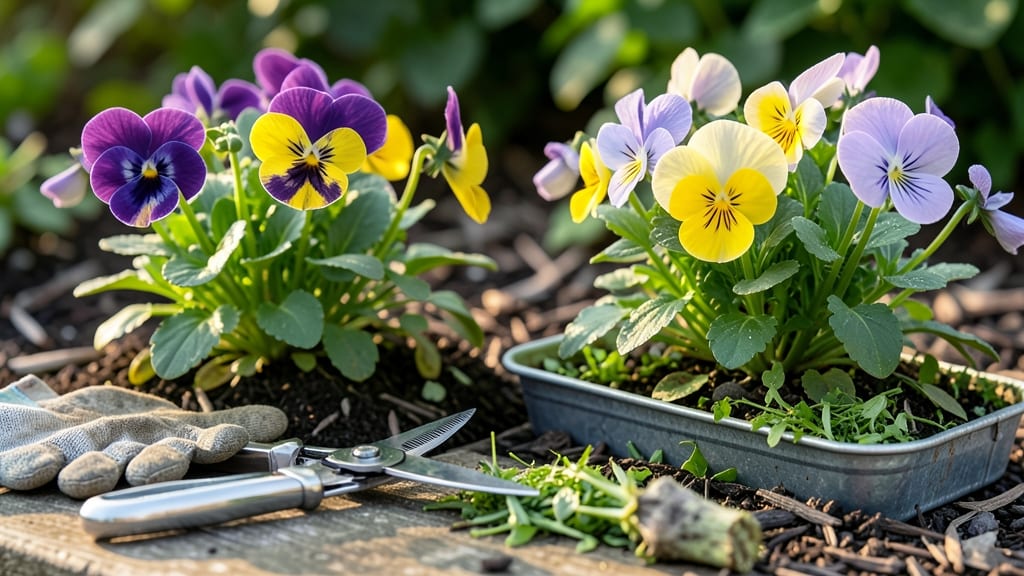
Pruning pansies isn't just about tidying up—it's the secret to nonstop blooms that last from early spring until frost. 🌸 I learned this the hard way after my first winter: skipping pruning meant leggy stems and sparse flowers by summer.
The right cuts transform your pansies from a one-season wonder into a year-round showstopper.
You only need sharp scissors and 10 minutes on a dry day. Start by snipping off faded blooms at the base—this deadheading sends energy back into producing fresh flowers.
Then, trim back any stems that look tired or overcrowded, cutting just above a set of leaves. The goal is to keep the plant compact and encourage new growth.
By late winter, your pansies will reward you with bold, vibrant blooms that outshine anything from the garden center. The secret is consistency: check them weekly during bloom season, and you'll avoid the common mistake of over-pruning, which stresses the plant.
Even in cooler months, they'll keep flowering if you stay on top of it.
This method works for both in-ground and container pansies, making it perfect for small spaces or patio pots. Once you master it, you'll wonder how you ever let those blooms fade without a fight. Here's how to make it happen every season!
📚 In This Guide
- What you need
- Instructions
- Tips and common mistakes
- Wrapping up and next steps
What you need
- ● Bypass pruners – Sharp, clean bypass pruners (4–6 inches) for precise cuts. Dull blades crush stems—avoid this!
- ○ Hand pruners (optional) – For smaller stems or tight spaces (3–4 inches).
- ● Garden shears – If pruning larger patches (8–10 inches).
- ● Gloves – Lightweight, breathable gloves (e.g., nitrile-coated) to protect against thorns or sap.
- ● Disinfectant (70% isopropyl alcohol or bleach solution) – 1 part bleach to 9 parts water to sterilize tools between cuts.
- ○ Pruning sealant (optional) – Bee’s Wax or tree wound dressing for large cuts (prevents disease).
- ● Compost bin or bucket – For collecting pruned stems (or bag for disposal).
- ○ Water spray bottle (optional) – To mist plants post-pruning (reduces stress).
- ● Dry weather – Prune on a mild, sunny day (avoid rain for 24 hours to prevent fungal issues).
- ● Morning timing – Start early to avoid midday heat stress on plants.
- ● Tool maintenance – Sharpen blades before pruning for clean cuts.
Step-by-step instructions for pruning pansies
Here's how I keep my pansies blooming like crazy all season long—no fancy tools required.
✂️ Step 1: Wait for the Right Moment
Prune pansies in late winter when new growth begins but before the first flush of spring blooms appears. This is usually 4-6 weeks before your last frost date, when daytime temperatures hover around 50-55°F. You'll notice fresh, vibrant leaves pushing through the old foliage—this is your signal that the plant is waking up.
Don't rush to prune too early. If you cut back too soon, you risk removing buds that haven't opened yet. I always check the weather forecast first—if a hard freeze is predicted, wait until after it passes. Cold-hardy pansies can handle light frost, but new growth is vulnerable.
✂️ Step 2: Deadhead Spent Blooms
Use clean, sharp hand pruners or even your fingers to pinch off faded blooms at their base. I make a quick snip just above the first set of leaves below the flower—this encourages the plant to redirect energy into producing new buds rather than seed pods. You'll see fresh side shoots emerge within 7-10 days if the plant is healthy.
Don't skip this step, even if you're not doing a major prune. Regular deadheading keeps pansies tidy and prevents them from going to seed too early. I check my plants every 3-4 days during peak bloom season to stay on top of it. If you notice leggy stems with no flowers, it's a sign you've been too aggressive with pruning.
✂️ Step 3: Trim Back Leggy Growth
After the first wave of blooms, some stems stretch tall and thin—this is called "legginess." Use your pruners to cut these back by one-third to encourage bushier, more compact growth. Focus on stems that are bare or have only a few leaves, as these won't recover well. You'll see new side shoots form within 2 weeks if the plant is healthy and the weather is warm enough.
Here's the thing—don't overdo it. If you cut back more than one-third of the plant at once, you risk shocking it into dormancy. I like to do this in stages: first trim the worst stems, then wait 10-14 days before tackling the rest. This gives the plant time to adjust and prevents stress.
🌿 Step 4: Fertilize and Mulch After Pruning
After pruning, spread a balanced, water-soluble fertilizer (like 10-10-10) at half-strength over the soil. Water it in well so the roots can absorb the nutrients. I also add a 1-inch layer of mulch around the base of the plants to retain moisture and regulate soil temperature. Use organic mulch like shredded bark or straw—it breaks down slowly and adds nutrients as it decomposes.
Don't let the mulch touch the stems directly, as this can cause rot. Keep it 1-2 inches away from the plant base. If you notice the soil drying out quickly, water deeply once a week during dry spells. Pansies are drought-tolerant once established, but they'll reward you with more blooms if you keep them consistently moist.
☀️ Step 5: Monitor and Repeat for Continuous Blooms
Throughout the growing season, keep deadheading faded blooms and trimming leggy stems every 2-3 weeks. This encourages the plant to produce new flowers instead of going to seed. If your pansies start to look tired by late summer, give them a final light prune to tidy them up, but don't expect as many blooms—they'll focus on storing energy for next year.
I know it seems like a lot of work, but trust me, it's worth it. With this method, my pansies keep blooming from early spring until a hard frost, and they look fuller and healthier every year. The key is consistency—don't let the deadheading pile up, and you'll have nonstop color all season long.
Tips & tricks for perfect pansy pruning
These simple tricks will help you keep your pansies blooming beautifully all season—no green thumb required.
Timing is Everything: The 4-6 week window before your last frost is your sweet spot for pruning. I check my local frost date online and mark it on my calendar as a reminder. If you're unsure about your exact frost date, err on the side of waiting—pansies can handle a little cold, but new growth can't. That 50-55°F temperature range is ideal because it signals to the plant it's time to wake up without being too harsh.
Tool Selection Matters: While hand pruners work great, I've found that clean fingernails do just as well for deadheading. The key is always to make clean cuts—don't crush stems or leave jagged edges. For leggy growth, I use small garden shears that give me better control over those precise one-third cuts. Sharp tools make all the difference in how cleanly your cuts heal.
Stage Your Pruning: That 10-14 day waiting period between pruning sessions is crucial. It gives the plant time to recover and prevents shock. I like to think of it like giving my plants a spa day—they come back looking even more vibrant. If you're in a hurry, you can do a light maintenance prune every 2-3 weeks instead of the full one-third trim, but you won't get as dramatic results.
Visual Cues for Perfect Pruning: When you're cutting back leggy stems, look for the point where the stem has at least 3-4 healthy leaves. This is your target cut point—it ensures the plant has enough foliage to continue photosynthesizing. For deadheading, pinch off blooms just above the first set of leaves below the flower. You'll know you're doing it right when you see fresh side shoots emerge within that 7-10 day window.
Pro Tips for Prune Pansies
- These simple tricks will help you keep your pansies blooming beautifully all season—no green thumb required.
- Timing is Everything: The 4-6 week window before your last frost is your sweet spot for pruning.
- Tool Selection Matters: While hand pruners work great, I've found that clean fingernails do just as well for deadheading.
Frequently asked questions
Got questions about pruning pansies? You're not alone! Here are some of the most common concerns—plus straightforward answers to keep your blooms thriving.
When is the best time to prune pansies?
Prune pansies in late winter (just before new growth starts) or early spring to encourage fresh blooms. Avoid pruning in extreme heat or cold—aim for 50–65°F temps. If your plants look ragged mid-season, a light trim after flowering can also help!
How much should I cut back?
Remove 1/3 of the plant’s height (about 2–3 inches) to promote bushier growth. Avoid over-pruning—never cut more than half the foliage, or you risk stressing the plant. Focus on dead or yellowing leaves first, then trim back leggy stems.
What if it rains right after pruning?
Light rain won’t hurt, but heavy downpours can wash away fresh cuts or expose stems to rot. Prune in the morning so wounds have time to dry. If rain is forecast, wait 24–48 hours. Always use sterilized shears to prevent disease spread in wet conditions.
Can I prune pansies in containers?
Yes! Container pansies follow the same rules, but trim more frequently (every 4–6 weeks) since space is limited. Deadhead spent blooms weekly to encourage continuous flowers. Use sharp scissors to avoid crushing stems, and fertilize lightly after pruning for a boost.
My pansies look sad after pruning—what went wrong?
Don’t panic! Pansies may temporarily slow growth if pruned too late or too harshly. Ensure they get 6+ hours of sun, well-draining soil, and consistent moisture. If yellowing persists, check for pests (like aphids) or fungal issues—adjust care and monitor closely.
Wrapping up and next steps
Pruning pansies in late winter isn’t just about tidying up—it’s your secret weapon for vibrant, long-lasting blooms all season long! 🌸 By deadheading spent flowers, trimming leggy stems, and giving them a little TLC, you’re essentially hitting the reset button for your pansies to thrive.
Remember, consistency is key, but don’t stress—even small efforts make a big difference.
Now that you’re armed with the know-how, grab those shears and give your pansies the love they deserve. Ready for even more gardening magic? Try experimenting with container gardening or companion planting to keep your garden buzzing with color and life! 🌿