
Pruning
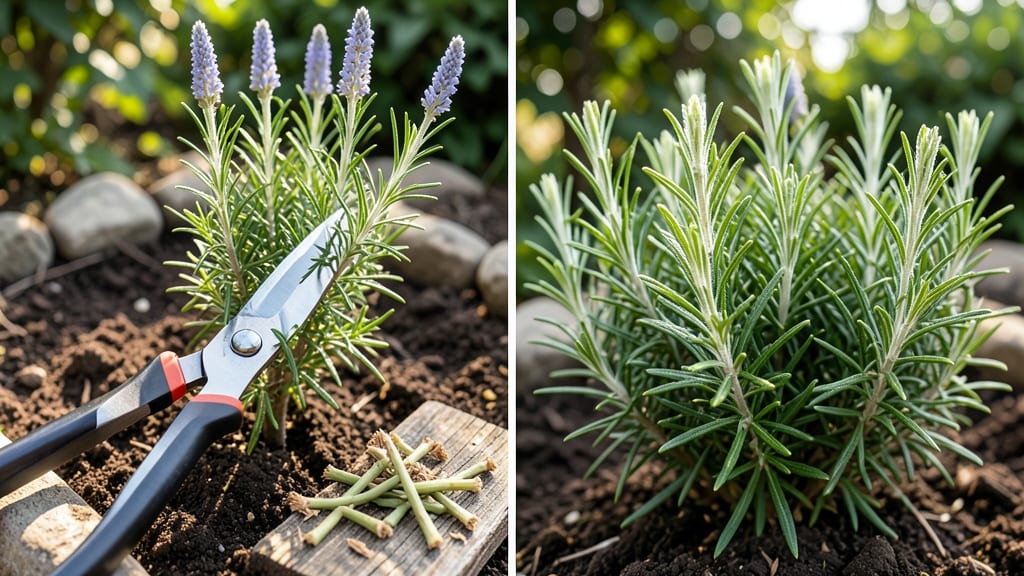
How to prune overgrown rosemary—those woody stems don’t mean it’s dead, just dormant. Pruning isn’t just about tidying up; it’s about unlocking that hidden green machine beneath the brown. I’ve turned my own gnarled, unruly bushes into fragrant, bushy plants using these simple cuts, and you can too.
The best time to prune is late winter or early spring, before new growth starts. Grab sharp pruners (dull blades crush stems) and cut just above leaf joints, never into bare wood.
You’ll see fresh green shoots within 2-3 weeks, proving the plant’s resilience. The key? Never remove more than one-third of the plant at once—rosemary hates aggressive pruning.
What you end up with is a compact, highly productive bush that smells like a Mediterranean vacation. The leaves stay tender, the stems stay flexible, and you’ll have enough sprigs for cooking, garnishes, and even small bouquets. My pruned rosemary now produces three times the harvest of my neglected bushes.
Works for both potted and in-ground rosemary, even if it’s been ignored for years. The secret is patience—rosemary recovers slowly but surely. Here’s how to do it right the first time.
📚 In This Guide
- What you need
- Instructions
- Tips and common mistakes
- Wrapping up and next steps
What you need
- ● Pruning shears or bypass pruners – Choose a pair with sharp, bypass blades (not anvil-style) to make clean cuts without crushing stems. Size: 5-7 inches for medium-sized rosemary bushes.
- ● Hand pruners or loppers – For thicker, woody stems (½ inch or larger). Opt for bypass-style loppers with a ratcheting mechanism for ease.
- ● Garden gloves – Protect your hands from thorns and rough stems. Look for durable, breathable fabric with a snug fit.
- ● Disinfectant (rubbing alcohol or bleach solution) – Clean tools between cuts to prevent the spread of disease. Mix: 1 part bleach to 9 parts water.
- ● Sharpie or permanent marker – Mark stems you plan to prune if you’re unsure about placement.
- ● Buckets or containers – Collect pruned stems for composting or propagation. Size: 1-2 gallon capacity per bush.
- ● Rake or garden fork – Clear debris and mulch around the base before pruning for better access.
- ● Hose with nozzle – Rinse off sap and debris after pruning for a cleaner workspace.
- ● Plant tie or twine – Secure new growth if heavy stems need support post-pruning.
- ● Plant food or fertilizer – Boost recovery with a balanced, water-soluble fertilizer (10-10-10 ratio) after pruning.
- ● Safety glasses – Protect your eyes from flying debris if pruning near your face.
- ● Notebook & pen – Jot down notes on pruning patterns or growth changes for future reference.
Step-by-Step guide to pruning overgrown rosemary
Here's how I transform woody, leggy rosemary into vigorous, aromatic bushes with just a few strategic cuts.
Assess the Plant and Identify Growth Zones
Examine your rosemary plant carefully to locate the basal growth zone, where new shoots emerge from the wood. This is where you'll focus your pruning—never cut into old, bare wood, as it won't regenerate. Look for green stems with buds near the base; these are your plant's energy centers. If you see only woody stems with no green growth, your plant may need more drastic rejuvenation.
Use your fingers to gently probe the stems. If they feel soft and pliable, they're still capable of producing new growth. If they're hard and brittle, they're past saving. Mark these growth zones with a pencil or your thumb—you'll return to them after gathering your tools.
Gather Tools and Prepare for Pruning
You'll need clean, sharp pruning shears (sterilized with rubbing alcohol) to make precise cuts without crushing stems. Avoid dull tools—they tear plant tissue, inviting disease. I also recommend wearing gloves to protect your hands from the plant's resin, which can irritate skin. Lay out a tray or bucket to collect clippings, as rosemary trimmings make excellent seasoning.
Work on a dry, sunny day when temperatures are above 50°F—rosemary is drought-tolerant but needs energy to recover from pruning. If your plant is particularly large, consider pruning in stages over 2-3 days to reduce stress. Never prune when the plant is wilted or under drought conditions.
Prune Leggy Stems Back to Healthy Growth Points
Starting at the top, cut back woody, overgrown stems to just above a leaf node or green bud—this is where new growth will emerge. Make cuts at a 45-degree angle about ¼ inch above the node to prevent water from pooling on the stem. Avoid "heading back" (cutting into old wood) unless you're rejuvenating a severely neglected plant.
For severely leggy stems, you may need to cut them back by half their length to encourage bushier growth. If a stem has no green growth at all, remove it entirely at the base. Step back occasionally to assess the plant's shape—you want to maintain an open, airy structure that allows sunlight to penetrate the center.
Thin Out Crowded Centers and Encourage Airflow
Focus on the interior of the plant, where branches often grow tightly together. Remove 1-2 of the oldest, thickest stems from the center to improve airflow and sunlight exposure. This prevents fungal issues and encourages the plant to put energy into new growth rather than maintaining weak, shaded stems.
If your rosemary has developed a bare, woody center, you can prune back even more aggressively—down to the basal growth zone—as long as you leave at least 3-4 healthy stems to support the plant. The key is to never remove more than ⅓ of the plant's foliage in one session, even if it looks overgrown.
Post-Pruning Care for Rapid Recovery
After pruning, water the plant deeply to help it recover, even though rosemary is drought-tolerant. The roots need moisture to support new growth. Avoid fertilizing immediately—pruned plants don't need extra nutrients right away. Instead, wait 2-3 weeks before applying a balanced, slow-release fertilizer to support regrowth.
Place the pruned rosemary in a bright, sunny location (at least 6 hours of direct sunlight daily) and protect it from strong winds for 1-2 weeks while it recovers. You should see new shoots emerging from the cut stems within 3-4 weeks. If no new growth appears after 6 weeks, your plant may need more aggressive rejuvenation or may be too far gone to revive.
Tips & tricks for revitalizing overgrown rosemary
These practical insights will help you transform that woody rosemary into a fragrant, bushy plant with minimal stress to your herb.
Growth Zone Identification: In Step 1, when assessing your rosemary, focus on the basal growth zone where stems meet the soil. This is where new shoots emerge, and cutting here stimulates regrowth. If you're unsure, gently bend stems—flexible ones indicate potential for new growth, while brittle ones are past saving. I've revived plants with just one healthy basal stem by cutting back everything else.
Tool Precision Matters: The sharpness of your pruning shears in Step 2 makes all the difference. Dull blades crush stems instead of cleanly cutting them, which can introduce disease. I sterilize my shears with rubbing alcohol between cuts, especially when working with multiple plants. For stubborn stems, use a small saw—just avoid tearing the plant tissue.
Strategic Cutting Angles: When pruning in Step 3, those 45-degree cuts above the leaf node aren't just decorative—they prevent water from pooling on the stem, which could cause rot. I make these cuts just above the node while keeping my non-dominant hand positioned to guide the stem away from the blade. This technique also helps direct new growth in the direction you want.
Recovery Timeline: The 3-4 week window mentioned in Step 5 for new shoots to appear is a guideline, not a rule. In warmer climates (above 60°F), I've seen regrowth appear in as little as 2 weeks, while cooler conditions may extend this to 6 weeks. The key is patience—rosemary grows slowly but steadily once it starts. After pruning, I place a small stake near the plant to mark where I made cuts, which helps track progress.
Pro Tips for Prune Overgrown Rosemary
- These practical insights will help you transform that woody rosemary into a fragrant, bushy plant with minimal stress to your herb.
- Growth Zone Identification: In Step 1, when assessing your rosemary, focus on the basal growth zone where stems meet the soil.
- Tool Precision Matters: The sharpness of your pruning shears in Step 2 makes all the difference.
Frequently asked questions
Got questions about pruning overgrown rosemary? You’re not alone! Here are answers to the most common concerns—so you can tackle that woody bush with confidence.
When is the best time to prune rosemary?
Prune rosemary in early spring (just as new growth begins) or after flowering in late spring/early summer. Avoid heavy pruning in fall or winter—rosemary is semi-dormant and needs time to recover. For severely overgrown plants, light pruning in late winter (before buds swell) can help too!
Can I prune rosemary too much?
Yes! Over-pruning (cutting back more than 1/3 of the plant at once) can stress rosemary, especially in hot climates. If you’ve already trimmed too aggressively, focus on light shaping and fertilizing lightly (use a balanced 10-10-10) to encourage regrowth. Rosemary is resilient but prefers gradual renewal.
What if my rosemary looks dead after pruning?
Don’t panic! If stems appear brown and brittle, they might be woody (normal for mature rosemary) or dead. Gently scratch the stem—if green underneath, it’s alive! Trim only the dead parts, then water deeply (but avoid soggy soil). New growth should sprout within 4–6 weeks. For extra help, mulch with gravel to retain moisture.
How do I prune rosemary in containers?
Container-grown rosemary needs more frequent pruning (every 4–6 weeks) to prevent root-bound stress. Trim back by 1/3 in spring, then lightly shape throughout summer. Since containers dry out faster, water after pruning to reduce shock. If roots circle the pot, consider repotting in spring—rosemary thrives with room to stretch!
What if my rosemary keeps turning woody?
Woody stems are a sign of age or overcrowding. To prevent it:
- Prune younger stems (green, not brown) to encourage bushiness.
- Space plants 3–4 feet apart (or thin crowded containers).
- Use shear pruners for shaping, not harsh cuts.
- Fertilize lightly in spring (too much nitrogen = softer growth).
Wrapping up and next steps
Pruning overgrown rosemary doesn’t have to be intimidating—it’s your secret weapon for revitalizing woody stems into vibrant, lush growth! 🌿 With the right tools, timing, and technique, you’ll transform your leggy shrub into a thriving herb garden staple.
Remember, consistency is key: a little effort now means bountiful harvests (and fragrant air!) later.
Ready to take the next step? Celebrate your progress—then grab those fresh cuttings to propagate new plants or infuse your kitchen with homemade rosemary oil. Your herb garden (and taste buds) will thank you!