
Pruning
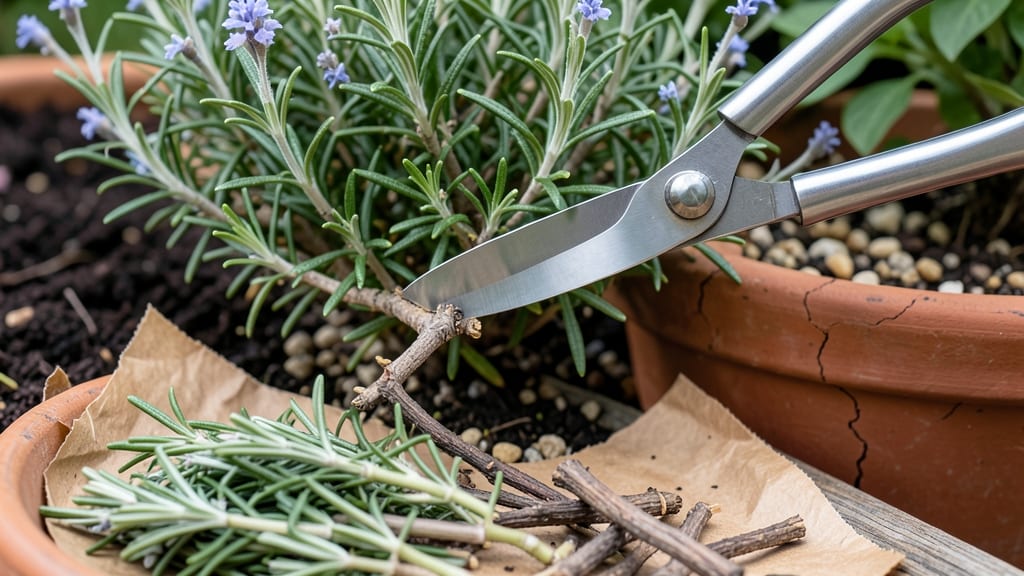
Pruning rosemary plant keeps it bushy and fragrant for years. ✂️ I’ve learned the hard way that cutting too late or too hard turns this hardy herb into a leggy stick—until I discovered the right timing and technique.
The secret lies in understanding its woody stems and how it responds to pruning differently than annual herbs.
You only need sharp bypass pruners and a sunny spot to work. Prune in early spring just as new growth starts, or after harvests in late summer to encourage fresh foliage.
Avoid heavy pruning in winter—rosemary’s semi-woody stems need time to heal before cold snaps. For shaping, trim back one-third of the longest stems to encourage bushier growth.
What you’ll end up with is a rosemary plant that smells intensely piney and stays compact enough to fit on windowsills or in pots. The key is cutting just above a leaf joint (never bare wood) to spur new branches.
A well-pruned plant produces more aromatic leaves for cooking and garnishes all year long.
This method works for both upright and trailing varieties, whether you’re growing it in containers or garden beds. Even drought-tolerant rosemary thrives with proper pruning—just avoid over-trimming, or you’ll sacrifice that signature fragrance. Ready to transform your rosemary from sad to stunning?
📚 In This Guide
- What you need
- Instructions
- Tips and common mistakes
- Wrapping up and next steps
What you need
- ● Sharp bypass pruners – A high-quality pair (like Felco or Fiskars) ensures clean cuts without crushing stems. Size: 6-8 inches.
- ● Hand pruners or shears – For smaller branches. Look for ergonomic handles to reduce hand fatigue.
- ● Gloves – Garden gloves (nitrile-coated for grip) protect your hands from thorns and rough stems.
- ● Disinfectant (70% isopropyl alcohol or bleach solution) – 1 part bleach to 9 parts water to sterilize tools between cuts and prevent disease.
- ○ Pruning saw (optional) – For thick, woody stems (1/4 inch or larger in diameter). A folding pruning saw works best.
- ● Trash bag or bucket – For collecting pruned branches and debris.
- ● Hose or water source – To rinse tools and clean up sap residue.
- ○ Rubbing alcohol wipes (optional) – For quick tool disinfection on the go.
- ○ Marking twine or flags (optional) – If you’re shaping rosemary into a topiary or hedge, use these to map out cuts.
- ● Compost bin or green waste bag – To recycle pruned rosemary (it’s great for compost!).
Step-by-Step guide to pruning rosemary for lush, fragrant growth
Here’s the method I’ve used for years to keep rosemary thriving—whether you’re shaping a bush or harvesting sprigs for cooking.
✂️ Step 1: Prune in Early Spring for New Growth
Start in late February or early March when new growth begins but before the plant flowers. This timing ensures you encourage fresh, fragrant stems while avoiding the stress of winter dormancy. Use clean, sharp pruning shears—dull blades crush stems and invite disease.
Cut back one-third of the plant’s height, focusing on leggy or overgrown branches. Make cuts just above a leaf node (the bump where leaves attach) at a 45-degree angle—this prevents water from pooling on the wound. Avoid cutting into old, woody stems; rosemary rarely regrows from bare wood.
✂️ Step 2: Shape Throughout the Growing Season
Rosemary grows best with regular light pruning every 4-6 weeks during spring and summer. Pinch back the tips of new growth to encourage bushier, denser foliage. This is especially important if you’re growing rosemary for culinary use—frequent pruning keeps the leaves tender and flavorful.
Watch for woody, bare stems—these indicate overgrown branches that need removal. Cut these back to the base of the plant, but never remove more than 20% of the plant at once. Over-pruning stresses rosemary, and it may take years to recover.
✂️ Step 3: Light Pruning in Fall to Prepare for Winter
In late September or October, give your rosemary a light trim to remove any dead, damaged, or diseased branches. This helps the plant enter dormancy stronger and reduces the risk of fungal issues over winter. Avoid heavy pruning now—rosemary needs its energy reserves for cold weather.
If your rosemary is in a container, this is also a good time to check the roots. Gently loosen the soil and trim any circling or overly dense roots with sterilized shears. Repot if the plant has outgrown its container—rosemary prefers being slightly root-bound but not suffocating.
✂️ Step 4: Minimal Pruning in Winter (If Needed)
Rosemary is semi-dormant in winter, so avoid heavy pruning unless you see dead or broken branches. If you must trim, do so on mild, dry days—never prune after frost or in wet conditions. A light cleanup keeps the plant tidy without shocking it.
Here’s the thing—rosemary often looks sparse in winter, but it’s storing energy for spring. Don’t panic and over-prune—this is when the plant recovers its strength. By late winter, you’ll see fresh green shoots signaling it’s ready for another round of shaping.
🌿 Step 5: Harvest Strategically for Flavor and Form
Pruning and harvesting go hand in hand. For the best flavor, harvest sprigs from the tips of non-flowering branches. Use clean scissors to snip just above a leaf node—this encourages new growth at the base. Avoid taking more than one-third of the plant’s foliage at a time, or you’ll weaken it.
If your rosemary flowers, remove the blooms as they appear. While the flowers are pretty, they drain energy from the plant and make the leaves less aromatic. Deadheading also keeps the plant bushier and more compact—perfect for kitchen gardens or ornamental borders.
Tips & tricks for perfect rosemary pruning
Between us, rosemary responds to thoughtful pruning like a well-oiled machine—it rewards precision with lush, fragrant growth. Here's what nobody tells you about keeping your rosemary thriving year-round.
Timing is Everything: The late February to early March window in Step 1 isn't arbitrary—it's when rosemary naturally begins its growth cycle. I've learned this the hard way after pruning too early in winter and seeing minimal regrowth. The key is catching that first flush of new growth while still avoiding the flowering stage, which diverts energy away from leaf production. Watch for those tiny green shoots along the stems—they're your signal it's time to prune.
Cutting Technique Matters: That 45-degree angle in Step 1 isn't just for show—it creates a larger surface area for new growth while preventing water from pooling on the cut. I've seen beginners make flat cuts that actually trap moisture, leading to rot. Use your pruning shears to make clean cuts just above a leaf node, and always sterilize your tools between cuts to prevent disease transmission. For woody stems mentioned in Step 2, you can cut all the way back to the base, but never remove more than 20% of the plant at once—this is rosemary's stress threshold.
Seasonal Adjustments: The fall pruning in Step 3 deserves special attention because it's where most gardeners go wrong. Many people over-prune in autumn thinking it'll help the plant prepare for winter, but rosemary actually needs those leaves to photosynthesize and store energy. Limit yourself to just removing dead or damaged branches—think of it as a light cleanup rather than a major shaping session. And that root check? It's non-negotiable for container-grown rosemary. I've had plants recover from overcrowded roots after repotting, but never from neglecting this step.
Harvesting Strategy: The one-third rule in Step 5 applies to both pruning and harvesting. When you're harvesting sprigs for cooking, always take from the tips of non-flowering branches—this encourages the plant to grow bushier rather than leggy. I've found that harvesting in the morning gives the most potent flavor, as the essential oils are most concentrated after a night's rest. And that deadheading? It's not just about looks—removing flowers redirects the plant's energy back into leaf production, making your rosemary more aromatic for cooking.
Pro Tips for Prune Rosemary Plant
- Between us, rosemary responds to thoughtful pruning like a well-oiled machine—it rewards precision with lush, fragrant growth.
- Timing is Everything: The late February to early March window in Step 1 isn't arbitrary—it's when rosemary naturally begins its growth cycle.
- Cutting Technique Matters: That 45-degree angle in Step 1 isn't just for show—it creates a larger surface area for new growth while preventing water from pooling on the cut.
Frequently asked questions
Got questions about pruning rosemary? You’re not alone! Here are answers to the most common concerns—so you can keep your plant thriving with confidence.
When is the best time to prune rosemary?
The ideal time is early spring (just as new growth begins) or after flowering in late spring/early summer. Avoid heavy pruning in fall or winter—rosemary is semi-evergreen and needs time to recover before cold weather. Light trimming to shape can happen year-round, but avoid cutting back more than 1/3 of the plant at once.
Can I prune rosemary too much?
Yes! Over-pruning—especially in cold climates—can stress the plant, leaving it vulnerable to winter damage. Stick to 1-2 major pruning sessions per year and avoid cutting into old, woody stems. If your rosemary looks leggy, focus on selective pruning to encourage bushier growth rather than drastic cuts.
What if my rosemary turns brown after pruning?
Brown tips or stems after pruning usually mean stress from improper cuts (like leaving jagged edges) or over-pruning. Trim just above a leaf node (where new growth emerges) with clean, sharp shears, and avoid cutting into bare wood. If browning persists, check for underwatering or pests.
Can I propagate rosemary from pruned cuttings?
Pruned stems make perfect propagation material. Dip 3–4 inch cuttings in rooting hormone (optional), plant in well-draining soil, and keep them lightly moist. Place in bright, indirect light until roots form (4–6 weeks). This is a great way to expand your rosemary collection or share with friends!
How do I prune rosemary in cold climates?
In zones 7 and below, minimize pruning in late fall/winter—rosemary is sensitive to cold damage. Focus on light shaping in spring and avoid cutting back into old wood. If your plant looks woody or leggy, prune just enough to open up the center for airflow. Mulch around the base to protect roots, but avoid piling mulch against the stems.
Wrapping up and next steps
Pruning your rosemary plant doesn’t have to be intimidating—it’s all about timing, technique, and a little love! 🌿 With the right tools and a few simple steps, you’ll encourage lush, fragrant growth year-round.
Whether you’re shaping it for culinary use or just keeping it tidy, regular maintenance pays off—so grab those shears and get pruning!
Now that you’re armed with the know-how, why not take the next step? Try propagating those pruned cuttings to grow new rosemary plants—it’s a great way to expand your herb garden for free! Happy pruning! 🌱✨