
Pruning
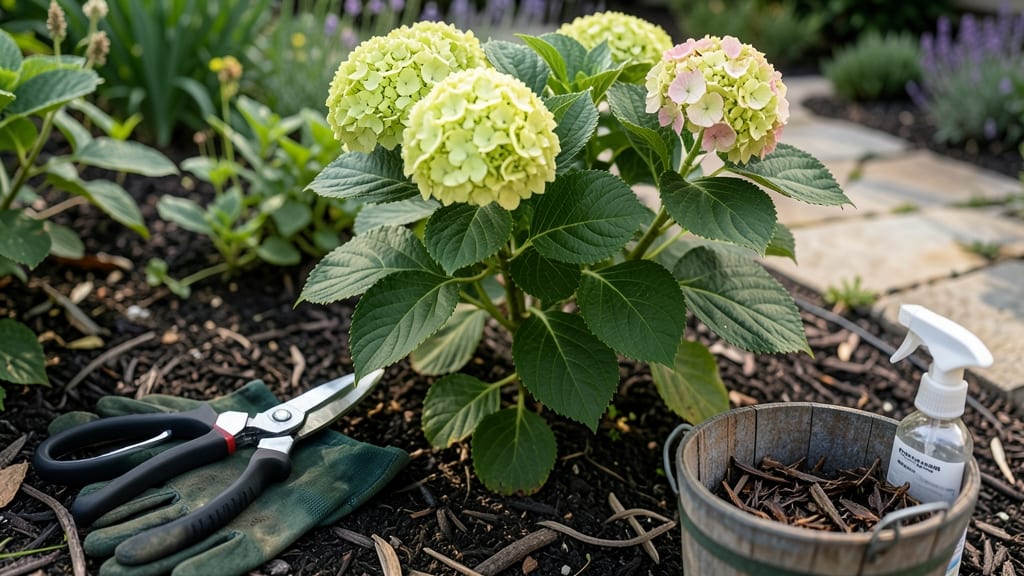
Pruning Limelight hydrangeas in summer isn’t about cutting back—it’s about shaping their future blooms. ✂️ I’ve learned that strategic summer trims keep these showstoppers lush and productive, not just for this year, but for seasons to come.
The key? Timing and technique that encourage new growth without sacrificing next year’s flowers.
You’ll need sharp pruners, a clean towel, and about 15 minutes of focused attention. The right tools prevent jagged cuts that invite disease, while the towel wipes away sticky sap. Most importantly, you’ll need patience—Limelight hydrangeas bloom on old and new wood, so every cut matters.
What you’ll end up with is a bush that stays compact, blooms longer, and puts out bigger, brighter flowers next season. The secret is deadheading spent blooms while leaving some stems intact—this keeps energy flowing where it counts.
By summer’s end, your hydrangeas will look like they just got a spa day.
This method works for container-grown plants too, and even in hot climates where hydrangeas can struggle. Just avoid heavy pruning after July 1st—that’s when new growth starts hardening off for winter. Let’s get those blooms thriving!
📚 In This Guide
- What you need
- Instructions
- Tips and common mistakes
- Wrapping up and next steps
What you need
- ● Bypass pruning shears – Sharp, clean bypass shears (4-6" blades) for precise cuts. Why? They minimize damage to stems and reduce the risk of disease.
- ● Loppers – For thicker stems (½" or larger). Choose bypass loppers with a 10-12" handle for leverage.
- ● Hand pruners (felco or equivalent) – A backup pair for smaller cuts, with ergonomic grips to reduce hand fatigue.
- ● Garden gloves – Heavy-duty, cut-resistant gloves (e.g., Mechanix or Filon) to protect hands from thorns and sap.
- ● Disinfectant (70% isopropyl alcohol or bleach solution) – 1 part bleach to 9 parts water to sterilize tools between cuts and prevent bacterial spread.
- ● Rubbing alcohol or hand sanitizer – For quick tool and hand cleaning mid-pruning.
- ● Garden twine or plant ties – 10-15 feet of biodegradable twine to secure heavy branches if needed.
- ○ Sharpie or permanent marker – To mark stems for future reference (optional but helpful).
- ● Hose with nozzle – For rinsing tools and cleaning sap off stems post-pruning.
- ● Pruning saw (if needed) – For very thick stems (>1" diameter) that loppers can’t handle.
- ● Fungicide spray – A copper-based fungicide to treat cuts if the plant shows signs of disease.
- ● Knee pads or stool – For comfort if your hydrangea is tall or the ground is uneven.
- ● Trash bag or bucket – To collect pruned branches for compost or disposal.
Step-by-step instructions for pruning Limelight hydrangeas in summer
Summer pruning keeps your Limelight hydrangeas thriving with bold, vibrant blooms—here's how to do it right.
✂️ Step 1: Identify the Right Time and Tools
Prune Limelight hydrangeas in early summer, just as the buds begin to form but before they swell noticeably. This timing ensures you encourage next year's blooms while maintaining current season growth. Use clean, sharp pruners—dull blades crush stems and invite disease. I always disinfect my tools with rubbing alcohol before cutting to prevent bacterial spread.
Look for new growth at the base of the plant—these are the stems that will produce next year's flowers. Older wood typically blooms on the previous year's growth, but Limelights are an exception and bloom on current season growth, making summer pruning ideal. Avoid cutting back into last year's stems unless they're dead or diseased.
✂️ Step 2: Remove Dead or Weak Growth
Start by cutting out any dead, damaged, or crossing branches—these compete for energy and weaken the plant. Make your cuts just above a leaf node or outward-facing bud to encourage healthy regrowth. I like to step back and visually assess the plant's shape, removing stems that disrupt airflow or create dense clusters.
If you see yellowing leaves or stems with blackened tips, those are signs of stress or disease. Cut these back to the nearest healthy growth point. Never leave stubs—always make clean cuts at a 45-degree angle just above a bud. This prevents water from pooling and reduces the risk of fungal infections.
✂️ Step 3: Thin Out Overcrowded Stems
Limelight hydrangeas thrive when they have good air circulation, so thin out crowded stems to 3-5 strong, upright branches per plant. Focus on removing the thinnest, weakest stems first—these rarely contribute to strong blooms. I aim to leave the most vigorous stems, which you can identify by their thick, green bark and upright growth habit.
Cut back these stems by one-third to encourage bushier growth. Avoid heavy pruning—this can reduce next year's flower production. Watch for new shoots emerging from the base; these are your plant's way of telling you it's ready for more growth. If you notice leggy stems, prune them back to a lateral bud to promote a fuller shape.
☀️ Step 4: Encourage Airflow and Sunlight Exposure
After pruning, step back and assess the plant's canopy structure. You want sunlight to penetrate to the inner stems—this prevents fungal issues and ensures even blooming. If branches are still too dense, make a few more strategic cuts to open up the center. Limelights need full sun to partial shade, so don't be afraid to trim back any shaded stems.
Once you're satisfied with the shape, give the plant a light watering to help it recover from the stress of pruning. Avoid heavy watering immediately after trimming, as this can lead to root rot. Instead, water deeply 2-3 days later to allow the cuts to callus over slightly. This protects the plant from pathogens while it heals.
🌿 Step 5: Monitor and Maintain Through Summer
After pruning, keep an eye out for new growth—this is your plant's way of rebounding. Fertilize lightly with a balanced, slow-release fertilizer to support the recovery process. I use a 10-10-10 formula in early summer, applied according to package instructions. Avoid high-nitrogen fertilizers, as these promote leafy growth at the expense of flowers.
Continue to deadhead spent blooms throughout the summer to encourage more flowers. Limelights are forgiving, but consistent care keeps them looking their best. If you notice any pests like aphids or spider mites, treat them immediately with neem oil or insecticidal soap. A healthy plant is less susceptible to infestations, so pruning correctly is your first line of defense.
Tips & tricks for perfect Limelight hydrangea pruning
Summer pruning transforms your Limelight hydrangeas from merely surviving to thriving—here's how to avoid the most common mistakes while maximizing results.
Timing Secret: The early summer window is critical for Limelights because they bloom on current season growth. Watch for tiny buds forming at the stem tips but not yet swelling—this is your cue to prune. I've learned the hard way that waiting too long means you'll be cutting back potential flower stems for next year. If you miss this window, you can still prune, but you'll sacrifice some of next year's blooms.
Tool Technique: Never skip the disinfecting step with rubbing alcohol—this prevents spreading bacterial diseases between cuts. I use a small spray bottle of 70% isopropyl alcohol to quickly sanitize my pruners between each plant. For stubborn branches, I've found that making a slight notch in the bark just before cutting prevents tearing. This clean cut heals faster and looks more professional.
Visual Assessment: Step back frequently during pruning to evaluate the plant's shape from all angles. The goal is to create an open, vase-like structure that allows sunlight to reach all stems. I imagine a glass vase when shaping—widest at the base, gradually narrowing toward the top. This shape prevents fungal issues while maximizing bloom potential. If you're unsure, take photos before and after pruning to compare.
Post-Pruning Care: The 2-3 day waiting period before deep watering is often overlooked, but it's crucial. This allows the cuts to begin callusing over, which naturally protects against pathogens. I've seen plants develop fungal infections when watered immediately after pruning—this simple waiting period prevents most issues. After the 2-3 days, water deeply to help the plant recover from the stress of trimming.
Pro Tips for Prune Limelight Hydrangeas In Summer
- Summer pruning transforms your Limelight hydrangeas from merely surviving to thriving—here's how to avoid the most common mistakes while maximizing results.
- Timing Secret: The early summer window is critical for Limelights because they bloom on current season growth.
- Tool Technique: Never skip the disinfecting step with rubbing alcohol—this prevents spreading bacterial diseases between cuts.
Frequently asked questions
about pruning Limelight hydrangeas in summer—because even experts need a little clarity! Here are answers to the most common questions to keep your blooms thriving.Can I prune Limelight hydrangeas too much in summer?
Yes, but strategically! Over-pruning in summer can stress the plant and reduce next year’s blooms. Stick to removing only dead or wilted stems—never cut more than 1/3 of the plant’s foliage. Light trimming to improve airflow is fine, but avoid heavy pruning unless reviving a neglected shrub.
How soon after pruning will I see new growth?
Limelight hydrangeas are resilient! You’ll often see new shoots within 2–4 weeks of light summer pruning, especially if you trim just above a leaf node. For more aggressive cuts (like reviving a leggy plant), expect fresh growth in 4–6 weeks. Keep soil moist and fertilize lightly to encourage recovery.
What if I missed summer pruning—can I still shape my hydrangea?
Don’t panic! While summer is ideal, you can lightly prune in early fall (before frost) to tidy up. Avoid heavy cuts—focus on removing only the worst-looking stems. Next spring, plan a full renewal pruning (cutting back by 1/3) to reset growth. Hydrangeas are forgiving!
Why are my Limelight hydrangeas not blooming after summer pruning?
Limelight hydrangeas bloom on new wood, so summer pruning shouldn’t stop flowers—unless you cut too aggressively or stressed the plant. Check for:
- Underwatering (hydrangeas love moisture!)
- Nutrient deficiency (feed with acid-loving plant fertilizer)
- Pests/disease (inspect leaves for signs)
Do I need special tools for summer pruning?
Not necessarily! Clean, sharp bypass pruners (for stems up to ½ inch thick) and loppers (for thicker stems) are all you need. Avoid dull tools—they crush stems, inviting disease. Disinfect blades with rubbing alcohol between cuts to prevent spreading pathogens.
Wrapping up and next steps
Pruning your Limelight hydrangeas in summer isn’t just about tidying up—it’s your secret weapon for stunning, long-lasting blooms! By following the right techniques, you’ll encourage healthier growth, vibrant flowers, and a bush that stays lush all season. 🌿✨
Now that you’re armed with the know-how, grab those shears and give your hydrangea the care it deserves. Ready to see the difference? Check out our guide on fertilizing for post-prune blooms to keep your Limelight thriving!