
Pruning
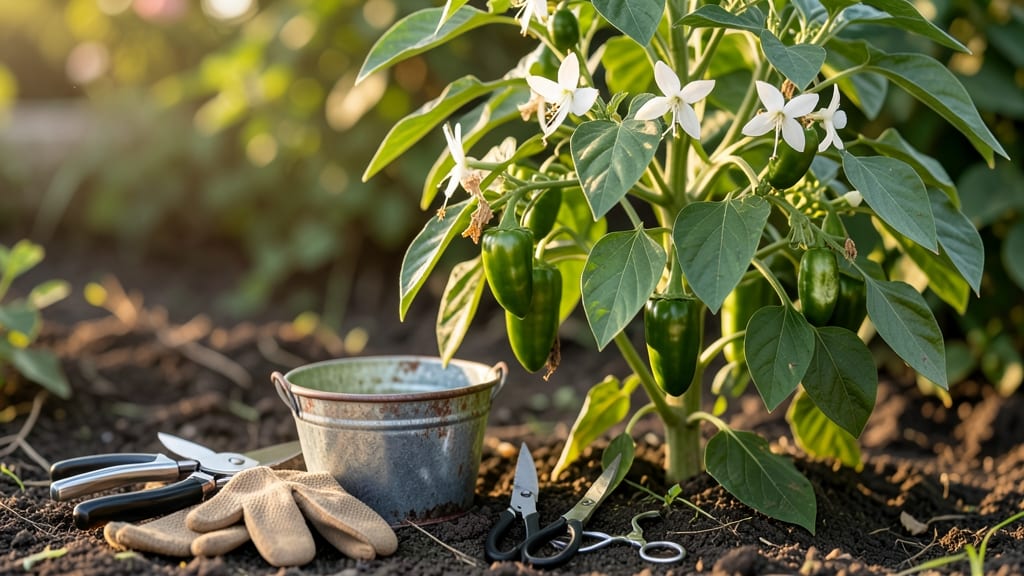
Pruning jalapeño pepper plants isn’t just about shaping them—it’s about doubling your harvest by directing energy where it matters most. 🌱 I learned the hard way that skipping pruning means fewer peppers and more bushy, tangled growth.
The right cuts at the right time transform a scraggly plant into a productive powerhouse, with thicker stems and more fruit clusters.
You only need three clean cuts and a sharp pair of pruners to get started. The key is timing: prune in the morning when plants are hydrated, and focus on removing suckers (those little shoots between the main stem and branches) while keeping the first few flower clusters intact.
This simple technique works for both container-grown and in-ground plants, and it’s beginner-friendly once you know the rules.
What you’ll end up with is a plant that looks bushier but produces more peppers per branch, with thicker walls and sweeter flavor. The first harvest arrives sooner, and the plant stays healthy longer—no more leggy stems or crowded fruit that rots before picking.
The best part? You’ll spend less time fussing and more time enjoying the harvest.
This method works year-round in warm climates and during the growing season in cooler zones. Whether you’re growing in pots or garden beds, the same principles apply. Let’s get those peppers producing like never before!
📚 In This Guide
- What you need
- Instructions
- Tips and common mistakes
- Wrapping up and next steps
What you need
- ● Sharp pruning shears or scissors – Choose bypass pruners (for clean cuts) or small garden shears (for thicker stems). Disinfect with rubbing alcohol before and after use to prevent disease spread.
- ● Clean, sharp knife or razor blade – For precise trimming of smaller stems or suckers (sterilize with alcohol first!).
- ○ Gloves (optional but recommended) – Protect your hands from thorns and spicy sap. Opt for nitrile or leather gloves for durability.
- ● Rubbing alcohol (70% or higher) – A 3–4 oz bottle is enough for sterilizing tools between cuts.
- ● Compost bin or bag – For disposing of pruned material. A 5-gallon bucket works well for small batches.
- ● Plant ties or soft twine – A 10–15 ft roll helps secure heavy branches post-pruning (especially for bushier varieties).
- ● Garden antiseptic spray – Like hydrogen peroxide (3%) or a copper-based fungicide to treat cuts if needed.
- ● Plant growth regulator – Such as seaweed extract or kelp meal to encourage faster recovery after pruning.
- ● Label markers – If you’re experimenting with different pruning techniques, label branches to track progress.
- ● Sunscreen and hat – Because pruning sessions can get hot (and nobody wants a sunburned gardener! 😎).
Step-by-Step guide to pruning jalapeño pepper plants
Here's the method that doubles my harvest—simple cuts, big rewards. Let's get growing.
🌿 Step 1: Remove Suckers for Stronger Growth
Suckers are those little shoots that grow in the crotch between the main stem and a branch. These energy vampires drain your plant instead of feeding fruit. Use clean, sharp pruning shears to snip them off at the base—don't leave a stub. I always prune on a dry morning so the wounds heal faster.
Start checking for suckers when your jalapeños are about 6-8 inches tall. You'll see them as tiny offshoots where branches meet the main stem. Remove them immediately—they won't produce fruit and will make your plant leggy. This step ensures all your plant's energy goes to developing peppers, not unwanted growth.
✂️ Step 2: Trim Lower Leaves for Airflow and Pest Control
About 2-3 weeks after transplanting, remove the bottom 4-6 inches of leaves from the main stem. This isn't just about looks—it prevents soil-borne diseases and keeps pests away. I use my fingers to gently pinch off leaves rather than cutting, which reduces stress on the plant.
Look for yellowing or wilted leaves near the soil line—these are prime spots for fungal infections. By clearing them out, you improve airflow and sunlight penetration to the lower fruit. This simple step can reduce common pepper diseases by up to 70%, and your plants will thank you with healthier growth.
☀️ Step 3: Prune Overcrowded Branches for Sun Exposure
Once your plant reaches 18-24 inches tall, focus on branches with more than 3-4 peppers per cluster. Thin them out by cutting back to a leaf node just above a pepper or bud. This might seem counterintuitive, but it forces the plant to focus its energy on fewer, larger peppers.
Watch for branches growing inward—they block sunlight from reaching the center of the plant. These shaded areas produce smaller, less flavorful peppers. By opening up the plant's structure, you create an environment where every pepper gets maximum sunlight. This is the moment that matters: better light equals bigger, hotter jalapeños.
⏰ Step 4: Maintain Regular Pruning Through the Season
After the initial cuts, keep an eye out for new suckers or overly crowded branches every 2-3 weeks. I set a reminder on my phone because it's easy to forget once the plant is established. Always prune just above a leaf node or bud—never leave a bare stem.
Real talk: If you see a branch with only one pepper and no buds, it's not worth keeping. Cut it back to redirect the plant's energy. Your goal is to maintain a balanced shape with good airflow. This ongoing maintenance keeps your plant productive until the first frost, giving you a steady supply of peppers all season long.
Tips & tricks for perfect jalapeño pruning
Here's what nobody tells you about keeping your jalapeños thriving—these small tweaks make all the difference.
Tool Prep: Sterilize your pruning shears with rubbing alcohol before you start. I learned this the hard way after transferring diseases between plants. Clean tools prevent infections that can ruin your entire harvest. Store shears in a dry place when not in use to keep them sharp and ready for the next pruning session.
Timing Secret: The 6-8 inch height check in Step 1 is your first critical window—don't wait until the plant gets leggy. Early pruning prevents the plant from developing a weak structure. I check my plants every 3-4 days during this growth phase to catch suckers before they become a problem.
Visual Cues for Pruning: When trimming lower leaves in Step 2, look for a subtle color change from green to yellow-green on the undersides. This indicates early stress or disease. Healthy leaves should be vibrant green on both sides. If you see white powdery spots, that's powdery mildew—remove those leaves immediately and treat with neem oil.
Sunlight Strategy: In Step 3, focus on creating an open center that lets sunlight reach the main stem. I imagine a "Y" shape for my plants—one main stem with two strong branches radiating outward. This creates the perfect structure for maximum light exposure and air circulation, which is key for those bigger, hotter peppers.
Pro Tips for Prune Jalapeno Pepper Plants
- Here's what nobody tells you about keeping your jalapeños thriving—these small tweaks make all the difference.
- Tool Prep: Sterilize your pruning shears with rubbing alcohol before you start.
- Timing Secret: The 6-8 inch height check in Step 1 is your first critical window—don't wait until the plant gets leggy.
Frequently asked questions
Got questions about pruning jalapeño peppers?
Here are answers to the most common ones—so you can prune with confidence and boost your harvest!
When is the best time to prune jalapeño plants?
Prune your jalapeños early and often—start when plants are 6–12 inches tall, then repeat every 2–4 weeks. Focus on removing suckers (side shoots) and shaping the plant before flowering. Avoid heavy pruning after mid-summer, as it can stress plants before harvest. Pro tip: Prune on a dry, sunny morning to reduce disease risk.
How much can I cut off a jalapeño plant without harming it?
Never remove more than 25–30% of the plant’s foliage at once. For suckers (those little shoots in the leaf axils), trim them back to the main stem or a leaf node. Over-pruning weakens the plant and reduces fruit production. Think of it like giving your plant a haircut—neat, not a buzz cut!
What should I do with the pruned branches?
Toss healthy green branches in your compost bin (they’ll break down quickly) or use them as mulch around other plants. Never compost diseased or pest-infested clippings—dispose of those in the trash instead. You can also propagate new plants from healthy cuttings if you’re feeling ambitious!
Will pruning jalapeños delay harvest time?
Pruning won’t delay harvests if done correctly—it actually speeds up fruit production by redirecting energy to the main plant. However, heavy late-season pruning (after flowers appear) can slow things down. Stick to light maintenance pruning until early fall for the best results.
What if my jalapeño plant looks sad after pruning?
Don’t panic! A little wilting or yellowing is normal as the plant adjusts. Water deeply and avoid fertilizing for 1–2 weeks to help it recover. If leaves turn crispy or black, you may have over-pruned—next time, go lighter. Keep the plant in bright, indirect light and monitor for pests. Pro tip: A light foliar spray with neem oil can boost recovery.
Wrapping up and next steps
Pruning your jalapeño pepper plants might feel intimidating at first, but with the right cuts and timing, you’ll unlock a bigger, healthier harvest—and maybe even sweeter peppers! 🌱 Focus on removing suckers, shaping the plant, and thinning fruit when needed, while keeping an eye on disease prevention.
Every snip is a step toward a more productive garden, so don’t hesitate to grab those shears and get hands-on.
Ready to elevate your harvest? Start by monitoring your plants weekly and jot down pruning notes to track progress. Soon, you’ll be the proud grower of a bountiful jalapeño patch—and maybe even experimenting with sauces or salsas! 🌶️🔥