
Pruning
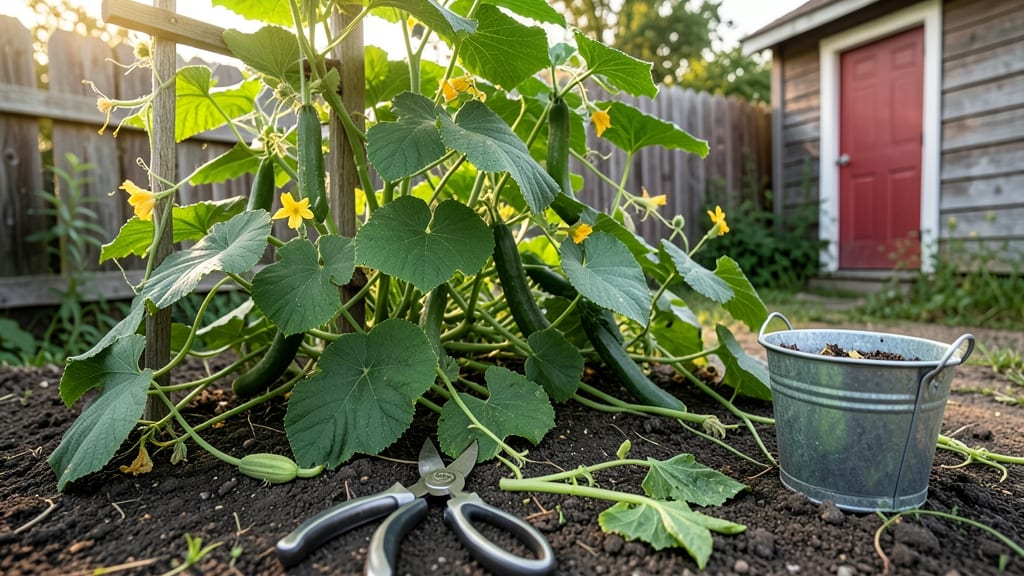
Pruning the parts of a cucumber plant isn't just about trimming—it's about redirecting energy to where it matters most. ✂️ I've learned the hard way that skipping this step means fewer fruits, more pests, and a tangled mess by midsummer.
The right cuts transform a rambling vine into a productive powerhouse, with bigger harvests and healthier plants all season long.
Focus on three key areas: removing suckers (those small shoots between the main stem and leaves), thinning overcrowded vines, and clearing away yellow or diseased leaves. Use clean, sharp pruners to avoid damaging the plant, and always cut at a 45-degree angle just above a leaf node.
This simple technique improves air circulation, prevents fungal diseases, and ensures your cucumbers get the nutrients they need.
Timing matters—prune in the early morning when the plant is still cool and hydrated, and avoid heavy pruning during heatwaves or when fruits are already forming. Within 2-3 weeks, you'll notice new growth and more flowers setting fruit.
The payoff? A 20-30% increase in yield and cucumbers that ripen faster and more evenly.
For trellised plants, prune more aggressively to encourage upward growth, while bush varieties need lighter touches. And here's the secret: stop pruning once fruits start forming—you want the plant to focus on what's already there. Start small, observe how your plant responds, and adjust as you go.
📚 In This Guide
- What you need
- Instructions
- Tips and common mistakes
- Wrapping up and next steps
What you need
- ● Sharp pruning shears or scissors: Bypass pruners (4–6 inches long) work best—avoid dull tools to prevent tearing stems.
- ○ Clean, disinfected gloves: Nitrile or latex gloves (optional but recommended to protect against thorns and bacteria).
- ● Garden twine or soft ties: For supporting vines after pruning (3–5 feet per plant).
- ○ Small hand trowel or knife: For removing stubborn suckers or debris (optional but handy).
- ● Healthy cucumber plant: Prune only when vines are 12+ inches tall and actively growing (avoid pruning stressed or diseased plants).
- ● Sunny, dry day: Morning is ideal—wet plants can invite fungal issues.
- ● Patience & observation: Wait until vines have 3–5 true leaves before pruning.
- ● Pruning spray (70% isopropyl alcohol): To sterilize tools between cuts.
- ● Compost bin: For disposing of pruned suckers (avoid leaving them near the plant).
- ● Staking system or trellis: If your cucumbers aren’t already supported (pruning works best with vertical growth!).
Instructions for pruning cucumber plants like a pro
Here’s how I shape my cucumber plants for stronger vines, more fruit, and fewer pests—no guesswork involved.
✂️ Step 1: Identify the Main Stem and Lateral Branches
Cucumber plants grow in a vining habit, meaning they produce a central stem with side shoots (laterals) that bear fruit. The main stem is the thickest, fastest-growing vertical shoot—this is your plant’s backbone. Locate it first by tracing the thickest vine upward from the base. Laterals emerge at leaf nodes (the points where leaves attach to the stem) and will grow horizontally.
I always start pruning at the bottom of the plant, working my way up. The first 12 inches of stem often produce weak, spindly laterals that drain energy. Snip these off completely at the node with clean, sharp pruners—never tear the stem, as this invites disease. You’ll see new, stronger laterals form higher up where light exposure is better.
✂️ Step 2: Remove Suckers for Directed Growth
Suckers are the small, aggressive side shoots that grow in the V-shaped junction between the main stem and a lateral branch. These compete with your fruit-bearing laterals for energy. Use your thumb and forefinger to gently squeeze the sucker’s base until it snaps cleanly—no need for pruners here. You’ll know you’ve got the right spot when you feel a slight resistance at the node.
I prune suckers weekly during the plant’s active growing season (spring through early summer). If you miss a sucker, it’ll grow into a full lateral, creating a tangled mess. Watch for new suckers forming in the upper third of the plant—these are the most critical to remove, as they’re closest to the flowering zone where fruit develops.
✂️ Step 3: Thin Laterals to 2-3 per Node
Once a lateral branch reaches 6-8 inches long, decide whether to keep it. Aim for 2-3 laterals per node on the main stem, spaced 6-12 inches apart. If a node has multiple laterals, snip all but the strongest one—look for the shoot with the thickest stem and healthiest leaves. Thin laterals encourage the plant to focus its energy on fewer, more productive branches.
Here’s the thing—overcrowding laterals leads to smaller fruit and more disease pressure. I always prune in the early morning, when the plant is turgid (full of water) and cuts heal faster. After pruning, I spray the cuts with a copper fungicide (optional but recommended for humid climates) to prevent rot.
☀️ Step 4: Prune for Airflow and Sun Exposure
Cucumber plants need good airflow to prevent powdery mildew and bacterial wilt. After removing suckers and thinning laterals, step back and assess the plant’s structure. If branches are too dense, prune out every other lateral to create gaps. You’re aiming for a lacy, open framework—imagine sunlight filtering through like a dappled forest floor.
Pay special attention to the top third of the plant, where new growth is most active. If you see laterals growing straight upward (instead of outward), prune them back to encourage horizontal growth. This ensures fruit sets closer to the main stem, making it easier to harvest and reducing breakage. A well-pruned plant will have fewer, larger cucumbers and fewer that rot on the vine.
⏰ Step 5: Time Your Pruning for Maximum Yield
Prune early in the morning on a dry, cloudless day to minimize stress on the plant. Avoid pruning after rain or late in the day, as cuts take longer to heal and are more susceptible to infection. I also never prune during flowering or fruiting—wait until the plant has 2-3 mature leaves on a lateral before trimming nearby suckers.
As the season progresses, slow down your pruning in late summer. By mid-August, focus on harvesting rather than shaping. The plant’s energy shifts toward ripening existing fruit, and new growth will be slower. If you see yellowing leaves at the base, that’s a sign the plant is maturing—stop pruning entirely and let it finish its cycle.
Tips & tricks for pruning cucumber plants like a pro
These game-changing strategies will transform your cucumber harvest—no more tangled vines or wasted energy.
Precision Pruning Tools: Invest in a pair of bypass pruners with sharp, clean blades—they make all the difference. Dull tools crush stems instead of cutting cleanly, which invites disease and slows healing. I also keep a small bottle of rubbing alcohol handy to wipe blades between cuts, especially when working with multiple plants. This simple habit prevents cross-contamination that could spread fungal spores.
Visual Growth Assessment: In Step 4, when evaluating airflow and sun exposure, look for v-shaped leaf angles as your cue. Healthy cucumber leaves should form a 45-degree angle from the stem, allowing sunlight to penetrate. If leaves grow flat against the stem or overlap excessively, you're dealing with overcrowding—prune aggressively to create that open framework. Think of it like training vines to grow like a trellis naturally.
Seasonal Pruning Adjustments: The weekly pruning schedule in Step 2 works perfectly during spring's active growth phase, but your approach should shift by mid-August. Once plants show signs of maturing—like yellowing lower leaves—I switch to a maintenance-only pruning routine. Focus solely on removing diseased or damaged growth while letting the plant concentrate on ripening existing fruit. This late-season strategy prevents stress that could reduce your final harvest.
Optional Disease Prevention: While the instructions mention copper fungicide as optional, I've found that a 1% hydrogen peroxide solution (mix 1 part 3% hydrogen peroxide with 3 parts water) works just as effectively for sealing cuts. Spray it directly on fresh pruning wounds after making cuts—it's a natural disinfectant that helps prevent bacterial infections. This is particularly useful in humid climates where fungal diseases spread quickly.
Pro Tips for Pruning Parts Of A Cucumber Plant
- These game-changing strategies will transform your cucumber harvest—no more tangled vines or wasted energy.
- Precision Pruning Tools: Invest in a pair of bypass pruners with sharp, clean blades—they make all the difference.
- Visual Growth Assessment: In Step 4, when evaluating airflow and sun exposure, look for v-shaped leaf angles as your cue.
Frequently asked questions
Got questions about pruning your cucumber plants? You’re not alone! Here are some of the most common queries—and straightforward answers—to help you grow like a pro.
Why should I prune my cucumber plant at all?
Pruning directs the plant’s energy toward fruit production instead of excessive vines or leaves. Without pruning, cucumbers can become overcrowded, leading to smaller yields, disease risk, and poor air circulation. Think of it as giving your plant a spa day—less clutter, more focus on the good stuff!
When is the best time to prune cucumbers?
Prune in the morning when the plant is hydrated and temperatures are cooler. Start when vines are 12–18 inches tall, then repeat every 1–2 weeks. Avoid pruning late in the day—it can stress the plant. Pro tip: Never remove more than 1/3 of the plant at once!
What parts of the cucumber plant should I cut, and which should I leave?
Remove:
- Yellow or diseased leaves (they drain energy).
- Side shoots growing from the main stem (unless you’re growing bush varieties).
- Overcrowded vines blocking sunlight.
- Healthy, green leaves (they photosynthesize!).
- Female flowers (they bear fruit—look for tiny cucumbers behind them!).
Can I prune cucumbers too much? What are the signs?
Yes! Over-pruning weakens the plant, leading to stunted growth, fewer flowers, or even death. Signs you’ve gone too far include:
- Wilted or yellowing leaves after pruning.
- No new growth within 1–2 weeks.
- Fewer flowers or fruit.
Do I need to prune cucumbers if I’m growing them in containers?
Container-grown cucumbers need even more pruning than ground plants because space is limited. Focus on:
- Trimming vines that spill over the edges.
- Removing leaves shading the base (to prevent rot).
- Pruning aggressively if the plant looks stressed (containers dry out faster!).
Wrapping up and next steps
Pruning your cucumber plant isn’t just about tidying up—it’s a game-changer for healthier vines and bigger, more abundant harvests! 🌱 By removing suckers, yellow leaves, and overcrowded stems, you redirect energy to fruit production and improve airflow, keeping pests and diseases at bay.
Whether you’re a seasoned gardener or just starting, these strategic cuts make all the difference.
Now that you’re armed with the know-how, roll up your sleeves and get pruning! Grab your shears, pick a sunny day, and watch your cucumbers thrive. Happy gardening—and here’s to your most bountiful harvest yet! 🍉✨