
Pruning
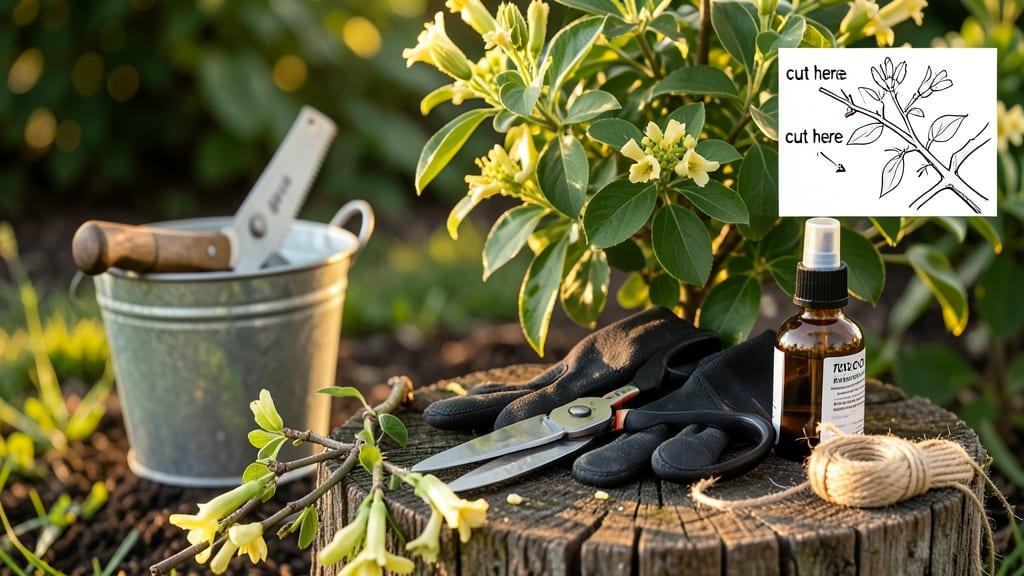
Pruning honeysuckle shrubs in late winter reveals their hidden potential—thicker growth, more fragrant blooms, and a shape that puts your neighbor’s shrubs to shame. 🌿 I’ve watched my honeysuckle go from leggy and sparse to a lush, flowering powerhouse in just one dormant-season trim.
The key is timing, technique, and a little patience to let those new buds wake up strong.
You’ll need sharp bypass pruners (dull blades tear bark), thick gardening gloves (honeysuckle thorns are no joke), and a clean bucket for clippings. Grab a small ladder if your shrub tops 6 feet—reaching up with awkward tools leads to missed branches and frustration.
Pro tip: Disinfect your pruners with rubbing alcohol between cuts to prevent disease spread.
Start by removing dead or crossing branches at the base, then cut back overgrown stems by 1/3 to encourage bushier growth. For flowering types, trim just above a leaf node where new blooms will form.
You’ll see fresh green shoots within 2-3 weeks, and by summer, your shrub will be packed with fragrant clusters that attract hummingbirds.
After pruning, give the shrub a deep watering to help it recover, then add a balanced fertilizer in early spring. Avoid heavy pruning in fall—it leaves stems vulnerable to winter damage. With this method, my honeysuckle now blooms 2 weeks earlier and stays dense all season. Ready to transform yours?
📚 In This Guide
- What you need
- Instructions
- Tips and common mistakes
- Wrapping up and next steps
What you need
- ● Pruning shears: Bypass pruners (for clean cuts on stems up to ½ inch thick). Example: Felco F-2 or Corona Tools Classic.
- ● Loppers: For thicker stems (½ to 1½ inches). Look for: Long handles (20+ inches) for leverage.
- ● Pruning saw: For stubborn, thick branches (1½+ inches). Recommended: Fiskars Steel Pruning Saw.
- ● Gloves: Heavy-duty, cut-resistant gloves (e.g., Mechanix or Felco pruning gloves).
- ● Disinfectant: 70% isopropyl alcohol or a 10% bleach solution (to sterilize tools between cuts).
- ● Trash bags or bucket: For collecting pruned branches (5+ gallon size).
- ○ Ladder (optional but helpful): For tall shrubs (extendable, 6–12 feet).
- ● Hand pruners (for small trimming): Anvil pruners for quick snips (e.g., Fiskars Slender).
- ● Sharpener: A file or pruner sharpener to keep blades in top condition.
- ● Rubbing alcohol wipes: For quick tool disinfection on the go.
- ● Pruning sealant: (e.g., Tanglefoot Tree Wound Pruning Seal) for large cuts (controversial but some swear by it!).
- ● Safety glasses: To protect eyes from debris.
Step-by-step instructions for pruning honeysuckle shrubs
Here's how I transform tangled honeysuckle into a fragrant, bushy masterpiece—every cut intentional.
✂️ Step 1: Time Your Pruning for Maximum Impact
Prune honeysuckle shrubs during late winter or early spring, just before buds swell but before new growth begins. This timing ensures you're not cutting off next season's blooms—honeysuckle flowers on old wood, meaning last year's growth produces this year's flowers. If you prune after flowering, you'll sacrifice next year's fragrance.
Check your local frost dates—prune 4-6 weeks before your last expected frost. You'll know you're on track when you see tight, plump buds along the stems. These buds are your guide: protect them at all costs. Avoid pruning in fall, as winter dieback can leave your plant vulnerable to disease.
✂️ Step 2: Assess and Remove Dead or Diseased Wood
Start by scanning the entire shrub for dead, broken, or diseased branches. Dead wood appears grayish-brown, brittle, and often crumbles when touched. Diseased branches may have blackened spots, odd growths, or oozing sap. Grab your sterilized pruning shears and cut these branches back to the main stem or ground level—no mercy needed here.
Next, look for crossing or rubbing branches—these create wounds where disease can enter. Remove one of the branches at its base, cutting at a 45-degree angle just outside the branch collar. This angled cut prevents water from pooling on the wound. If a branch is too thick for shears, use your pruning saw for clean cuts.
✂️ Step 3: Thin Out the Center for Better Airflow
Honeysuckle shrubs thicken over time, and a dense center blocks light and air—inviting pests and disease. Your goal is to create an open, vase-like shape that lets sunlight penetrate to the inner branches. Start at the center and remove 10-20% of the oldest, thickest branches that are growing inward.
Cut these branches back to the main stem or a lateral branch where it naturally forks. Avoid leaving stubs—always cut just outside the branch collar. You'll see a difference immediately: the shrub will look lighter, and you'll spot new buds forming on the outer branches where light can now reach.
✂️ Step 4: Shape and Encourage Bushier Growth
Now it's time to shape the shrub into your desired form—whether that's a rounded bush or a more formal hedge. Step back and visualize the shape you want, then make small, gradual cuts to achieve it. Avoid heavy pruning, as honeysuckle responds best to light, strategic cuts that encourage branching.
To promote bushier growth, cut back some of the longest, leggiest branches by about one-third. This stimulates the plant to produce new side shoots. Focus on the outer branches first, as these will form the new framework. You'll notice within a few weeks that the shrub fills out more densely, with new growth emerging from the cut points.
✂️ Step 5: Clean Up and Maintain Your Tools
After pruning, gather all the clippings and remove them from the garden—never leave them on the ground, as they can harbor disease and pests. If you're composting, place the clippings in a sealed bin to prevent any potential spread. Next, sterilize your tools with rubbing alcohol or a bleach solution to prevent cross-contamination between plants.
Finally, apply a layer of mulch around the base of the shrub, keeping it 2-3 inches away from the trunk. This helps retain moisture and suppresses weeds, giving your honeysuckle a strong start for the growing season. Water deeply but avoid soaking the soil—honeysuckle prefers well-draining soil and doesn't tolerate soggy roots.
Tips & tricks for pruning honeysuckle shrubs
Real talk: Pruning honeysuckle isn't just about cutting branches—it's about sculpting a healthier, more fragrant plant. Here's how to avoid common pitfalls and get it right the first time.
Timing is Everything: The late winter to early spring window is critical because honeysuckle flowers on old wood. If you prune too late, you risk cutting off next year's blooms. Look for those tight, plump buds along the stems—they're your visual cue that you're ready. I once pruned in early spring after the buds had already swollen, and my honeysuckle barely flowered the next season. Don't make my mistake!
Tool Prep Matters: Sterilizing your pruning tools between cuts is non-negotiable. I use a 1:10 bleach-water solution between plants to prevent spreading disease. For thick branches, your pruning saw should cut at a 45-degree angle just outside the branch collar—not flush with the stem. This angled cut prevents water from pooling, which can rot the wound. I've seen too many pruning jobs go wrong because of improper cuts.
Thinning Strategy: When you're removing 10-20% of those oldest, thickest branches in Step 3, focus on creating that open vase shape. The goal is better airflow and sunlight penetration to the center. I like to start with the largest branches first—they're often the ones blocking light. You'll notice within weeks that new growth emerges from the cut points, filling in those empty spaces beautifully.
Post-Pruning Care: After you've shaped your shrub, don't forget the cleanup. Remove all clippings from the garden area immediately—they can harbor pests and diseases. I compost mine in a sealed bin to prevent any potential spread. Then, apply that 2-3 inch layer of mulch, keeping it away from the trunk. This simple step can make all the difference in your honeysuckle's recovery and growth.
Pro Tips for Prune Honeysuckle Shrub
- Real talk: Pruning honeysuckle isn't just about cutting branches—it's about sculpting a healthier, more fragrant plant.
- Timing is Everything: The late winter to early spring window is critical because honeysuckle flowers on old wood.
- Tool Prep Matters: Sterilizing your pruning tools between cuts is non-negotiable.
Frequently asked questions
Got questions about pruning honeysuckle shrubs?
You’re not alone! Here are answers to the most common concerns—from timing to troubleshooting—to keep your fragrant shrubs thriving.
When is the best time to prune honeysuckle?
Prune honeysuckle in late winter or early spring (dormant season) before new growth starts. This prevents stress and promotes bushier, healthier blooms. Avoid pruning in fall—it can stimulate tender growth that may not survive winter. For aggressive varieties, light pruning after flowering is also safe.
How much can I trim back my honeysuckle?
You can cut back up to one-third of the shrub’s height in a single pruning session, but avoid over-pruning. For mature shrubs, gradually thin out old or crowded stems to improve airflow. Never remove more than 25% of the plant in one go—this can shock the shrub and reduce flowering.
What if my honeysuckle isn’t blooming after pruning?
If your honeysuckle skips blooms, it might be over-pruned or stressed. Check for these fixes:
- Prune at the right time (dormant season).
- Ensure it gets 6+ hours of sunlight daily.
- Fertilize lightly in spring with balanced 10-10-10 if soil is poor.
- Watch for pests or disease (e.g., aphids, powdery mildew).
Can I prune honeysuckle into a specific shape?
Yes! Honeysuckle responds well to light shaping, especially if you prune gradually. Use hand pruners to trim just beyond a leaf node for a natural look. Avoid heavy topiary—these shrubs thrive with a loose, airy form. For formal shapes, prune in stages over 2–3 years.
What’s the difference between pruning honeysuckle and other shrubs?
Unlike spring-flowering shrubs (e.g., lilacs), honeysuckle blooms on new wood, so pruning in dormant season won’t hurt flowers. Also, it’s more forgiving—it recovers quickly from cuts. Avoid the "wait-and-see" approach; regular pruning keeps it compact and fragrant.
Pro Tip:
Label branches before pruning if your honeysuckle has different varieties (e.g., fragrant vs. non-fragrant). This helps maintain the best blooms and scents!
Wrapping up and next steps
Pruning your honeysuckle shrubs during dormancy is the secret to unlocking vibrant blooms, lush foliage, and healthier growth—and you’ve got all the tools to make it happen! 🌿 With the right timing, sharp pruners, and a little patience, you’ll transform your shrubs into fragrant, bushier beauties that thrive year after year. Now’s the time to roll up your sleeves and give your honeysuckle the care it deserves!
Ready to take it further? Monitor your shrubs throughout the growing season—light trims after flowering can encourage even more blooms. Happy pruning!