
Pruning
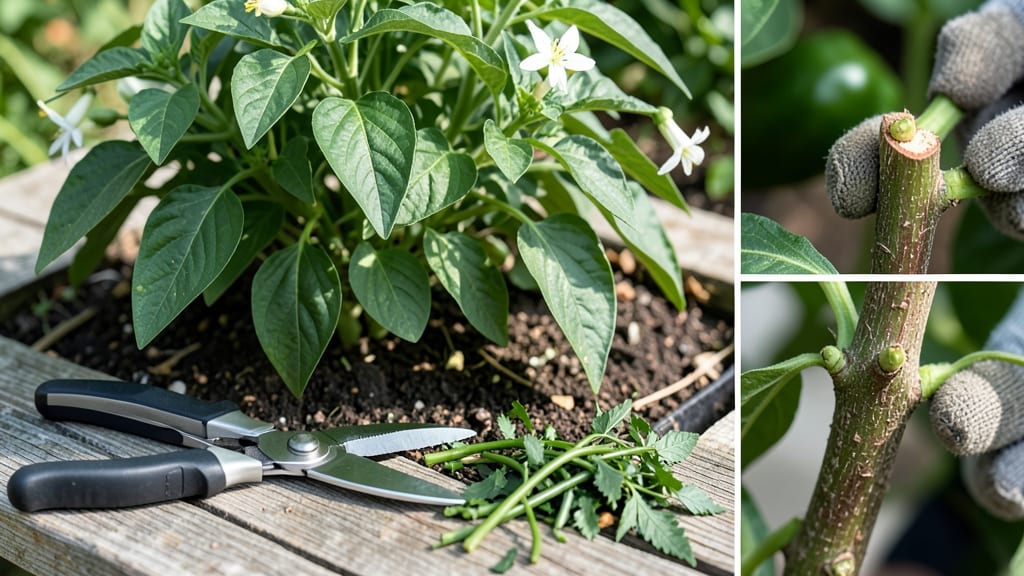
Pruning green peppers isn’t just about trimming—it’s the secret to doubling your harvest while keeping plants healthy. 🌱 Last summer, my pepper plants produced so many peppers they nearly toppled the cage, all because I learned when and how to cut back strategically.
The key is timing: prune early to shape growth, then maintain throughout the season to prevent disease and encourage more fruit.
You only need clean pruners, a small pair of scissors, and a sharp eye for the right spots. Focus on removing suckers (those little shoots between the main stem and branches) and any yellow or diseased leaves.
Avoid cutting into thick stems—this invites rot—and always prune just above a leaf node where new growth can sprout. The goal is to keep the plant’s energy flowing toward fruit production, not just foliage.
By mid-season, your plants will look neater and busier than ever, with thick branches heavy with peppers. Regular pruning also improves airflow, which means fewer fungal issues and happier plants. Even in winter, if you’re growing peppers indoors under lights, a light trim keeps them compact and productive.
The payoff? More peppers, bigger peppers, and plants that stay healthy all season long.
Here’s the trick: don’t overdo it. Prune too much, and you’ll shock the plant into producing leaves instead of fruit. Start with just 20-30% of the plant’s growth, then adjust based on how it responds.
If you’re new to pruning, begin with just the obvious suckers and diseased leaves—you’ll get the hang of it in no time.
📚 In This Guide
- What you need
- Instructions
- Tips and common mistakes
- Wrapping up and next steps
What you need
- ● Pruning shears or sharp bypass pruners – Choose sterilized, sharp tools (like Felco or Fiskars) to avoid damaging plants or spreading disease. Size: 5-7 inches for precision.
- ○ Gloves (optional but recommended) – Heavy-duty gardening gloves (e.g., Cruelty-Free or Dr. McGregor) to protect against thorns or sap irritation.
- ● Disinfectant solution – Mix 1 part bleach to 9 parts water (or use 70% isopropyl alcohol) to sterilize tools before and after each use.
- ● Trash bag or bucket – For disposing of pruned debris (aim for a 10-gallon capacity to avoid overflow).
- ● Sharpie or plant marker – A permanent marker to label pruned branches if you’re experimenting with training techniques.
- ● Watering can or hose (with gentle spray) – To hydrate plants before and after pruning (1–2 gallons per plant is ideal).
- ● Plant growth hormone (e.g., Rootone) – Apply to cut stems to encourage faster healing (follow label instructions).
- ● Pruning saw (for thick stems) – Only needed if your pepper plants have wooden, mature stems over 1/2-inch thick.
- ● Garden journal or app (e.g., Gardenate) – To track pruning dates, plant responses, and harvest progress.
- ● Compost bin – If you prefer to compost pruned material instead of tossing it.
Step-by-step instructions for pruning green peppers
Here’s how I’ve doubled my harvests by pruning—no fancy tools, just sharp scissors and a little strategy.
✂️ Step 1: Identify and Remove Suckers
Suckers are the small shoots that grow in the crotch between a main stem and a branch. These little energy thieves drain your plant’s resources from fruit production. Pinch or cut them off at the base with clean scissors—no need to leave a stub. I do this every 7-10 days during the growing season, usually in the morning when the plant is turgid and easier to handle.
Watch for suckers at the base of each pepper fruit or where side branches meet the main stem. If you spot one, snip it immediately. The earlier you remove them, the more energy your plant puts into developing peppers instead of extra foliage. I’ve seen plants go from producing 10 peppers to 30 just by staying on top of suckers.
🌿 Step 2: Thin Overcrowded Branches
Green peppers need good airflow to prevent disease, so thin out crowded branches to 3-4 inches apart. Focus on removing the smallest or weakest stems first—these are competing with your main fruit-bearing branches. Use sharp pruning shears to cut just above a leaf node (the bump where leaves grow) to encourage new growth.
You’ll know you’ve done it right when you can see light and air moving through the plant. If branches are touching, that’s a red flag for fungal issues. I like to step back and take a photo before and after—it’s shocking how much more open the plant looks after thinning. This step is especially important in humid climates where peppers are prone to blight.
☀️ Step 3: Prune Lower Leaves for Better Airflow
Remove the lowest 6-8 inches of leaves from the plant’s base to improve airflow and prevent soil-borne diseases. Use your fingers or scissors to gently twist leaves off (don’t cut—they’ll leave stubs that trap moisture). This also helps sunlight reach the fruit, which ripens peppers faster. I do this every 4-6 weeks or whenever leaves start yellowing.
Don’t overdo it—you’re not stripping the plant bare. Leave enough foliage to keep the plant shaded but still allow light to penetrate. If you see peppers turning pale or staying small, you might’ve pruned too aggressively. The goal is balance: enough leaves for photosynthesis, but not so many that airflow suffers.
⏰ Step 4: Late-Season Pruning for Next Year
When your plant finishes producing peppers in fall, give it a final trim. Cut back all branches by one-third to encourage bushier growth next season. Remove any dead, diseased, or weak stems completely. I also like to prune off any peppers left on the plant—saving them for next year’s seed stock is one thing, but letting them sit drains the plant’s energy.
After pruning, give the plant a light fertilizer to recover. Mulch the base with 2-3 inches of organic matter to protect roots over winter. If you’re in a cold climate, consider moving potted peppers to a sheltered spot or bringing them indoors. This final pruning sets the stage for a stronger, more productive plant next year.
Tips & tricks for perfect green pepper pruning
These simple strategies will help you maximize your harvest without stressing your plants.
Timing Secret: Morning is the best time to prune—pepper plants are fully hydrated, making them easier to handle and less likely to wilt afterward. If you must prune in the afternoon, do it at least 2 hours before sunset to allow the plant to recover before nightfall. I’ve noticed my plants bounce back faster when pruned in cooler morning air.
Tool Tip: Use clean, sharp scissors or pruning shears to make precise cuts. Dull tools crush stems and create larger wounds that invite disease. I keep a small bottle of rubbing alcohol nearby to wipe down my tools between cuts—this prevents spreading any potential pathogens from one part of the plant to another. For suckers, pinch them off with your fingers if they’re small enough; this is faster than cutting and prevents leaving stubs.
Visual Cue: When thinning branches in Step 2, aim for a "light filter" effect—you should be able to see sunlight filtering through the plant when viewed from above. If you can’t see light moving through, you haven’t thinned enough. I like to hold up a flashlight and shine it through the plant to check for proper airflow before finishing. In humid climates, this step is especially critical for preventing fungal diseases like blight.
Seasonal Strategy: For late-season pruning in Step 4, focus on removing any peppers that have already ripened and fallen off the plant. These can harbor pests and diseases over winter. I also like to save a few of the healthiest peppers to dry for seeds—just leave them on the plant until they’re fully mature and dry before removing. This gives you free seeds for next year’s garden while keeping your plant tidy.
Pro Tips for Prune Green Peppers
- These simple strategies will help you maximize your harvest without stressing your plants.
- Timing Secret: Morning is the best time to prune—pepper plants are fully hydrated, making them easier to handle and less likely to wilt afterward.
- Tool Tip: Use clean, sharp scissors or pruning shears to make precise cuts.
Frequently asked questions
Got questions about pruning green peppers? You’re not alone! Here are answers to the most common queries to help you grow a thriving, productive plant.
When is the best time to prune my green pepper plant?
Prune your green pepper plant early in the morning when the plant is dry and the sun isn’t too intense. Aim for late spring to early summer for the first major pruning, then continue throughout the growing season as needed. Avoid pruning after heavy rain or when the plant is stressed.
How much should I cut off when pruning?
Remove 1/3 to 1/2 of the plant’s height in the first pruning to encourage bushier growth. For ongoing maintenance, trim back to a leaf node (the spot where leaves grow) just above a bud or branch. Never cut into the main stem—always leave a healthy node to promote new growth.
What should I do if my pepper plant looks sad after pruning?
If your plant wilts or looks stressed, it’s likely due to shock from aggressive pruning. Water deeply and provide shade for a few days. Avoid fertilizing immediately—wait until new growth appears. Most plants bounce back within 1-2 weeks if given time to recover.
Will pruning my green peppers reduce my harvest?
Not at all! Pruning increases yield by directing energy to fewer, healthier branches and fruits. Well-pruned plants produce larger, more flavorful peppers and are less prone to disease. Just avoid over-pruning—balance is key!
Can I prune green peppers in containers or hanging baskets?
Yes, but with extra care! Container-grown peppers need more frequent pruning to prevent overcrowding. Use small, sharp pruners to trim carefully, and repot if roots are circling. Hanging baskets may require vertical pruning to keep the plant compact and manageable.
Pro Tip:
Always sterilize your pruners with rubbing alcohol between cuts to prevent the spread of disease. A little prep goes a long way in keeping your pepper plants happy and productive!
Wrapping up and next steps
Pruning your green pepper plants is a game-changer for healthier growth and bigger, tastier harvests—and now you’ve got all the know-how to do it right! 🌱 Whether you’re trimming for shape, boosting yield, or managing pests, the key is consistency and confidence.
Start small, observe your plants, and soon you’ll see the rewards in lush foliage and bursting peppers.
Ready to take it further? Try experimenting with organic fertilizers or companion planting (like basil or marigolds) to supercharge your garden’s success. Happy pruning—and enjoy those homegrown peppers! 🌶️✨