
Pruning
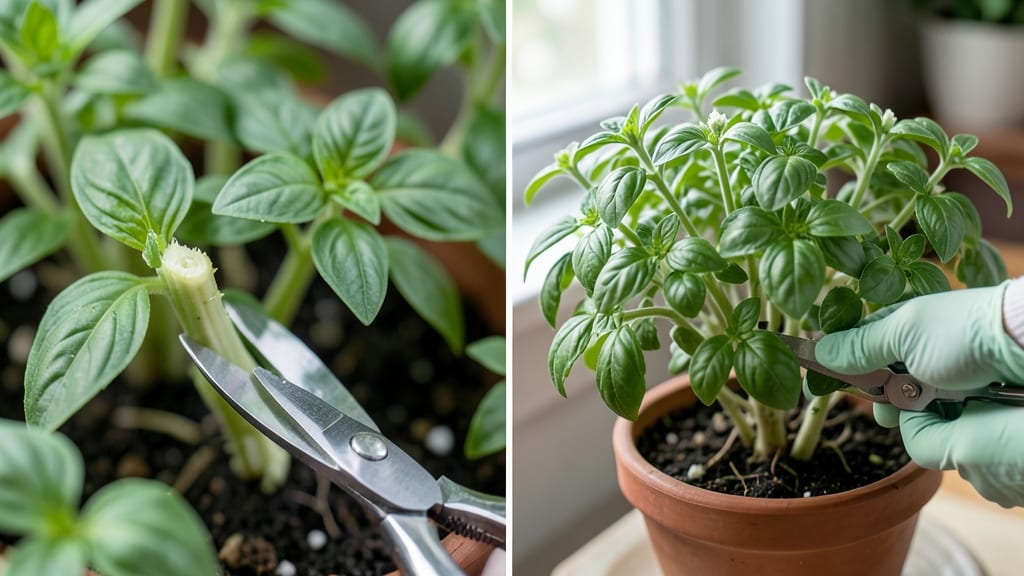
Pruning fresh basil isn’t about cutting back—it’s about unlocking a bushier plant with more leaves than you can use. 🌿 I’ve learned the hard way that skipping this step means leggy stems and fewer harvests, but the right cuts transform basil from a floppy mess into a productive powerhouse.
The secret lies in timing, technique, and knowing when to stop. You’ll need just two tools: clean, sharp scissors (or fingers for pinching) and a sunny spot where your basil gets 6+ hours of light daily.
Prune in the morning after the dew dries, and always cut just above a leaf node—never below. This encourages new growth where you want it, not at the base where it weakens the plant.
Within 2-3 weeks, you’ll see thick, dark-green stems packed with leaves instead of sparse, woody branches. The plant stays compact, resists pests better, and keeps producing for months—not just a few weeks. Plus, regular pruning means you’re always harvesting fresh leaves, not bitter stems.
Common mistakes? Over-pruning (more than 1/3 of the plant at once) or cutting too close to the base. Start small, and your basil will reward you with double the harvest by midseason. Now, let’s get those scissors ready!
📚 In This Guide
- What you need
- Instructions
- Tips and common mistakes
- Wrapping up and next steps
What you need
- ● Clean, sharp pruning shears or scissors – Opt for bypass pruners (4-6 inches long) to avoid crushing stems. Pro tip: 💡 Sterilize with rubbing alcohol before and after use to prevent disease spread!
- ○ Gloves (optional but recommended) – Lightweight gardening gloves protect your hands from sap and thorns.
- ● Water spray bottle (8 oz) – Keeps leaves hydrated during trimming and helps reduce stress on the plant.
- ● Container or tray (10x12 inches) – For collecting pruned leaves or stems (great for compost or recipes!).
- ● Basil plant (healthy, 6+ inches tall) – Ensure it’s at least 4-6 weeks old with visible leaf clusters.
- ● Hand lens or magnifying glass – Helps spot pests or diseases before they spread.
- ● Pruning saw (for woody stems) – Rarely needed, but useful if your basil has thick, mature stems.
- ● Plant food or compost tea – A quick nutrient boost post-pruning encourages faster regrowth.
- ● Notebook & pen – Track pruning dates and plant responses for future reference!
Step-by-Step instructions for pruning fresh basil
Here’s how to keep your basil bushy and productive—no gardening degree required.
✂️ Step 1: Wait Until the Plant is Established
Hold off on pruning until your basil has at least 6-8 inches of growth and 4-6 true leaves. This usually takes 4-6 weeks after transplanting. You’ll know it’s ready when the stems feel sturdy and the leaves are deep green, not pale or leggy. Pruning too early stresses young plants and can stunt their growth.
I like to check for new leaf pairs—when you see two sets of leaves growing opposite each other, that’s your signal. Avoid cutting into the lower leaves; focus on the upper growth where the plant is actively putting energy into new shoots.
✂️ Step 2: Use Clean Tools and the Right Technique
Grab a pair of sharp scissors or pruning shears (cleaned with rubbing alcohol to prevent disease). Snip just above a leaf node—that’s where the little bump meets the stem, and new branches will sprout from there. Cutting too close to the node can damage the plant, while leaving too much stem makes the cut look messy and weak.
For your first prune, aim to remove about one-third of the plant’s top growth. This encourages bushier growth instead of a single tall stem. Watch for new side shoots within a week—they’ll tell you the plant is responding well.
✂️ Step 3: Prune Regularly for Continuous Harvests
After the first prune, keep cutting back the plant every 2-3 weeks to maintain shape and encourage leaf production. Always cut just above a leaf node, and avoid trimming more than one-third of the plant at a time. This prevents shock and keeps the basil thriving.
Here’s the thing—don’t let your basil flower. If you see tiny white or yellow buds forming, snip them off immediately. Flowering signals the plant to stop producing leaves and focus on seeds, which ruins the flavor and growth. You’ll know you’re doing it right when you’re harvesting more leaves than stems every time.
🌿 Step 4: Revive and Prune Older Plants
If your basil starts looking leggy or sparse, it’s time for a rejuvenation prune. Cut back the entire plant by half, right above a strong leaf node. This might seem drastic, but the plant will bounce back with fresh, vibrant growth within 2-3 weeks. Water deeply after pruning to help it recover.
For older plants, focus on removing damaged or yellowing leaves first—they sap energy from the healthy growth. If the stems feel woody or the leaves taste bitter, it’s a sign the plant is past its prime. At that point, it’s better to start fresh with a new cutting or plant.
Tips & tricks for pruning fresh basil
Let's talk about how to keep your basil thriving so you're always harvesting fresh leaves instead of stems.
Timing is Everything: The 4-6 week wait before your first prune is crucial—this gives your basil enough time to develop a strong root system. I learned this the hard way after pruning too early and watching my basil struggle to recover. Look for those sturdy stems and deep green leaves as your signal. Once you see two sets of leaves growing opposite each other, that's your cue to start pruning.
The Right Cut Makes All the Difference: When you're ready to prune in Step 2, focus on cutting just above a leaf node—this is where new branches will sprout. I can't stress enough how important this is: cutting too close to the node can damage the plant, while leaving too much stem makes the cut look messy. For your first prune, aim to remove about one-third of the plant's top growth to encourage bushier growth instead of a single tall stem.
Regular Maintenance is Key: The 2-3 week pruning schedule in Step 3 keeps your basil thriving. I've found that sticking to this schedule not only maintains the plant's shape but also encourages continuous leaf production. Always cut just above a leaf node, and never trim more than one-third of the plant at a time. This prevents shock and keeps your basil producing more leaves than stems, which is what we're aiming for.
Watch for Flowering: Don't let your basil flower! If you see those tiny white or yellow buds forming, snip them off immediately. I've seen basil plants go from lush and green to producing flowers in just a few days, which signals the plant to stop producing leaves. This is a game-changer for maintaining the plant's productivity and flavor.
Pro Tips for Prune Fresh Basil
- Let's talk about how to keep your basil thriving so you're always harvesting fresh leaves instead of stems.
- Timing is Everything: The 4-6 week wait before your first prune is crucial—this gives your basil enough time to develop a strong root system.
- The Right Cut Makes All the Difference: When you're ready to prune in Step 2, focus on cutting just above a leaf node—this is where new branches will sprout.
Frequently asked questions
Got questions about pruning basil? You’re not alone! Here are answers to the most common queries to help you keep your basil bushy, healthy, and productive.
How often should I prune my basil?
Prune your basil every 4–6 weeks or when it reaches about 6 inches tall. Regular pruning encourages bushier growth and prevents legginess. If you’re harvesting leaves frequently, trim lightly every 2–3 weeks to maintain shape and yield.
Can I prune basil too much?
Yes! Over-pruning—removing more than 1/3 of the plant at once—can stress basil and stunt growth. Stick to gentle trims (2–3 inches per cut) and avoid pruning right before a hard frost. If you’ve already overdone it, reduce future cuts and focus on watering and sunlight.
What if my basil turns yellow after pruning?
Yellowing leaves after pruning usually mean overwatering, nutrient deficiency, or shock. Check soil moisture (it should be damp but not soggy) and fertilize lightly with a balanced liquid fertilizer. If the yellowing is severe, trim only healthy growth and monitor for pests or disease.
Do I need to prune basil if I’m not growing it for harvest?
Even ornamental basil benefits from pruning! Trimming encourages fuller growth and prevents woody stems. If you’re growing it for aesthetics, prune lightly to shape the plant and remove any leggy or damaged stems. Just avoid heavy cuts that could weaken the plant.
Can I prune basil in winter?
In cold climates, stop pruning basil 4–6 weeks before the first frost—it needs time to harden off. If you’re growing basil indoors or in a greenhouse, light pruning can continue year-round, but reduce frequency in low-light winter months. Always use clean, sharp scissors to avoid disease.
Wrapping up and next steps
Pruning fresh basil isn’t just about keeping your plant tidy—it’s your secret weapon for bigger, bushier harvests and longer-lasting flavor. By following these simple steps—like pinching back growth, avoiding over-trimming, and giving your basil the right care—you’ll turn a few stems into a thriving, leafy powerhouse. 🌿✨
Now that you’re armed with the know-how, roll up your sleeves and get pruning! Start small, stay consistent, and soon you’ll be drowning in fresh basil for pesto, salads, or whatever your heart desires. Happy gardening!