
Pruning
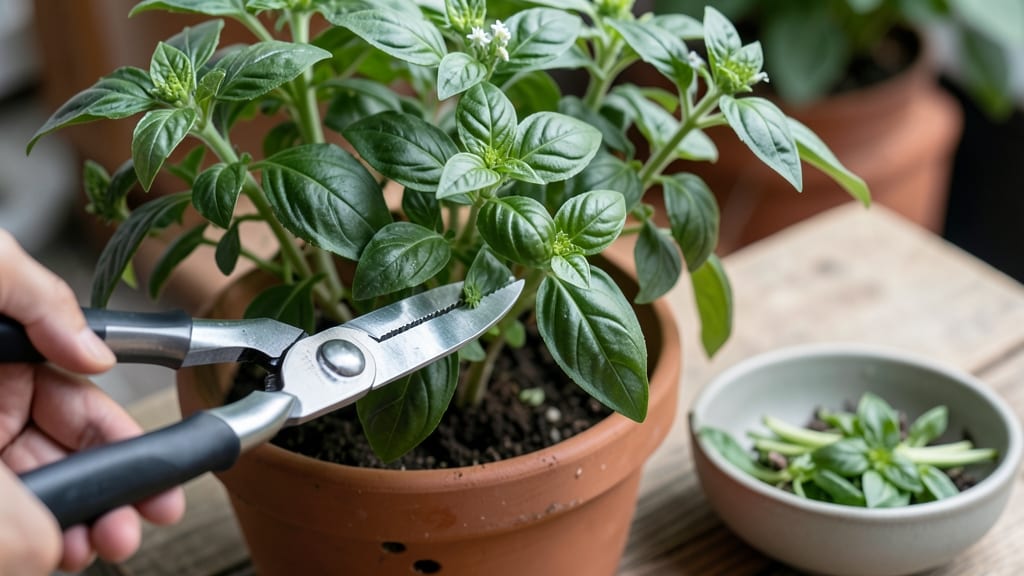
Pruning basil plants isn't just about keeping them tidy—it's the secret to bushier growth and flavor-packed leaves that make your kitchen taste like summer. 🌿 I’ve learned the hard way that skipping this step means leggy stems and bitter leaves, but the right technique turns your basil into a productive powerhouse all season long.
You only need a few basic tools: sharp scissors or pruning shears (cleaned with rubbing alcohol to prevent disease), and about 10 minutes of your time. The key is to cut just above a leaf node—where leaves meet the stem—and always snip at a 45-degree angle to prevent water pooling.
This encourages new branches to form, giving you more harvests and a fuller plant.
By pruning regularly—every 2-3 weeks—you’ll see a noticeable difference in just days. The plants stay compact, produce more leaves, and develop that sweet, aromatic flavor that store-bought basil can’t match. Plus, you’ll avoid the common mistake of cutting into woody stems, which can stunt growth.
This method works whether you’re growing basil in pots on your patio or in raised beds. The same principles apply, so you can keep your plants thriving from spring through fall—and even overwinter them indoors for year-round harvests. Ready to give it a try?
📚 In This Guide
- What you need
- Instructions
- Tips and common mistakes
- Wrapping up and next steps
What you need
- ● Sharp pruning shears or scissors: Use bypass pruners (clean, sharp blades) to avoid crushing stems. Avoid dull tools that can tear leaves.
- ○ Clean, sterilized cutting tool (optional but recommended): A small knife or razor blade for precise cuts if shears aren’t available.
- ○ Gloves (optional): Lightweight gardening gloves to protect hands from sap or thorns (if dealing with woody basil varieties).
- ● Water spray bottle: A 16-ounce bottle with water to mist leaves post-pruning (helps reduce stress).
- ● Disinfectant (rubbing alcohol or bleach solution): 70% isopropyl alcohol or a 1:9 bleach-water mix to sterilize tools between cuts.
- ● Container or bucket: A small basin to collect clippings (for composting or regrowing).
- ● Growth hormone rooting powder: Speeds up rooting for stem cuttings (e.g., Clonex or Dip ‘N Grow).
- ● Plant food or liquid fertilizer: A balanced 10-10-10 or organic option (like fish emulsion) to nourish basil after pruning.
- ● Plant markers or labels: If propagating cuttings, label them to track varieties (e.g., Genovese, Thai, or Purple basil).
- ● Pruning guide or ruler: Helps ensure you’re cutting at the right 1/3 of the stem for optimal regrowth.
Step-by-step instructions for pruning basil plants
Here’s how I keep my basil thriving—bushier, more productive, and packed with flavor—throughout the growing season.
✂️ Step 1: Identify the Right Time to Prune
Prune basil when it reaches 4-6 inches tall—this is the sweet spot for encouraging bushy growth. You’ll know it’s ready when it has 4-6 pairs of true leaves (the larger leaves that come after the initial seed leaves). Pruning too early stunts growth, while waiting too long makes the plant leggy and sparse.
Morning is the best time to prune—it gives the plant time to recover before the heat of the day. Avoid pruning after a heavy rain or when the plant is stressed, as it’ll take longer to bounce back. I always grab my pruners and a small bowl to catch the clippings for pesto or tea.
🌿 Step 2: Cut Above a Leaf Node for Bushier Growth
Use clean, sharp pruners to make your cuts just above a leaf node (the point where a leaf or branch meets the stem). This encourages new growth to sprout from that node, creating a fuller, more compact plant. If you cut too close to the stem, you risk damaging the plant’s ability to regenerate.
For the main stem, pinch or cut above the 4th or 5th set of leaves to promote branching. For side stems, trim back to just above a pair of leaves to encourage more lateral growth. This method keeps your basil from growing tall and spindly—it’ll stay short, wide, and packed with flavorful leaves.
🌱 Step 3: Harvest Regularly to Encourage Continuous Growth
After your initial prune, keep harvesting 1-2 inches from the top every 2-3 weeks to maintain shape and productivity. You’ll notice new shoots forming at the nodes where you made cuts—this is your plant’s way of telling you it’s happy and growing strong.
Don’t remove more than one-third of the plant at a time, or you’ll shock it. If you’re growing basil in pots, regular pruning also prevents the roots from becoming root-bound. I like to harvest in the morning when the oils are most concentrated—perfect for fresh pesto or salads.
⏰ Step 4: Adjust Pruning for Seasonal Changes
In spring and summer, basil grows aggressively, so prune every 2-3 weeks to keep it bushy and prevent flowering (which makes leaves bitter). In fall, slow down to once a month as growth naturally tapers off. If your basil starts flowering, snip the blooms immediately—they signal the end of the plant’s productive life.
Over winter, if you’re growing basil indoors, reduce pruning to once every 4-6 weeks and provide bright light (12+ hours daily). If you’re growing outdoors in a warm climate, you can still prune lightly, but expect slower regrowth. The key is to always prune just enough to encourage new growth without stressing the plant.
💧 Step 5: Care for Basil After Pruning
After pruning, water your basil deeply to help it recover. The roots need moisture to support new growth, but avoid overwatering—soggy soil can lead to root rot. I like to water at the base in the morning so the leaves stay dry, which prevents fungal issues.
Fertilize lightly with a balanced liquid fertilizer (like 10-10-10) 1-2 weeks after pruning to give your basil a nutrient boost. Too much fertilizer can burn the roots, so dilute it to half-strength. Keep an eye out for pests like aphids or whiteflies, which love tender new growth—spray with neem oil if you spot any.
Tips & tricks for perfect basil pruning
These simple tricks will help you keep your basil thriving all season long—no green thumb required.
Timing is Everything: The morning after a light watering is ideal for pruning. This ensures the soil is moist enough to support recovery but not so wet that it stresses the plant. I've found that pruning in the late afternoon can leave basil vulnerable to evening heat stress, especially during summer months. The 4-6 inch height guideline is your best friend—this is when basil has enough energy reserves to bounce back quickly.
Tool Selection Matters: Never use dull scissors or your fingernails for pruning—you'll crush stems and create entry points for disease. Invest in a pair of clean, sharp pruners (or even clean kitchen shears in a pinch) and always sterilize them with rubbing alcohol between plants. This simple step prevents spreading fungal spores that can devastate your basil patch. I keep my pruners in a small jar of alcohol between uses during growing season.
Seasonal Adjustments: Spring and summer's aggressive 2-3 week pruning schedule might seem intense, but it's what prevents that bitter flowering we all hate. In fall, when growth slows naturally, you can extend that monthly pruning to every 4-6 weeks—just watch for those first flower buds and snip them immediately. The key is matching your pruning frequency to the plant's natural growth cycle, not sticking rigidly to a calendar.
Post-Pruning Recovery: That deep watering after pruning isn't just about hydration—it's about giving your basil's roots time to establish new growth before the next heatwave hits. I've seen basil plants wilt dramatically after pruning only to recover beautifully within 24 hours when given this proper post-care. The morning watering routine also helps prevent fungal issues that thrive in damp evening conditions.
Pro Tips for Prune Basil Plants
- These simple tricks will help you keep your basil thriving all season long—no green thumb required.
- Timing is Everything: The morning after a light watering is ideal for pruning.
- Tool Selection Matters: Never use dull scissors or your fingernails for pruning—you'll crush stems and create entry points for disease.
Frequently asked questions
Got questions about pruning basil? You’re not alone! Here are answers to the most common concerns—so you can keep your plants thriving and your kitchen stocked with fresh, flavorful leaves.
When is the best time to prune basil?
Prune basil regularly—about every 4–6 weeks—to encourage bushier growth. Focus on spring and summer when plants are actively growing. Avoid heavy pruning in late fall or winter, as growth slows. Pro tip: Morning pruning helps leaves dry faster, reducing disease risk.
How much should I cut off my basil plant?
Remove about 1/3 of the plant’s height at a time, focusing on the top sets of leaves. This stimulates branching and prevents legginess. For mature plants, you can trim more aggressively (up to half) to rejuvenate growth. Warning: Never prune more than 50% at once—it stresses the plant.
What if my basil turns yellow or wilted after pruning?
Yellowing or wilting can happen if you over-prune or stress the plant. Ensure it’s in bright, indirect light and well-watered (but not soggy). If leaves drop, it’s likely a shock—give it time to recover. Fix it: Reduce future cuts and fertilize lightly with a balanced solution.
Can I prune basil in pots or containers?
Container basil benefits even more from pruning since space is limited. Trim regularly to prevent overcrowding, and pinch off flowers to redirect energy to leaves. Bonus: Use pruned cuttings in water for fresh basil regrowth—no replanting needed!
What do I do with basil stems after pruning?
Don’t toss them! Use pruned stems in three ways:
- Harvest for cooking: Strip leaves for pesto, salads, or pasta.
- Root in water: Place stems in a glass with 1 inch of water for new plants.
- Freeze for later: Bundle stems in a bag and freeze for winter use.
Wrapping up and next steps
Pruning basil isn’t just about keeping your plant tidy—it’s the secret to unlocking bushier growth, bigger leaves, and richer flavor! 🌿 With the right tools, timing, and technique, you’ll turn a leggy plant into a thriving, productive herb powerhouse.
Remember: regular trims (like harvesting leaves) and removing flowers (to prevent bolting) are your best friends.
Now that you’re armed with these tricks, roll up your sleeves and get pruning! 🌱 Start small, stay consistent, and soon you’ll be harvesting enough basil to drown your pasta in pesto. Happy gardening!