
How To
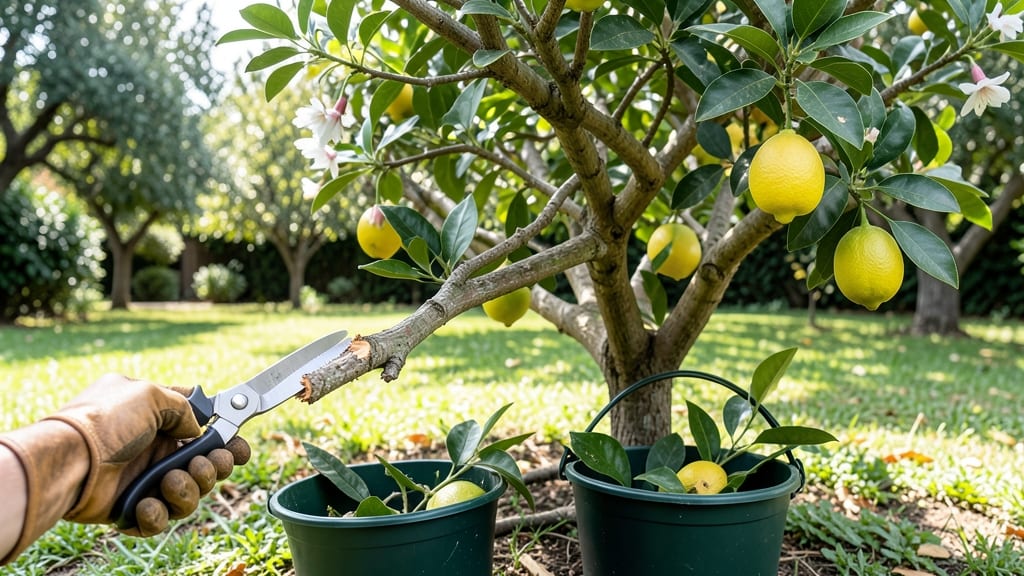
Pruning your Meyer lemon tree transforms it from a scraggly mess to a fruit-bearing powerhouse—and the best time to start is right after harvest. ✂️ I’ve turned my once-overgrown tree into a compact, productive beauty by following a simple year-round schedule that keeps branches healthy and fruit abundant.
The key is cutting back 10-20% of the oldest growth each year, focusing on dead, crossing, or crowded branches. Use clean, sharp pruners to make angled cuts just above a leaf node, and always prune just outside the branch collar to prevent disease.
This isn’t about drastic changes—it’s about guiding the tree’s shape while encouraging new growth where the fruit forms.
📚 In This Guide
- What you need
- Instructions
- Tips and common mistakes
- Wrapping up and next steps
What you need
- ● Bypass pruning shears – Sharp, clean shears (avoid anvil types to prevent crushing stems). Budget pick: Felco F-2 or similar (5-7 inches).
- ● Loppers – For thicker branches (up to 1.5 inches in diameter). Recommended: Corona or Fiskars (long-handled for reach).
- ● Pruning saw – For stubborn, large branches (2+ inches). Specs: Curved blade, 8-10 inches long.
- ● Gloves – Heavy-duty, cut-resistant gloves (e.g., Mechanix or Dr. McGill’s) to protect from thorns and sap.
- ● Disinfectant – 70% isopropyl alcohol or a 10% bleach solution (1 part bleach to 9 parts water) to sterilize tools between cuts.
- ● Rubbing alcohol or hand sanitizer – For cleaning hands after pruning (sap can irritate skin).
- ● Tree wound dressing – Pruning paste (e.g., Tanglefoot Tree Wound Pruning Sealer) to seal large cuts (controversial but useful in humid climates).
- ● Extension pole – For high branches (attach shears/loppers to a 6-10 ft pole).
- ● Bucket or tarp – To collect pruned branches and debris.
- ● Labeling tags – If grafting or propagating cuttings (mark with dates/varieties).
- ● Safety glasses – Protects eyes from sap or debris, especially when sawing.
- ● Know your tree’s age – Young trees (under 3 years) need minimal pruning; mature trees (3+ years) can handle heavier cuts.
- ● Check the weather – Prune on a dry, overcast day (avoid midday heat or rain within 24 hours).
- ● Identify dead/diseased branches – Look for brown, mushy, or oozing stems before you start.
- ○ Review your tree’s growth pattern – Sketch or photograph the canopy to plan cuts (optional but helpful for beginners).
Step-by-step instructions for pruning a Meyer lemon tree
Here's the method I use to keep my Meyer lemon tree thriving—it's all about timing, technique, and a little patience.
✂️ Step 1: Assess the Tree and Gather Tools
Start by examining your Meyer lemon tree for dead, diseased, or crossing branches. I look for branches that rub against each other or grow inward—they compete for sunlight and can damage each other. Grab your sharp pruning shears (cleaned with rubbing alcohol) and a pair of gloves to protect your hands from thorns.
Focus on removing any branches that are brown, brittle, or show signs of pest damage. These won’t produce fruit and can spread disease. I also check for "suckers"—those small, fast-growing shoots that pop up at the base or along the trunk. These sap-sucking growths drain energy from your tree, so they’ve got to go.
🌿 Step 2: Prune for Shape and Airflow in Late Winter
The best time to prune your Meyer lemon tree is in late winter, just as new growth begins but before buds break. This encourages strong, healthy growth for the season ahead. Start by thinning out the canopy to let sunlight and air circulate—aim for an open, vase-like shape with branches spaced 6-12 inches apart.
Cut back any branches that are growing straight up or inward. Make your cuts just above a leaf node or outward-facing bud at a 45-degree angle. Avoid leaving stubs—these can rot and invite pests. If you’re pruning a branch thicker than your shears can handle, use a pruning saw instead. I like to step back every few cuts to visualize the tree’s shape—it’s easier to see what needs adjusting from a distance.
☀️ Step 3: Lighten the Canopy in Early Summer
Once your tree is established and bearing fruit, focus on light pruning in early summer to prevent overcrowding. Remove any branches that are shading the center of the tree—this encourages fruit production on the outer branches where sunlight hits directly. I also trim back any overly vigorous growth that’s outpacing the rest of the tree.
Watch for water sprouts—those fast-growing, vertical shoots that pop up after pruning. These are energy vampires, so snip them off as soon as you spot them. If you see any fruit that’s overcrowded or growing in awkward spots, thin it out now. This ensures the remaining fruit gets enough nutrients and sunlight to grow big and sweet. Remember, less is more—you don’t want to strip the tree bare, just encourage balance.
⏰ Step 4: Clean Up and Monitor Year-Round
After each pruning session, clean up all the clippings and dispose of them properly. Don’t compost diseased branches—burn or trash them to prevent spreading pathogens. Wipe down your tools with rubbing alcohol to keep them sterile for next time. I also like to inspect the tree’s trunk and major branches for any signs of pests or disease, like holes, oozing sap, or unusual spots.
Throughout the year, keep an eye out for any new growth that needs trimming. If a branch starts to look leggy or sparse, give it a light prune to encourage bushier growth. And if your tree is in a container, prune the roots too—every 2-3 years, trim back the roots by about one-third when repotting. This keeps the tree from becoming root-bound and encourages new growth above ground.
Tips & tricks for pruning a Meyer lemon tree
Here's what nobody tells you about pruning that makes all the difference between a struggling tree and a fruit-loaded beauty.
Timing Secret: Late winter is your golden window because the tree is dormant but about to wake up. If you prune too early, you risk damaging new buds that haven't formed yet. I've learned this the hard way—pruning in early winter can shock the tree when it's still in deep dormancy. The "just as new growth begins" cue is your best guide, not the calendar date.
Cutting Technique: That 45-degree angle isn't just for looks—it helps water run off the cut and prevents it from pooling where it can rot. I always make my cuts just above a leaf node or outward-facing bud, which gives the tree a clear direction for new growth. And here's a pro move: After each cut, step back and look at the tree from all sides. You'll spot imbalances you missed up close.
Seasonal Strategy: Your early summer light pruning should focus on two things: sunlight access and fruit quality. I remove branches shading the center because those are the branches that never get enough light to produce fruit. And when thinning fruit, I always leave the largest, healthiest ones—it's better to have fewer perfect lemons than a bunch of small, underdeveloped ones.
Tool Maintenance: Your pruning shears are like your tree's first line of defense. I clean mine with rubbing alcohol after every use and sharpen them annually. Dull blades tear instead of cut cleanly, which can damage the tree and make it more susceptible to disease. I also keep a small container of rubbing alcohol handy for quick clean-ups between cuts—it only takes a few seconds and prevents cross-contamination between branches.
Pro Tips for Prune A Meyer Lemon Tree
- Here's what nobody tells you about pruning that makes all the difference between a struggling tree and a fruit-loaded beauty.
- Timing Secret: Late winter is your golden window because the tree is dormant but about to wake up.
- Cutting Technique: That 45-degree angle isn't just for looks—it helps water run off the cut and prevents it from pooling where it can rot.
Frequently asked questions
Got questions about pruning your Meyer lemon tree?
Here are answers to the most common concerns—whether you're a first-timer or a seasoned citrus gardener.
When is the best time to prune a Meyer lemon tree?
Prune your Meyer lemon tree in late winter or early spring (just before new growth starts) for best results. Avoid heavy pruning in summer or fall, as it can stress the tree and reduce fruit production. Light shaping can be done year-round, but major cuts should wait for dormancy.
Can I prune a Meyer lemon tree too much?
Yes! Over-pruning can weaken the tree, reduce fruit yield, and even kill it. Stick to no more than 25-30% of the canopy per year. Focus on removing dead, diseased, or crossing branches first, then shape gently. If you’ve already over-pruned, don’t panic—just reduce future cuts and fertilize well to encourage recovery.
Will pruning my Meyer lemon tree reduce fruit production?
Not if done correctly! Pruning actually boosts fruit quality and quantity by improving airflow and sunlight penetration. However, avoid heavy pruning during blooming or fruiting seasons, as it can stress the tree. Light pruning (removing only dead/diseased wood) is safe year-round and promotes healthier growth.
How do I prune a Meyer lemon tree indoors?
Indoor Meyer lemon trees need the same pruning principles as outdoor ones, but with extra caution. Use sterilized tools to avoid disease, and prune near a window or grow light to encourage new growth. Avoid overcrowding—aim for an open canopy to prevent pests. If your tree is root-bound, repot it before pruning to reduce stress.
What should I do if my Meyer lemon tree bleeds sap after pruning?
Sap bleeding (or "weeping") is normal for citrus trees and won’t harm them. It’s the tree’s way of healing. To minimize it, prune on a cloudy day or after rain and avoid cutting into large branches. If bleeding is excessive, seal cuts with pruning sealant (optional) and monitor for signs of disease or pests.
Wrapping up and next steps
Pruning your Meyer lemon tree isn’t just about keeping it tidy—it’s the secret to bigger harvests, stronger growth, and a happier plant! 🌿 With the right tools, timing, and techniques, you’ll transform your tree into a thriving fruit powerhouse.
Now that you’re equipped with the know-how, roll up your sleeves and get pruning! 💪
Ready for the next step? Monitor your tree’s progress after pruning—adjust future cuts based on its response. Soon, you’ll be enjoying juicy, sweet lemons and bragging rights for a stunning backyard centerpiece! 🍋✨