
Pruning
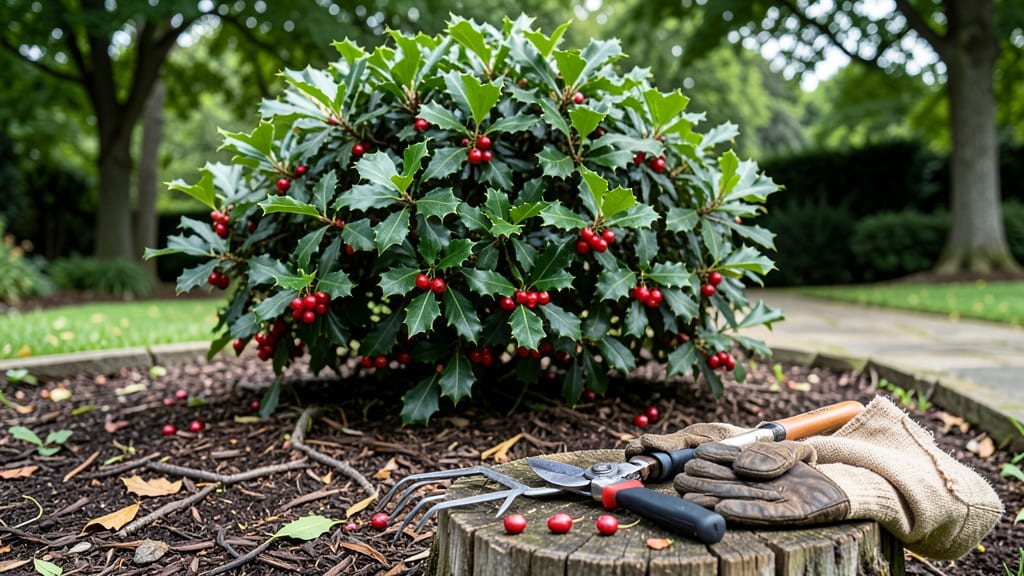
Pruning holly shrubs feels like sculpting a living masterpiece—just don’t let the thorns scare you off. ✂️ The key is timing (late winter or early spring) and precision cuts that keep your shrub dense, healthy, and free of tangled branches.
I’ve turned my holly from a wild, scraggly mess into a neatly shaped focal point with just three focused steps—and I’ll show you how to do it without losing those prized red berries.
You’ll need sharp pruning shears, a ladder (for taller shrubs), and a clear vision of your desired shape—whether that’s a formal hedge or a loose, natural silhouette. Start by removing dead or crossing branches first; holly hates competition for sunlight and space.
The goal is to open up the center for airflow while keeping the outer edges full and lush. Most holly shrubs handle a 25-30% prune without stress, so don’t go overboard.
By the time you’re done, your holly will look like it was designed by a pro—thicker foliage, fewer thorns in the way, and berries that pop against the green like holiday ornaments. The best part?
You’ll see fresh growth within weeks, and the shrub will reward you with years of effortless shape if you keep up the routine. Just avoid pruning in fall (it stresses the plant before winter) and never cut into old wood (it won’t regrow).
This method works for both English holly (with smooth leaves) and American holly (with spiky ones), so whether you’ve got a classic landscape shrub or a berry-producing variety, the same rules apply. Grab your tools—you’ve got this!
📚 In This Guide
- What you need
- Instructions
- Tips and common mistakes
- Wrapping up and next steps
What you need
- ● Pruning shears (bypass or anvil type) – Choose sharp, clean shears (4-6" blades) for clean cuts. Bypass shears are ideal for live branches.
- ● Loppers (for thicker branches, 1-2" diameter) – Look for long-handled loppers (18-24") for reach and leverage.
- ● Hand pruners (for small branches, – Keep a pair handy for precision trimming.
- ● Garden gloves (thick, cut-resistant) – Holly thorns are no joke—opt for leather or reinforced gloves (gardening grade, 12-14" cuffs).
- ● Safety glasses – Protect your eyes from flying debris, especially when dropping branches.
- ● Disinfectant (70% isopropyl alcohol or rubbing alcohol) – Wipe tools between cuts to prevent disease spread.
- ● Rag or paper towels – For cleaning tools and wiping sap.
- ● Trash bags or bucket – Collect pruned branches for disposal or composting.
- ● Ladder (if needed) – A stable, 4-6ft step ladder for taller holly shrubs (secure it to a sturdy surface!).
- ○ Optional: Pole pruner (for very tall shrubs) – Extends reach up to 10-12ft without a ladder.
Step-by-step instructions for pruning a holly shrub
Here's the straightforward method I use every year—no special tools, just clear cuts for a tidy, thorn-friendly shape.
✂️ Step 1: Remove Dead or Damaged Branches First
Start by scanning the shrub for any branches that are brown, brittle, or clearly dead. Holly shrubs are tough, but dead wood won't regrow and can spread disease. Use clean, sharp pruners to make your cuts—dull blades tear stems and leave jagged edges that heal poorly.
Cut back to the nearest healthy growth point, which is usually a small bump or leaf node. Avoid leaving stubs, as they can rot. If a branch is too thick for your pruners, use a small handsaw instead. You'll know you're on the right track when you see fresh green tissue just below the cut.
✂️ Step 2: Shape the Shrub for Balance and Airflow
Step back and look at the holly's overall shape. Holly shrubs naturally grow dense, but they need occasional thinning to prevent overcrowding. Focus on removing branches that cross or rub against each other—they create wounds that attract pests. I like to aim for a slightly rounded top with an open center, which lets light and air reach all parts of the plant.
For each cut, make it just outside the branch collar (the swollen area where the branch meets the trunk). This ensures the wound heals faster. If you're pruning to encourage fullness, cut back to a side branch that grows outward. Avoid cutting into old wood—holly shrubs rarely regrow from mature stems, so prioritize younger growth.
✂️ Step 3: Lighten the Top and Encourage New Growth
Holly shrubs often grow leggy or top-heavy, so the final step is to lighten the top by removing about one-third of the oldest branches from the center. This opens up the shrub and encourages new growth lower down. Start at the top and work your way down, cutting branches that are no longer producing berries or leaves.
If your holly is female and you want more berries, avoid heavy pruning in late summer or fall—this is when flowers form for next year's fruit. Instead, do most of your shaping in late winter or early spring, just as new growth begins. You'll see fresh, vibrant leaves within a few weeks, signaling the shrub is recovering well.
Tips & tricks for pruning a holly shrub
Here's what I've learned after years of pruning holly shrubs—these tricks make the process cleaner, healthier, and way less frustrating.
The Pruner Factor: Never skip sterilizing your pruners with rubbing alcohol or a bleach solution before you start. Holly shrubs are prone to fungal diseases, and infected tools can spread problems from one plant to another. I also keep a small spray bottle of disinfectant handy to clean blades between cuts on different branches.
Timing Secret: Late winter or early spring is the absolute best time to prune holly, right when new growth begins. This timing lets you shape the shrub while it's still dormant but ready to burst with energy. Avoid pruning in late summer or fall if you're growing female hollies—the flowers for next year's berries form during this period, and heavy pruning can reduce fruit production.
Visual Cue for Healthy Cuts: When cutting back to a healthy growth point in Step 1, look for a small bump or leaf node where new shoots will emerge. The fresh green tissue just below your cut is your target—it's a clear sign you're cutting in the right place. If you see only brown or woody tissue, you've gone too far and may have cut into old wood that won't regrow.
Tool Upgrade: For thick branches that your pruners can't handle, a small handsaw is your best friend. I've tried loppers, but they often leave uneven cuts that heal poorly. When using a handsaw, make smooth, controlled strokes—don't force it. Holly wood is tough, and jagged cuts can create entry points for pests and diseases.
Pro Tips for Prune A Holly Shrub
- Here's what I've learned after years of pruning holly shrubs—these tricks make the process cleaner, healthier, and way less frustrating.
- The Pruner Factor: Never skip sterilizing your pruners with rubbing alcohol or a bleach solution before you start.
- Timing Secret: Late winter or early spring is the absolute best time to prune holly, right when new growth begins.
Frequently asked questions
Got questions about pruning your holly shrub?
You’re not alone! Here are some of the most common concerns—and straightforward answers—to help you prune with confidence.
When is the best time to prune a holly shrub?
Prune your holly after flowering (late spring to early summer) to avoid cutting off next year’s berries. For shaping or light maintenance, late winter or early spring is also fine—just avoid heavy pruning in fall, as it can stress the plant before winter.
Can I prune a holly shrub in winter?
Yes, but only if necessary (e.g., removing dead or damaged branches). Heavy pruning in winter can expose the plant to cold stress. If you must prune, do so on a mild day and avoid cutting into old wood, as holly struggles to regrow from it.
Will pruning my holly reduce berry production?
Not if done correctly! Prune only after berries form (post-flowering) to preserve next year’s fruit. Avoid cutting back more than 1/3 of the shrub at a time, and focus on removing old, overcrowded, or leggy branches to encourage new growth and berries.
What if I cut into old wood—will my holly die?
Holly is semi-evergreen, so it won’t die from cutting old wood, but it won’t regrow from those spots. Prune just above a leaf bud on younger stems for best results. If you accidentally cut into old wood, don’t stress—just focus on shaping the healthier branches.
How do I prune a holly shrub to keep it bushy?
For a fuller look, prune selectively:
- Cut back 1/3 of the oldest stems to the ground to encourage new growth.
- Trim overlapping or crossing branches to improve airflow.
- Avoid "topping" (cutting the top flat)—this creates weak, sparse growth.
Light pruning annually keeps holly dense and healthy!
Wrapping up and next steps
Pruning your holly shrub doesn’t have to be intimidating—with the right tools, timing, and technique, you’ll keep it healthy, lush, and beautifully shaped year after year! Remember to trim in late winter or early spring, remove dead or crossing branches, and shape gradually to avoid stressing the plant.
Your efforts will reward you with vibrant foliage and stunning berries for seasons to come.
Now that you’re ready to prune like a pro, grab your shears and give your holly the TLC it deserves! 🌿 For even more gardening tips, check out our guide on maintaining other evergreens—happy pruning!