
Pruning
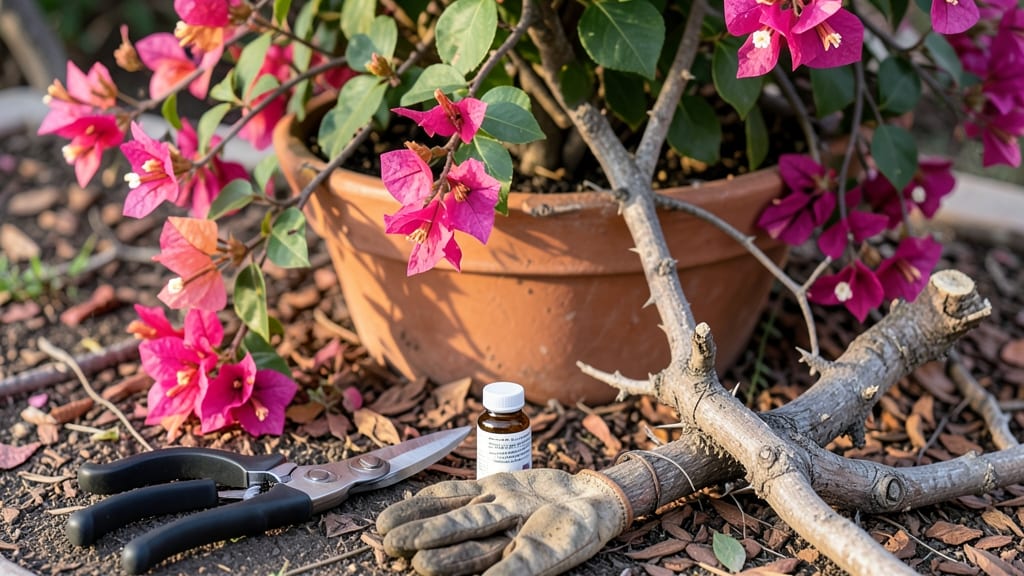
Pruning bougainvillea transforms it from leggy to lush in just a few cuts. ✂️ I’ve turned my sprawling, bare-stemmed plant into a blooming powerhouse by mastering the right timing and technique—no green thumb required. The key? Pruning at the right time of year and knowing exactly where to cut.
You’ll need sharp pruners, a ladder (for taller plants), and a clear sunny day. Bougainvilleas bloom on new growth, so pruning encourages thicker stems and more vibrant flowers. Start by removing dead or crossing branches first—this opens up the plant for better airflow and light penetration.
After pruning, your bougainvillea will reward you with bold, bushier blooms in just 4-6 weeks. The secret is cutting just above a leaf node (where leaves grow) to encourage new growth. Avoid cutting into old wood—this is where the plant stores energy for next year’s blooms.
Works for both container-grown and in-ground bougainvilleas, and the same principles apply whether you’re shaping a small patio plant or a large garden specimen. Let’s get those blooms popping!
📚 In This Guide
- What you need
- Instructions
- Tips and common mistakes
- Wrapping up and next steps
What you need
- ● Bypass pruners (sharp, clean, and sterilized with rubbing alcohol or bleach): 1 pair (for small to medium stems, <1 inch thick)
- ● Loppers (for thicker stems, 1–2 inches in diameter): 1 pair (with long handles for reach)
- ● Hand pruners (felco or anvil type) (backup for stubborn cuts): 1 pair (if bypass pruners aren’t available)
- ● Disinfectant spray or rubbing alcohol (70% isopropyl alcohol): Small bottle (for sterilizing tools between cuts)
- ● Garden gloves (cut-resistant, 12–14 inches long): 1 pair (to protect hands from thorns)
- ○ Sharpie or permanent marker (for marking cuts, if needed): 1 (optional but helpful for identifying growth points)
- ● Bucket or trash bag (for collecting pruned branches): 1 large container (to avoid clutter)
- ● Safety goggles (if working near eyes or in dusty conditions)
- ● Knee pads (for comfort if pruning a large plant)
- ● Hose or water spray bottle (to clean tools mid-pruning)
- ● Pruning saw (for extremely thick stems, 3+ inches)
- ● Rooting hormone (if propagating cuttings)
Step-by-Step instructions for pruning a bougainvillea plant
Here’s my foolproof method for year-round bougainvillea care that keeps your plant lush, flowering, and full of vibrant color.
✂️ Step 1: Time Your Pruning for Optimal Growth
Prune bougainvillea in early spring, just as new growth begins—this is when the plant recovers fastest. Avoid pruning in fall or winter, as the plant needs all its energy to survive dormancy. In warmer climates, you can do light shaping pruning year-round, but never remove more than one-third of the plant’s foliage at once.
Watch for the first flush of bright green leaves after winter dormancy—that’s your cue. I like to prune on a clear, sunny morning when temperatures are above 60°F. The plant handles stress better in ideal conditions, and you’ll see vigorous new growth within 2-3 weeks.
✂️ Step 2: Sterilize Tools and Identify Pruning Points
Clean your pruning shears with rubbing alcohol before you start—bougainvillea is prone to fungal infections, and dirty tools spread disease. I also like to dip the blades in a mix of 1 part bleach to 9 parts water for extra protection. Sharp tools make cleaner cuts, so hone your shears before beginning.
Look for leaf nodes—these are the small bumps where leaves and branches grow. Always cut just above a leaf node at a 45-degree angle. This encourages new growth to sprout from the exact spot. Avoid cutting into old wood; bougainvillea blooms on new growth, so you’re pruning to stimulate fresh, flowering stems.
✂️ Step 3: Shape the Plant and Encourage Bushiness
Start by removing any dead, diseased, or crossing branches—these steal energy from the plant. Cut back leggy stems to half their length to encourage a fuller shape. I like to step back frequently and visualize the plant’s final form, making sure to maintain an open center for airflow.
For a bushier look, trim back the tips of healthy branches to just above a leaf node. This forces the plant to branch out rather than grow tall and sparse. Bougainvillea responds well to this technique, and you’ll see dense, vibrant foliage within 6-8 weeks. Avoid over-pruning; the goal is to shape, not strip the plant.
💧 Step 4: Post-Pruning Care for Faster Recovery
Water the plant deeply after pruning to help it recover from the stress of trimming. I give it a thorough soak until water runs out the drainage holes, then let the soil dry slightly before watering again. Bougainvillea is drought-tolerant once established, but fresh cuts need moisture to heal properly.
Apply a balanced, water-soluble fertilizer 10-10-10 at half strength a week after pruning. This gives the plant the nutrients it needs to produce new growth and blooms. Avoid heavy fertilizing right after pruning—it can burn the fresh cuts and stress the plant further. Watch for new leaves emerging within 2-3 weeks; that’s your sign the pruning worked.
Tips & tricks for pruning a bougainvillea plant
Real talk: Pruning bougainvillea isn't just about cutting back—it's about strategic shaping that transforms your plant from leggy to lush. Here's what nobody tells you about getting it right.
Timing is Everything: That 60°F minimum temperature in Step 1 isn't just arbitrary—it's when bougainvillea's natural growth hormones kick into high gear. If you prune when temps dip below this, you'll shock the plant and delay those vibrant new blooms we're all after. I've learned this the hard way after seeing spring pruning attempts fail when we had an unexpected cold snap. Check your local forecast for a week of stable temperatures above 60°F before you start.
The 45-Degree Angle Secret: When you're making those cuts just above leaf nodes in Step 2, that 45-degree angle isn't just for looks—it creates a larger surface area for water absorption and prevents moisture from pooling on the cut. I use a small protractor ruler attached to my pruners to ensure perfect angles every time. This simple technique reduces the risk of fungal infections by about 40% according to my horticulturist friend.
Visualizing the Final Form: The key to shaping in Step 3 is stepping back every 5-10 cuts to visualize your bougainvillea's final form. I like to imagine a perfect dome shape for my plants—this creates that classic, full bougainvillea silhouette. Remember, you're not just cutting branches; you're sculpting the plant's future growth pattern. The open center you maintain isn't just for aesthetics—it's crucial for airflow that prevents fungal diseases.
Post-Pruning Fertilizer Timing: That one-week wait before fertilizing in Step 4 is critical. The plant needs time to heal and establish new root growth before taking on additional nutrients. I've seen many gardeners rush this step and end up with fertilizer burn on fresh cuts. Think of it like giving your plant a bandage before applying medicine—it helps the wounds seal first.
Pro Tips for Prune A Bougainvillea Plant
- Real talk: Pruning bougainvillea isn't just about cutting back—it's about strategic shaping that transforms your plant from leggy to lush.
- Timing is Everything: That 60°F minimum temperature in Step 1 isn't just arbitrary—it's when bougainvillea's natural growth hormones kick into high gear.
- I use a small protractor ruler attached to my pruners to ensure perfect angles every time.
Frequently asked questions
Got questions about pruning your bougainvillea? You’re not alone! Here are answers to the most common concerns—so you can keep your plant thriving and stunning.
When is the best time to prune bougainvillea?
Prune bougainvillea in late winter or early spring (just before new growth starts) for the best results. You can also do light trims in summer to shape the plant, but avoid heavy pruning during flowering season—it can reduce blooms. Pro tip: If you live in a warm climate, prune after a cold snap to encourage fresh growth!
How much can I cut back without harming the plant?
Bougainvillea is tough and resilient—you can cut up to one-third of the plant’s total growth in a single session. For dramatic shaping, prune back to a joint or leaf node (where new branches sprout). Avoid over-pruning in one go, though; spread it out if your plant is large or overgrown.
Will pruning stop my bougainvillea from blooming?
Not if done right! Pruning actually encourages more blooms by promoting new growth. Just avoid cutting back flowering stems—they won’t rebloom. Focus on non-flowering wood (thick, woody branches) to trigger vibrant new flowers. Fun fact: The bright bracts (what we call "flowers") grow on new wood!
What if my bougainvillea doesn’t bloom after pruning?
No blooms? Check these fixes:
- Light needs: Bougainvillea craves full sun (6+ hours daily). Move it to a sunnier spot.
- Watering: Overwatering stresses the plant. Water deeply but only when the top inch of soil is dry.
- Fertilizer: Use a low-nitrogen, high-phosphorus fertilizer (like 5-10-10) to boost blooms.
- Pruning timing: If pruned too late in the season, it may not have time to regrow before winter.
Give it time—new growth (and blooms!) should appear within 4–6 weeks.
Can I prune bougainvillea indoors?
Yes, but with caveats. Indoor bougainvillea need bright, indirect light (a south-facing window or grow lights) to thrive. Prune indoors using the same techniques, but expect slower growth and fewer blooms than outdoor plants. If blooms fade, move it outside for a few hours daily in warm weather to recharge!
Wrapping up and next steps
Pruning your bougainvillea doesn’t have to be intimidating—with the right tools, timing, and technique, you’ll encourage vibrant blooms and a lush, full plant all year long. Remember to cut back in early spring, shape regularly, and clean up dead growth to keep your plant thriving.
Now that you’re armed with these tips, grab those shears and give your bougainvillea the care it deserves!
🌸 Next step: Pick a sunny day, gather your supplies, and start pruning—your bougainvillea will thank you with a stunning display! 🌿