
How To
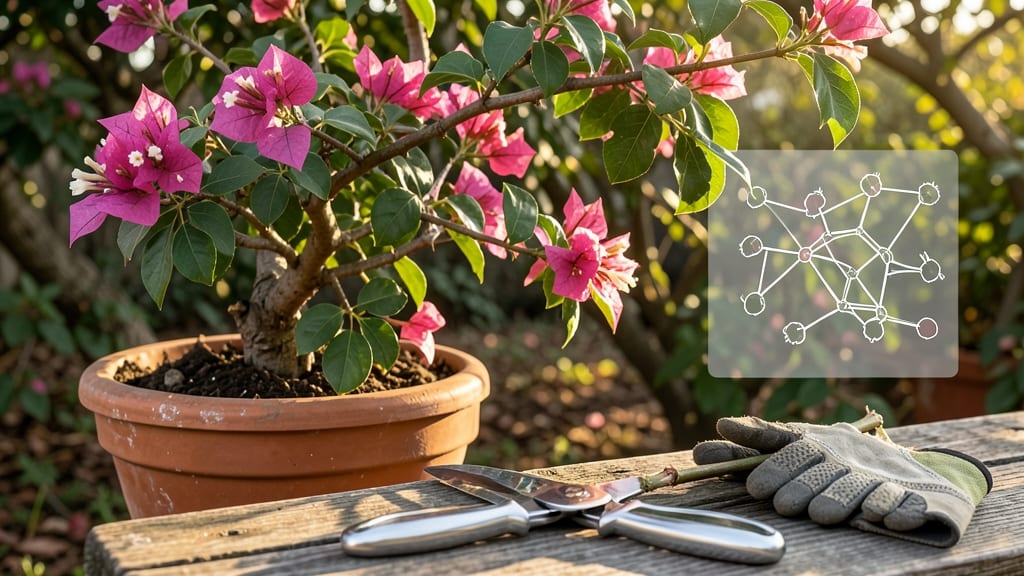
You can prune a bougainvillea 🌸 back to a healthy node—the little bump where leaves or branches grow—without harming its roots, as long as you don’t cut more than one-third of the plant’s total growth at once.
Pruning your bougainvillea too aggressively can stunt its growth—or worse, damage its roots—but knowing the right limits ensures a bushier, healthier plant without sacrificing its vibrant blooms.
Most gardeners hesitate to trim back their bougainvillea because they fear overdoing it. The truth? This hardy shrub can handle bold cuts in the right season, and with the right technique, you’ll end up with more flowers and a fuller shape.
In this guide, I’ll show you exactly how far back to prune—including how to spot the perfect cutting points, when to do it for best results, and the tools you’ll need to avoid common mistakes that leave your bougainvillea looking sad instead of spectacular.
Safe pruning limits for bougainvillea: how far back you can cut without harming roots
Pruning your bougainvillea is essential for shaping its growth and encouraging vibrant blooms, but cutting too far back can stress the roots and stunt the plant. The key is understanding the 25-33% rule—never remove more than one-third of the plant’s total foliage in a single session.
This guideline protects the root system while stimulating new, bushier growth.
Bougainvillea thrives on selective pruning, focusing on removing only the oldest, leggiest stems and dead branches. The plant’s roots are delicate, especially in well-draining soil, so aggressive cuts can disrupt the balance between above-ground growth and below-ground support. Always prioritize healthy growth nodes when trimming.
Seasonal timing plays a critical role in safe pruning. In spring, you can prune up to 25% of the plant to encourage new shoots before the flowering season.
In fall, limit cuts to 10-15% to avoid overstressing the plant as it prepares for dormancy. Winter pruning is generally not recommended unless removing dead or diseased branches.
Branch thickness also dictates how far back you can cut. For thin stems (pencil-sized or smaller), you can trim back to a leaf node or bud without risking root damage.
For thicker branches (finger-sized or larger), limit cuts to one-third of the branch length to maintain structural integrity and avoid overwhelming the root system.
Here’s a quick comparison of safe pruning limits based on plant health and season:
| Scenario | Max Prune Percentage | Branch Thickness Limit | Best Time to Prune |
|---|---|---|---|
| Healthy, established plant | 25-33% | Up to 1/3 of branch length | Spring or early summer |
| Overgrown but healthy | 20-25% | Thin stems only (pencil-sized) | Late spring |
| Young or newly planted | 10-15% | Minimal trimming (leaf nodes only) | Early spring |
| Preparing for winter dormancy | 5-10% | Remove only dead/diseased branches | Fall (before first frost) |
When pruning, always use clean, sharp pruners to make precise cuts at a 45-degree angle just above a leaf node or bud. This encourages new growth while minimizing stress on the plant. Avoid cutting into woody stems, as they won’t regenerate new shoots, leaving your bougainvillea with unsightly gaps.
If you’re unsure about how far to cut, start conservatively with 10-15% of the plant and monitor its response. Signs of over-pruning include yellowing leaves, stunted growth, or a lack of new blooms. In such cases, reduce watering slightly and focus on root care with well-draining soil and balanced fertilization.
Bougainvillea is remarkably resilient, but its roots are the foundation of its health. By adhering to the 25-33% rule and considering seasonal and branch-specific limits, you’ll maintain a thriving, blooming plant year after year. Always prioritize quality over quantity when pruning—less aggressive cuts yield better long-term results.
For container-grown bougainvillea, be even more cautious with pruning limits, as roots have less space to recover. Stick to 10-15% pruning and ensure the pot has adequate drainage to prevent root rot.
With the right approach, your bougainvillea will reward you with lush foliage and stunning flowers for seasons to come. 🌸
Step-by-step pruning guide: when and how to trim bougainvillea for maximum blooms
Pruning your bougainvillea at the right time and with the right technique can transform it from a wild, sprawling vine into a dense, flowering powerhouse. But timing is everything—prune too early or too late, and you risk damaging the plant’s root system or sacrificing next year’s blooms.
The key is to trim when the plant is actively growing, which for bougainvillea is typically in early spring or late fall, depending on your climate.
Before you grab your pruning shears, remember that bougainvillea blooms on new wood, meaning the vibrant papery bracts (the colorful parts we see) form on fresh growth. Cutting back too aggressively removes next year’s potential blooms.
Aim to prune 25-33% of the plant’s total volume per session to avoid stressing the roots while still encouraging dense foliage and flowers. For established plants, this means removing 1/3 of the oldest stems to make room for younger, more productive branches.
Step-by-Step Pruning Process
- 1 Choose the right time: Prune in early spring (before new growth starts) or late fall (after flowering). Avoid pruning in winter or during active bloom periods.
- 2 Gather your tools: Use sterilized pruning shears for clean cuts, gloves (bougainvillea thorns are sharp!), and disinfectant to prevent disease spread. Avoid dull tools that tear stems.
- 3 Identify the cut points: Look for leaf nodes (the bumps where leaves or branches grow). Cut just above a node, angled at 45 degrees, to encourage new growth. Avoid cutting flush with the stem.
- 4 Limit cuts to 1/3 of the plant: Never remove more than 33% of the plant’s volume in one session. For thick stems (>1 inch), make two cuts: one 1/3 from the base and another 1/3 from the tip to avoid tearing.
- 5 Remove dead or weak growth: Trim dead wood, crossing branches, and stems growing inward. These compete for nutrients and reduce airflow, increasing disease risk.
- 6 Clean up and fertilize: Dispose of pruned material away from the plant. Apply a balanced fertilizer (7-9-5 NPK) to support new growth. Water deeply afterward to reduce stress.
When pruning, always prioritize healthy, outward-facing branches to create an open structure that allows sunlight to penetrate the center. Bougainvillea thrives on direct sunlight, so avoid overcrowding the interior.
If your plant is potted, prune more aggressively to control its size, but never cut more than 25% of the foliage in a single session to prevent root shock.
After pruning, monitor your bougainvillea closely. New growth should appear within 2-4 weeks if conditions (sunlight, water, and soil) are ideal. If you notice yellowing leaves or stunted growth, you may have pruned too aggressively.
In this case, reduce watering slightly and apply a root stimulator to help recovery. With the right approach, your bougainvillea will reward you with vibrant blooms all season long.
Pro tip: Take before-and-after photos of your pruning sessions. Over time, you’ll notice how strategic cuts encourage denser foliage and more abundant flowers, making your bougainvillea the star of your garden. Just remember—patience is key! Bougainvillea responds best to gradual pruning over time rather than drastic cuts.