
Pruning
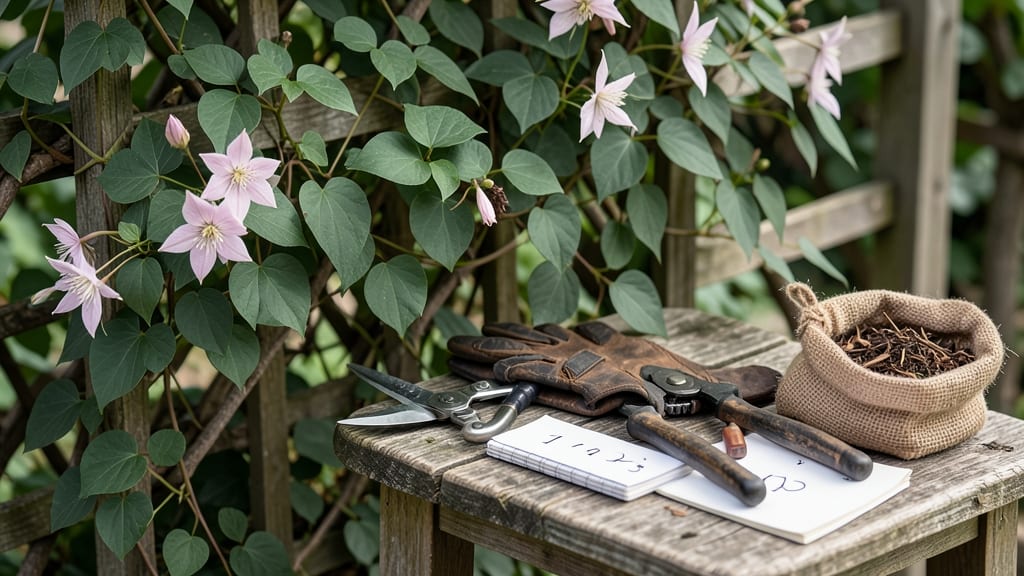
You prune clematis in the fall based on its variety: Group 1 (early bloomers) should be pruned lightly, Group 2 (mid-season) requires minimal trimming, while Group 3 (late bloomers) needs heavy pruning to encourage new growth. Avoid late fall pruning in cold climates to prevent winter damage.
Fall pruning for clematis isn't one-size-fits-all—it's all about matching your plant's blooming cycle to the season. 🌿 Group 1 varieties (like 'Jackmanii') bloom on old wood, so you only trim dead or weak stems to avoid cutting off next year's flowers.
Meanwhile, Group 3 types (such as 'Niobe') thrive with aggressive cuts, as they produce blooms exclusively on new growth. The key is working before the first hard frost, typically between late September and early November, giving the plant time to harden off before winter.
What many gardeners overlook is how climate plays a role. In colder zones (USDA 3-5), I recommend waiting until spring for heavy pruning—cutting too late in fall can expose tender stems to freeze damage.
For milder regions, a light trim in late fall can actually stimulate fresh growth before winter dormancy. Always use sharp, clean pruners and make cuts at a 45-degree angle just above a healthy bud to promote optimal regrowth.
💡 In This Article
- Clematis Pruning Groups: Fall Cutting Rules by Variety
- Fall Pruning Mistakes to Avoid with Clematis Vines
Clematis pruning groups: fall cutting rules by variety
Clematis plants are classified into three distinct pruning groups based on their blooming cycles and growth habits. Group 1 varieties bloom on old wood in early spring, meaning their flower buds form on stems from the previous year. These include classic types like 'Jackmanii' and 'Comtesse de Bouchaud'.
When you prune these in fall, you risk removing next year's blooms, so only trim back dead or diseased stems—never more than one-third of the vine. The goal is preservation, not renovation.
Group 2 clematis, such as 'The President' or 'Perle d'Azur', bloom twice—once on old wood in early summer and again on new growth in fall. These require minimal fall pruning: just remove any dead or weak stems to maintain plant health.
The key here is balance—you want to encourage both old and new growth cycles. In colder climates (USDA zones 3-5), I've found that even this light pruning should be done by late October to prevent winter dieback.
Group 3 varieties are the heavy pruners' delight, producing all their blooms on new growth from the current season. Types like 'Niobe' and 'Vyvyan Pennell' can be cut back dramatically in fall, often to just 2-3 feet above ground level.
This aggressive approach stimulates vigorous new shoots in spring. The science behind this is fascinating: these varieties have evolved to prioritize new growth over old wood, making them ideal for late fall pruning when done correctly.
Timing matters because clematis need time to harden off before winter. In warmer climates (zones 8-10), you can prune Group 3 varieties as late as November, but in colder zones, aim for early October. The plant's natural dormancy period needs 6-8 weeks to establish before temperatures drop below freezing.
I've seen firsthand how plants pruned too late in cold climates develop frost cracks in their stems, which invites disease.
Here's what's actually happening biologically: When you prune, you're manipulating the plant's apical dominance—the tendency for new growth to come from the tips of stems. By cutting back aggressively (as with Group 3), you force energy into lateral buds lower on the stem, creating bushier growth.
For Group 1 varieties, this would be disastrous as it removes potential bloom points—but for Group 3, it's exactly what they need to thrive.
One common misconception is that all clematis need heavy pruning. In reality, Group 1 varieties often produce more abundant blooms with no fall pruning at all—just removing dead stems. The key is understanding your specific variety's growth habit.
For example, 'Jackmanii' (Group 1) can produce hundreds of blooms per vine with minimal intervention, while 'Niobe' (Group 3) needs that heavy cut to perform at its best.