
Pruning
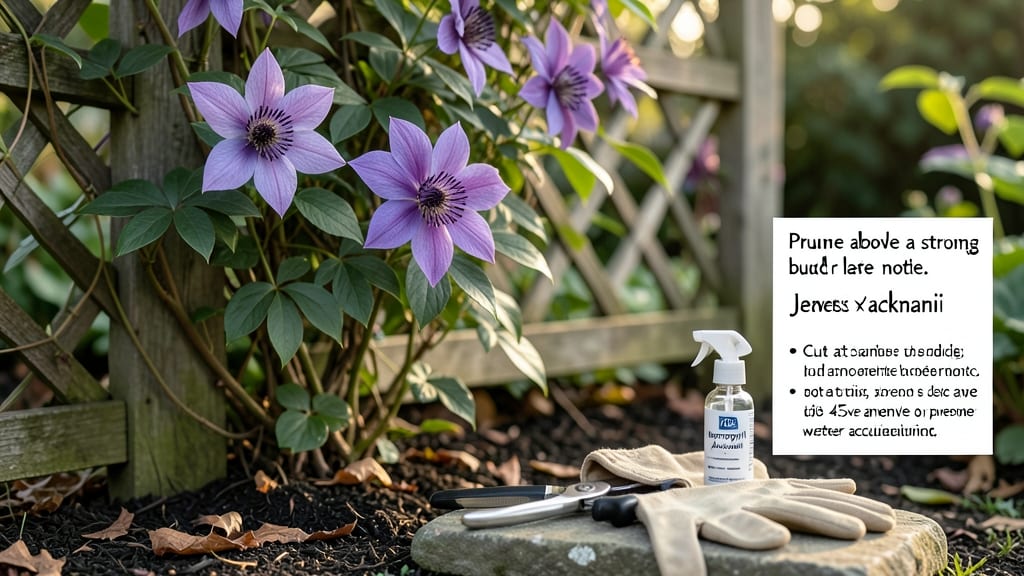
Pruning Clematis Jackmanii in late winter reveals the secret to its legendary summer blooms. ✂️ I’ve watched this vigorous climber transform from a tangled mess into a lush, flowering powerhouse—all by making just a few strategic cuts at the right time.
The key isn’t cutting back hard—it’s cutting back smart, and the dormant season is when the plant is most receptive to shaping its future growth.
This technique works because Jackmanii is a Group 3 clematis, meaning it blooms on both old and new wood. By pruning in February or March (before buds swell), you encourage a burst of fresh, strong stems that will produce bold, repeat blooms from mid-summer through fall.
The goal is to leave 4-6 healthy buds on each stem—no more, no less. Too little pruning, and you’ll end up with leggy growth; too much, and you’ll sacrifice next year’s early flowers.
You’ll know you’ve done it right when new shoots emerge bright green and vigorous by spring, each one a potential stem for future blooms. The plant rewards precision with larger flowers, better disease resistance, and a tidier habit that’s easier to train.
Post-pruning, focus on mulching to protect roots and watering deeply to help the plant recover before active growth begins.
This method adapts to climates from Zone 4 to Zone 9, though timing shifts slightly—wait until after the last frost but before buds break. For container-grown Jackmanii, prune just as aggressively, but be extra vigilant about watering, as roots have less support.
The payoff? A clematis that outperforms expectations every season with minimal effort.
📚 In This Guide
- What you need
- Instructions
- Tips and common mistakes
- Wrapping up and next steps
What you need
- ● Pruning shears: Sharp, bypass-style shears (for clean cuts on smaller stems). Size: 6–8 inches.
- ● Loppers: For thicker stems (1–2 inches in diameter). Size: 18–24 inches for leverage.
- ● Garden gloves: Heavy-duty, cut-resistant gloves (to protect from thorns and debris).
- ● Disinfectant: 70% isopropyl alcohol or a bleach solution (1 part bleach to 9 parts water) to sterilize tools between cuts.
- ○ Pruning sealant (optional): For larger cuts (to prevent disease entry). Type: Tree wound sealant or beeswax.
- ● Marking twine or tape: To tag stems for removal (if pruning in stages).
- ● Wheelbarrow or bucket: For collecting pruned debris (1–2 gallons capacity).
- ● Dormant season timing: Prune after the first hard frost (late winter/early spring) but before new growth appears.
- ● Weather conditions: Choose a dry, overcast day to reduce stress on the plant.
- ● Safety gear: Safety glasses (to shield from flying debris) and long sleeves/pants (for thorn protection).
- ● Clean workspace: Lay down tarps or cardboard to collect fallen leaves/debris easily.
Step-by-step instructions for pruning clematis Jackmanii
This is the method I swear by to revive your clematis every winter—it’s how I’ve kept my vines blooming like crazy for years.
✂️ Step 1: Time Your Prune Perfectly
Wait until the plant is completely dormant, after the first hard frost but before new growth in spring—typically late winter to early spring (February-March in most climates). You’ll know it’s ready when the stems feel brittle and the leaves have fallen completely. Pruning too early leaves bare stems vulnerable to winter damage, while waiting too long risks cutting off next season’s buds.
I always mark the date on my calendar so I don’t miss the window. A sharp pair of bypass pruners is critical—dull blades crush stems and invite disease. Clean them with rubbing alcohol between cuts to prevent spreading any hidden pathogens lurking in the vine.
✂️ Step 2: Identify and Remove Dead or Weak Growth
Start by scanning the vine for dead wood—it’ll be hollow, brown, and snap easily when bent. Cut these stems back to the base immediately. Next, look for weak or thin stems (thinner than a pencil) that never bloomed well. These take energy from stronger growth, so remove them entirely. I like to bundle all the cuttings together to compare—it’s shocking how many hidden weak stems you’ll spot.
For stems that show green buds, hold off on cutting—these are your future blooms. The key is to maintain a strong framework of 3-5 main stems per vine. If your clematis is mature, you might have more, but overcrowding leads to fewer, smaller flowers. Step back occasionally to visualize the structure—you’re sculpting, not just hacking.
✂️ Step 3: Apply the Group 3 Pruning Technique
Clematis Jackmanii is a Group 3 variety, meaning it blooms on both old and new wood. Here’s the magic: cut back one-third to one-half of the oldest stems to the ground. These are the stems that bloomed last summer—they’re exhausted and need a reset. You’ll recognize them as the thickest, most woody stems. I usually target 2-3 of the largest stems for this drastic cut.
Leave the younger, thinner stems (from last year’s growth) at 12-18 inches tall. These will produce this season’s main blooms. Make your cuts just above a pair of healthy buds facing outward—this encourages bushier growth. Angle the cut slightly downward to shed water, and avoid leaving stubs longer than ¼ inch.
🌱 Step 4: Stimulate New Growth with Proper Aftercare
Once pruned, apply a balanced fertilizer (10-10-10) around the base, not on the stems—this prevents burn. Water deeply to help the plant recover, but avoid soaking the crown. You’ll notice new shoots emerging from the cut stems within 3-4 weeks. These are your future blooms, so protect them from late frosts by covering with frost cloth if needed.
Here’s the thing—I mulch heavily with 3-4 inches of organic mulch (like shredded bark) to insulate the roots and retain moisture. This is especially important if your winter runs cold. Avoid fresh mulch right after pruning, though—wait until new growth is 2-3 inches tall to add it. The mulch will also suppress weeds, which compete for nutrients your clematis desperately needs now.
☀️ Step 5: Position for Maximum Summer Success
After pruning, assess your clematis’s support structure. If it’s climbing a trellis or arbor, ensure the framework is sturdy and unobstructed—Jackmanii can get heavy with blooms. I always check for rotting or weak wood in the support and replace it if needed. A well-supported vine blooms better and lasts longer.
Now’s also the time to rotate the vine if it’s leaning heavily toward the sun. Gently untangle stems and redistribute them evenly. You’ll see stronger, more uniform growth by midsummer, and the blooms will be larger and more abundant. Keep an eye out for spider mites or aphids—they love fresh new growth. A strong spray of water usually knocks them off before they become a problem.
Tips & tricks for pruning clematis Jackmanii like a pro
Mastering the art of pruning your clematis transforms it from a struggling vine to a blooming powerhouse—here's how to avoid the most common pitfalls.
Timing is Everything: The February-March window isn't just arbitrary—it's when your clematis enters true dormancy. Test the stems: if they snap cleanly like dry kindling, you're ready. If they bend slightly, wait another week. I've learned this the hard way after accidentally pruning too early and watching my vines develop frost damage on exposed stems. Mark your calendar now to avoid this mistake.
Tool Prep Prevents Problems: Your bypass pruners are your most important tool, but only if they're sharp. Dull blades crush stems instead of cutting cleanly, creating perfect entry points for fungal infections. I keep a small bottle of rubbing alcohol in my gardening toolkit to wipe between cuts—it's a simple habit that prevents spreading hidden pathogens. Also, never reuse pruners on different plants without cleaning them first.
Visualize the Framework: When you're deciding which stems to keep, step back and visualize the vine's structure. Aim for 3-5 main stems that create a balanced framework. I like to bundle all the cuttings together to compare—the contrast between healthy, thick stems and weak, thin ones becomes obvious. This is where many gardeners go wrong by keeping too many stems, which leads to overcrowding and smaller blooms.
Aftercare Makes All the Difference: The 3-4 week window after pruning is critical for new growth. Apply your 10-10-10 fertilizer around the base (never on the stems) to provide balanced nutrition. Water deeply but avoid soaking the crown—this prevents root rot while encouraging strong root development. I've seen dramatic improvements in bloom size simply by paying attention to this aftercare period, especially in my first few years of pruning.
Pro Tips for Clematis Jackmanii Pruning
- Mastering the art of pruning your clematis transforms it from a struggling vine to a blooming powerhouse—here's how to avoid the most common pitfalls.
- Timing is Everything: The February-March window isn't just arbitrary—it's when your clematis enters true dormancy.
- Tool Prep Prevents Problems: Your bypass pruners are your most important tool, but only if they're sharp.
Frequently asked questions
Got questions about pruning Clematis Jackmanii? You’re not alone! Here are the most common concerns—and clear answers—to help you master the art of dormant-season pruning for stunning summer blooms.
When is the best time to prune Clematis Jackmanii?
Prune Clematis Jackmanii in late winter or early spring (February–March) while the plant is still dormant but before new growth begins. This timing ensures you remove dead wood while preserving next season’s blooms. Avoid pruning in fall, as it can leave the plant vulnerable to winter damage.
How much should I cut back Clematis Jackmanii?
For Clematis Jackmanii, aim to cut back about 1/3 of the plant’s height—typically 12–18 inches from the base. Look for healthy buds (swollen nodes) about 6–12 inches from the ground; these will sprout new growth. Never cut into old wood, as it won’t regenerate.
What if I prune at the wrong time?
Pruning too early (fall/winter) can expose tender stems to frost, while pruning too late (spring after growth starts) removes potential blooms. If you miss the dormant window, wait until after flowering to do a light cleanup—just remove dead or crossing stems. Patience is key!
Will pruning reduce next year’s flowers?
Not if done correctly! Clematis Jackmanii blooms on new wood, so pruning in late winter encourages vigorous, flower-filled growth. Just avoid over-pruning—leave at least 3–5 healthy buds per stem to ensure a robust display.
Can I prune Clematis Jackmanii in stages?
Yes! For large or overgrown plants, you can prune in two steps: First, remove 1/3 of the oldest stems in late winter. Then, in early spring, trim the remaining stems to shape and encourage fresh growth. This method reduces stress on the plant.
| Quick Tip | Do This | Avoid This |
|---|---|---|
| Clean cuts | Use sharp pruners at a 45° angle. | Ragged or torn cuts that invite disease. |
| Timing | Prune after the last frost but before buds swell. | Pruning in fall or during active growth. |
| Buds matter | Leave 3–5 buds per stem for new growth. | Cutting back to bare wood or no buds. |
Wrapping up and next steps
Mastering clematis Jackmanii pruning in late winter or early spring is your secret weapon for showstopping summer blooms! 🌸 By following the 3-step pruning method—cleaning, shaping, and cutting back to a strong pair of buds—you’re setting your vine up for a healthier, more vigorous growing season.
Remember, patience and precision pay off, so don’t rush the process.
Ready to transform your garden? Grab your pruners, mark your calendar for February or March, and give your Jackmanii the care it deserves. Happy pruning—and enjoy those stunning, repeat-blooming flowers all summer long! 🌿✨