
Pruning
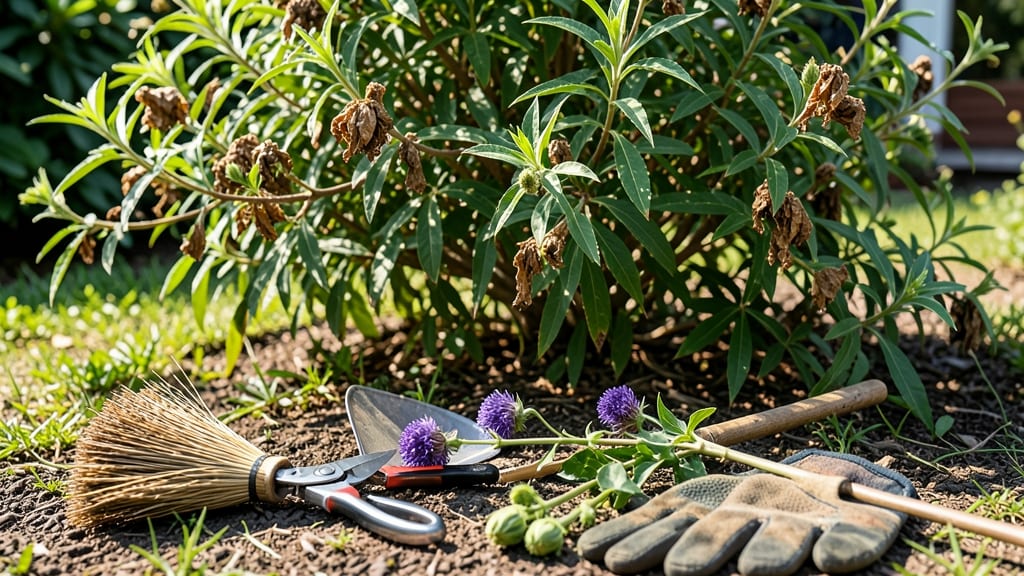
Pruning your Buddleia butterfly bush in late winter—when those gnarled canes still look bare—is the secret to next summer’s nonstop butterfly frenzy. 🌿 I’ve watched neglected bushes turn into lush, flowering powerhouses after just one proper dormant-season cut, and the difference in blooms is night-and-day.
The key? Timing, technique, and knowing which canes to keep (and which to sacrifice for the greater good). You’ll need sharp pruners, a saw for thicker stems, and a clear day to assess the plant’s structure.
The goal isn’t to hack it back randomly—it’s to shape the bush so air circulates, sunlight reaches the center, and next year’s blooms form on fresh growth. Most people over-prune, leaving no energy for flowers, or cut at the wrong time, inviting disease. We’re fixing that today.
By the time summer rolls around, you’ll have a bush covered in fragrant purple spikes that attract monarchs, swallowtails, and hummingbirds like a five-star hotel. The canes will be thicker, the blooms denser, and your neighbors will be asking for your pruning secrets.
Here’s exactly how to do it right—no guesswork, just results.
Start by removing 30-50% of the oldest canes at the base—these are the woody, non-flowering stems that drain energy. Then, cut back the remaining canes by about one-third to encourage new growth from the base. Look for signs of life: tiny buds or swelling nodes.
Those are your future blooms, so preserve them. Avoid cutting into old wood (it won’t regrow), and always make clean cuts just above a bud or node.
If your bush looks like a tangled mess, don’t panic—this is your chance to reshape it. Thin out crowded centers to improve airflow, and step back occasionally to check the balance. A well-pruned Buddleia should have an open, vase-like shape, not a dense tangle.
For neglected plants, you might need to prune in stages over two winters, but even then, you’ll see dramatic improvement. The payoff? A bush that flowers heavier and longer than ever before.
📚 In This Guide
- What you need
- Instructions
- Tips and common mistakes
- Wrapping up and next steps
What you need
- ● Pruning shears (bypass or anvil type) – Sharp, clean blades (2.5"–4" cutting capacity) to avoid crushing stems.
- ● Loppers (for thicker canes) – 8"–12" reach, with a bypass blade for precision cuts.
- ● Pruning saw (for woody stems >1") – Fine-toothed blade for clean cuts without tearing.
- ● Gloves (cut-resistant or gardening gloves) – Protects hands from thorns and sharp canes.
- ● Disinfectant (rubbing alcohol or 10% bleach solution) – 1 part bleach to 9 parts water to sterilize tools between cuts.
- ● Heavy-duty trash bags or compost bin – For disposing of pruned debris (avoid composting if diseased).
- ○ Measuring tape or ruler – Optional but helpful for marking pruning heights.
- ● Hand pruners (for small branches) – Compact and easy for detailed trimming.
- ● Knee pads or stool – For comfort during long pruning sessions.
- ● Marking spray paint (white or silver) – To tag canes for future reference (e.g., "keep" vs. "remove").
- ● Mulch or wood chips – To replenish the base after pruning for soil health.
- ● Safety glasses – If working near your face or in windy conditions.
Step-by-step instructions for pruning Buddleia butterfly bush
Here's how to transform your butterfly bush into a magnet for pollinators—start with clean cuts and strong growth.
✂️ Step 1: Time Your Pruning for Dormant Season
Prune your buddleia in late winter or early spring, just before new growth begins. This is when the plant is fully dormant and vulnerable to damage from late frosts. Look for bare branches with no leaf buds—this signals it's safe to cut. If you prune too early, you risk damaging emerging buds; if you wait too long, you'll cut off new growth.
I like to prune on a dry, calm day when temperatures are above 40°F. This reduces stress on the plant and prevents fungal infections from spreading through fresh cuts. Mark your calendar for February to March in most climates—adjust for regions with milder winters.
✂️ Step 2: Gather Tools and Sanitize Everything
You'll need sharp pruning shears (for small branches) and loppers (for thicker canes). Clean your tools with rubbing alcohol or a 10% bleach solution before you start—this prevents spreading disease from last year's cuts. I also keep a small bucket of water nearby to rinse tools between cuts on larger bushes.
Wear gloves to protect your hands from thorns and sap. Buddleia sap can irritate skin, so I recommend nitrile gloves for extra protection. Sharp tools make cleaner cuts, which heal faster and encourage stronger regrowth. Test your shears on a small branch first—if they don't cut cleanly, sharpen them before proceeding.
✂️ Step 3: Remove Dead, Diseased, or Weak Wood First
Start by identifying and removing any branches that are dead, diseased, or crossing. Dead wood is easy to spot—it's brown, brittle, and won't bend. Diseased branches may have black spots, mold, or oozing sap. Cut these back to healthy wood (green or light brown) at a 45-degree angle about ¼ inch above a bud or lateral branch.
Next, remove any weak or spindly branches—these are thin, pale, and grow outward rather than upward. Thin out crossing branches where canes rub against each other, as this creates wounds that invite pests. I like to step back every few cuts to visualize the bush's shape—this helps me decide which branches to keep for structure.
✂️ Step 4: Shape the Bush for Strong Growth
Buddleia flowers on new wood, so you can prune back up to one-third of the plant without sacrificing blooms. Cut back last year's growth to just above a strong bud or lateral branch, using your shears at a 45-degree angle. This encourages thicker, bushier growth and more flower clusters.
For a balanced shape, aim to leave 3-5 main canes as your framework. These should be thick, sturdy branches that reach upward. Avoid cutting back too aggressively—this can stress the plant and reduce flowering. If your bush is overgrown, prune in stages over 2-3 years to avoid shock.
⏰ Step 5: Clean Up and Fertilize for Recovery
After pruning, remove all debris from the area—this prevents pests and diseases from lingering. I like to bag the clippings and dispose of them in the trash (not compost) to avoid spreading any hidden pathogens. Rake up fallen leaves and twigs around the base of the plant.
Apply a balanced, slow-release fertilizer (like 10-10-10) around the drip line of the bush. Water deeply to help the plant recover and encourage new root growth. Buddleia is drought-tolerant once established, but it needs consistent moisture after pruning to support regrowth. Monitor the soil—it should stay evenly moist but not soggy for the first 4-6 weeks after pruning.
Tips & tricks for pruning Buddleia butterfly bush
Here's what nobody tells you about transforming your butterfly bush into a thriving pollinator magnet.
Timing is Everything: The February to March window is your sweet spot for pruning, but don't get too rigid about dates. Focus instead on the plant's condition—look for completely bare branches with no signs of swelling buds. In warmer climates, you might safely prune as late as early April. I've seen buddleia in Southern California bloom beautifully after March pruning, while Northern gardens should aim for late February to avoid frost damage. The key is catching that dormant-but-not-yet-active state.
Tool Prep Makes All the Difference: I can't stress enough how important it is to test your tools before you start. Run your pruning shears and loppers across a few small branches first—they should cut cleanly without tearing the wood. If they're dull, you'll crush the branches instead of making clean cuts, which slows healing and invites disease. I keep a small file in my tool kit specifically for this purpose. Also, that 10% bleach solution? Mix it fresh each time—old solutions lose effectiveness and can harm the plant.
Pruning Angle Secrets: That 45-degree angle isn't just for looks—it's a water-shedding strategy. When you cut at this angle, rain runs off the cut surface instead of pooling in the wound, which dramatically reduces the risk of fungal infections. To get the angle right, imagine slicing the branch diagonally from the top-left to bottom-right. This also gives you a visual reference point when making subsequent cuts to maintain consistency. For thicker branches, I like to use my loppers with a built-in angle guide for perfect alignment every time.
Visualizing the Structure: Step back every 5-10 cuts to reassess your work. I find it helps to mentally divide the bush into thirds—top, middle, and bottom. This forces me to think about height distribution and prevents that "lopsided" look. You're aiming for a vase-like shape where the widest part is about two-thirds up the plant. If you're unsure which branches to keep, try this trick: imagine the bush as a tree—remove branches that grow inward or downward, keeping only those that grow outward and upward to form the natural canopy shape.
Pro Tips for Buddleia Butterfly Bush Pruning
- Here's what nobody tells you about transforming your butterfly bush into a thriving pollinator magnet.
- Timing is Everything: The February to March window is your sweet spot for pruning, but don't get too rigid about dates.
- Tool Prep Makes All the Difference: I can't stress enough how important it is to test your tools before you start.
Frequently asked questions
Got questions about pruning your Butterfly Bush?
You’re not alone! Here are the most common concerns—plus clear, actionable answers to keep your plant thriving.
When is the best time to prune Buddleia?
The ideal window is late winter or early spring (just before new growth starts). If you’re in a mild climate, prune after the first frost but before buds swell. Avoid pruning in fall—it encourages tender new growth that won’t survive winter. Pro tip: Mark your calendar for February–March in most U.S. zones!
How much should I cut back my Butterfly Bush?
Hard pruning is key! Cut back 1/3 to 1/2 of the plant’s height to the strongest canes (look for thick, woody stems). Remove dead, weak, or crossing branches first. For young plants, you can be more aggressive—trim 2/3 of the height to encourage bushier growth. Warning: Never prune into old, bare wood—it won’t regrow!
What if I missed dormant-season pruning? Can I prune later?
Yes, but timing matters. If you skip winter pruning, wait until late spring after flowering (June–July). Cut back only the dead wood and overgrown stems, but avoid heavy pruning—it may delay blooms. For severe neglect, prune in stages over 2–3 years to avoid shocking the plant. Pro tip: If flowers appear in summer, prune after they fade to avoid removing next year’s buds!
Are there alternatives to hard pruning Buddleia?
If you dislike heavy pruning, try these low-maintenance options:
- Selective pruning: Remove only dead/diseased branches in spring.
- Thinning: Space canes 6–12 inches apart to improve airflow (reduces pests).
- Mulching: Add 2–3 inches of mulch to protect roots and reduce stress.
- Dwarf varieties: Choose ‘Lo & Behold’ or ‘Nanho Blue’—they bloom on new wood and need minimal pruning!
Why isn’t my Butterfly Bush blooming after pruning?
Common culprits:
- Pruned too late: Buds form in summer—pruning after July removes next year’s flowers.
- Over-fertilizing: Too much nitrogen = leafy growth, fewer blooms. Use a low-nitrogen, high-phosphorus fertilizer (like 5-10-5) in spring.
- Poor sunlight: Buddleia needs full sun (6+ hours/day). Move it if shaded.
- Old wood: If canes are >3 years old, they may not rebloom. Prune aggressively to stimulate new growth.
Wrapping up and next steps
Pruning your Buddleia Butterfly Bush in the dormant season isn’t just about tidying up—it’s your secret weapon for explosive growth and show-stopping blooms next year! 🌿 With the right tools, timing, and technique, you’ll transform last year’s canes into a thriving magnet for butterflies and pollinators.
Remember: patience and precision pay off, so take your time and celebrate each step of the process.
Ready to level up your garden? Grab those pruners, mark your calendar for late winter or early spring, and get ready to watch your Butterfly Bush shine brighter than ever. Next, explore how to repurpose those pruned cuttings—because even "waste" can become a gardening goldmine! ✨