
Pruning
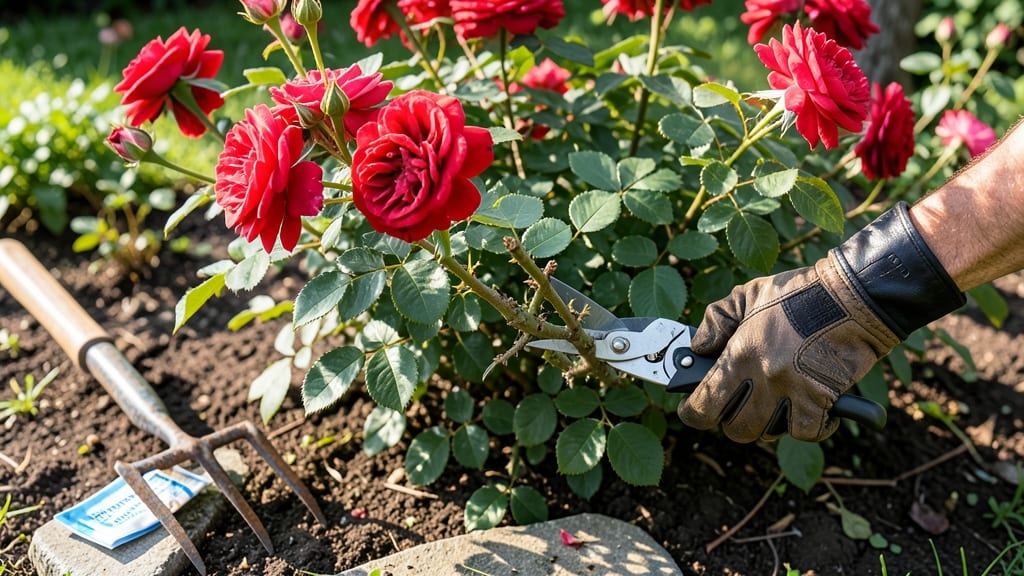
Pruning Knockout roses at the wrong time turns your summer blooms into a sad, leggy mess. ✂️ I’ve spent three winters learning the hard way—when I pruned too early, my bushes barely recovered before the heat hit.
The best time is late winter or early spring, right before new growth starts, when the plant’s dormant but the coldest snaps have passed.
Most gardeners wait until March in colder zones, but in warmer climates, you can prune as early as February. The key is timing it 2-3 weeks before your last frost, so the plant has time to heal before the growing season kicks in.
Skip the urge to prune in fall—it stresses the plant and leaves it vulnerable to winter damage.
Once you prune, you’ll see bold new red shoots within weeks, leading to nonstop blooms from early summer through fall. Just avoid cutting back more than one-third of the plant at once, and clean up any dead or crossing branches to keep airflow strong.
For repeat-flowering varieties, a light trim after the first flush of blooms keeps them productive all season. Just remember: sharp pruners and sterilized cuts are your best friends for keeping these tough bushes thriving.
What Triggers Overgrown Knockout Roses
Pruning knockout roses at the wrong time—or not at all—can turn your vibrant blooms into a tangled mess. But why does this happen? The answer lies in the plant’s biology, seasonal cycles, and how growth patterns respond to environmental cues.
Understanding these triggers helps you take control and keep your roses lush and productive.
Knockout roses (Rosa radrazz) are repeat bloomers, meaning they produce flowers continuously throughout the growing season—unless they’re stressed or pruned improperly. Their growth follows a natural rhythm tied to temperature and daylight:
- Spring Awakening (March–April): As temperatures rise above 50°F (10°C), roses break dormancy. New shoots emerge rapidly, fueled by stored energy from last year’s roots. If you prune too early (before last frost), tender new growth can be frost-damaged, stunting the plant’s ability to rebound. 🌡️
- Summer Surge (May–July): Long daylight hours and warm soil trigger exponential growth.
Without proper pruning, roses prioritize leaf and stem production over flowers, leading to: - Overcrowded canes (reducing airflow → fungal diseases like black spot). - Weak, leggy growth (fewer blooms, more maintenance). - Energy drain (roots struggle to support excess foliage).
- Fall Slowdown (September–November): Shorter days and cooling temps signal roses to prepare for dormancy. Pruning too late (after September) removes growth that could harden off (develop cold resistance). This leaves roses vulnerable to winter dieback. ❄️
Pro Tip: 💡 Knockout roses bloom on new wood (current season’s growth), so aggressive pruning in late summer can cut off potential flower buds for next year!
Even with the right timing, external factors can sabotage your pruning efforts. Here’s how they interfere:
| Stressor | How It Affects Growth | Solution |
|---|---|---|
| Late Frost | Damages new shoots → plant diverts energy to regrowth instead of blooms. | Prune after the last frost (check local averages!). |
| Overwatering | Waterlogged soil rots roots, starving the plant of nutrients for flowering. | Ensure well-draining soil; prune only when soil is slightly dry. |
| Nutrient Imbalance | Too much nitrogen = leafy monsters, few flowers. Too little phosphorus = weak blooms. | Test soil; use a balanced rose fertilizer (10-10-10) post-pruning. |
| Pests/Disease | Aphids or fungal spots weaken canes, making pruning cuts heal poorly. | Treat with neem oil before pruning; sterilize tools with rubbing alcohol. |
Warning: ⚠️ If your roses are already stressed (yellow leaves, wilted canes), wait to prune until they recover—cutting into damaged tissue spreads disease!
Here’s the vicious cycle that turns knockout roses into unruly shrubs:
- You skip pruning → Old, woody canes harden and stop producing flowers.
- You prune at the wrong time (e.g., late summer) → Removes next year’s flower buds.
- The plant overcompensates → Puts all energy into new, weak growth instead of blooms.
- Crowded canes block airflow → Fungal infections (like powdery mildew) take hold.
- Stressed roses bloom less → You think they’re “done” and prune too late in fall.
Break the cycle: Prune once in late winter/early spring (dormant season) and lightly after first bloom to encourage bushiness. ✂️
Knockout roses rely on hormonal signals tied to temperature to know when to bloom. Pruning disrupts these cues:
- Cold Snaps (Below 40°F/4°C): Pruning stimulates auxin hormones, which tell the plant to grow now—but if temps drop, new growth stops dead, wasting energy. Stunted recovery.
- Heat Waves (Above 85°F/29°C): Pruning in mid-summer heat can cause transpiration stress (water loss through leaves). The plant focuses on survival, not blooming. Fewer flowers, sunburned canes.
Actionable Fix: 🌡️ Prune on a cool, cloudy day (60–70°F/15–21°C) to minimize stress.
Quick Fixes for Pruning Mistakes
Pruning knockout roses at the wrong time—or doing it poorly—can leave your bushes looking ragged, stressed, or even disease-prone. But don’t worry!
Whether you’ve missed the ideal window, over-pruned, or ignored signs of trouble, these practical solutions will help you recover and set your roses up for a bloom-filled summer. Below, we’ll break down common pruning problems and their fixes, plus prevention tips to keep your knockout roses thriving year-round.
Cause: Cutting back too aggressively (especially in late winter or early spring) removes essential energy stores, leaving roses weak and vulnerable.
Fix:
- Stop Pruning Immediately – No further cuts until new growth appears (usually 2–4 weeks).
- Water Deeply – Give your roses 1–2 inches of water per week to compensate for lost foliage.
- Fertilize Lightly – Use a balanced rose fertilizer (10-10-10) or compost tea to boost recovery.
- Monitor for Stress – If leaves yellow or stems wilt, prune only the dead or diseased parts (never more than 1/3 of the plant at once).
💡 Prevention Tip:
- Follow the “Third Rule”: Never remove more than one-third of the plant’s height in a single pruning session.
Cause: Pruning after early spring (when buds swell) or before late winter dormancy disrupts blooming cycles.
Fix:
- Assess the Damage – If buds have already formed, avoid cutting them off. Instead, focus on:
- Removing dead, crossing, or weak stems (use clean, sharp pruners).
- Shortening last year’s growth to encourage bushier growth.
- Stimulate New Growth –
- Apply a high-phosphorus fertilizer (like 5-10-5) to encourage root and flower development.
- Mulch heavily (2–3 inches of organic mulch) to retain moisture and protect roots.
- Watch for Blooms – If you pruned too late, expect fewer flowers this season, but next year’s blooms will rebound if you stick to the dormant-season schedule.
🌡️ Prevention Tip:
- Mark your calendar for late winter/early spring (just before buds swell) and fall (after first frost) as your pruning windows.
Cause: Poor pruning hygiene (leaving stubs, cutting into old canes, or working in wet conditions) invites black spot, powdery mildew, or rose rosette virus.
Fix:
- Remove Infected Canes – Cut 6 inches below the diseased area (don’t leave stubs).
- Sterilize Tools – Wipe pruners with rubbing alcohol or a 10% bleach solution between cuts.
- Apply Fungicide – Spray with neem oil or a copper-based fungicide (like Bordeaux mixture) every 7–10 days until the issue clears.
- Improve Airflow – Thin out overcrowded branches to reduce humidity and fungal spread.
🎯 Prevention Tip:
- Prune on dry days and avoid overhead watering to keep foliage dry.
Cause: Skipping pruning or cutting too high leaves roses tall, bare, and floppy with few blooms.
Fix:
- Open the Center – Remove suckers (shoots at the base) and crossing branches to improve airflow.
- Cut at a 45° Angle – Always prune just above an outward-facing bud (about 1/4 inch above) to encourage new growth.
- Balance the Shape –
- Taller roses? Shorten the longest stems by 1/3.
- Bushy but sparse? Prune just above a strong bud on the outer third of the plant.
- Encourage Blooms – After pruning, feed with high-potassium fertilizer (like 12-12-17) to support flowering.
✨ Pro Tip:
- Step back and squint—this helps you see the plant’s natural shape and spot uneven growth.
Cause: Dull pruners cause tearing, which slows healing and invites disease.
Fix:
- Use the Right Tools –
- Bypass pruners for clean cuts on thicker stems (1/4 inch and up).
- Hand pruners for smaller branches.
- Sharpen Blades –
- Use a file or sharpening stone to maintain a razor-sharp edge.
- Test by cutting a piece of paper—if it tears, sharpen again.
- Disinfect After Use – Wipe tools with bleach or alcohol to prevent spreading disease.
💡 Prevention Tip:
- Store tools in a dry place and oil blades (mineral oil works) to prevent rust.
Final Thought: Even if you’ve made pruning mistakes, knockout roses are resilient—they’ll bounce back with the right care. Stick to dormant-season pruning, keep tools clean, and give your roses time to recover, and you’ll be rewarded with vibrant, nonstop blooms all summer long! 🌹💥
Frequently asked questions
Can I prune knockout roses in fall instead of spring?
Fall pruning is risky for knockout roses. While light shaping after the first frost is okay, major pruning in fall removes growth needed for winter hardiness. If you must prune, do it after the first hard frost (when temps drop below 32°F/0°C) but before November in most climates. Focus only on removing dead or diseased wood.
How do I know if I've pruned too much?
Look for these signs: no new growth within 2-3 weeks, yellowing leaves, or stems that appear woody and bare. If you've cut back more than one-third of the plant, it's likely over-pruned. Stop cutting immediately and focus on watering (1-2 inches per week) and light fertilization to help recovery.
What should I do if I missed the spring pruning window?
Don't panic! If you missed late winter/early spring, wait until after the first flush of blooms (usually June-July) for a light trim. Focus on removing dead wood, crossing branches, and overly long stems—never cut more than 25% of the plant. This keeps your roses healthy while maintaining some blooms for the season.
Can I prune knockout roses in warm climates like Florida or California?
Yes, but adjust your timing! In warm zones (USDA zones 8-11), prune in late winter (February) when night temps stay above 40°F/4°C. Avoid pruning during summer heat waves—wait for cooler mornings (60-70°F/15-21°C) to prevent stress. You can also do a light summer trim after blooms to encourage bushiness.