
Pruning
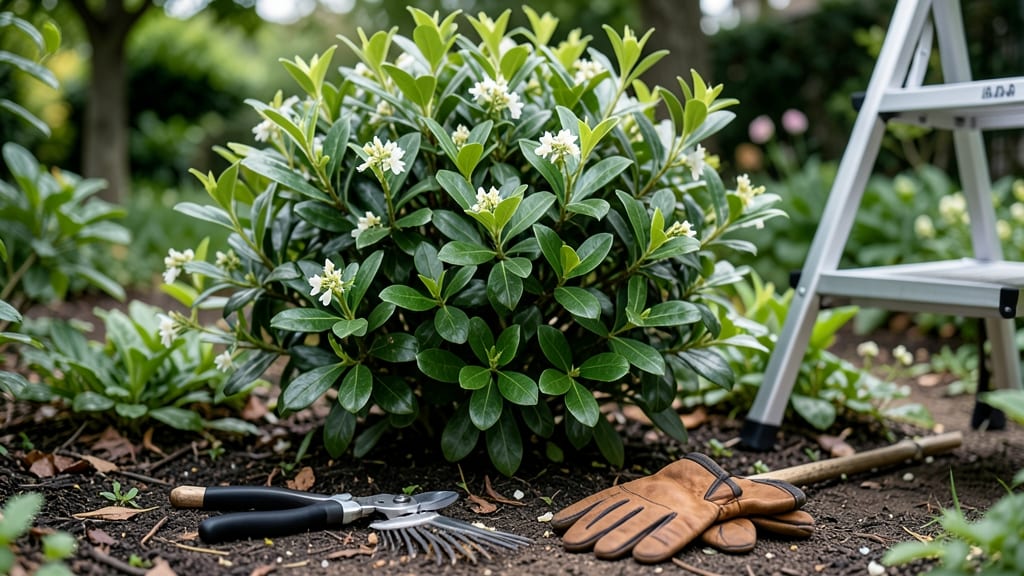
Late winter’s the secret to transforming your Schip laurel into a lush, vibrant hedge—just as new growth begins. ✂️ I’ve learned the hard way that pruning too early leaves bare stems, while waiting too long means sacrificing next year’s dense foliage.
The 3-4 week window after your last frost (typically February-March in most zones) is your sweet spot for shaping without stressing the plant.
You’ll need sharp bypass pruners, a sturdy ladder for taller hedges, and gloves to handle the tough leaves. The goal isn’t drastic cuts—think light shaping to maintain form and encourage bushier growth.
For established plants, remove no more than one-third of the foliage at once, focusing on thinning out crowded branches from the center to improve airflow.
What you’ll end up with is a hedge that stays thicker and greener all season, with fewer gaps where weeds can sneak in. The timing also prevents late-spring dieback from over-pruning, and you’ll see fresh, bright green shoots emerging within weeks.
Just avoid heavy pruning if you’re in Zone 7 or warmer—wait until early spring when growth slows.
Pro tip: Clean your tools with rubbing alcohol between cuts to prevent disease spread, and water deeply after pruning to help the plant recover. For a neater finish, use a string line to guide your cuts if shaping a formal hedge.
The results? A manicured look that lasts all summer without constant maintenance.
📚 In This Guide
- What you need
- Instructions
- Tips and common mistakes
- Wrapping up and next steps
What you need
- ● Pruning shears: Bypass pruners (sharp, 5-7" blades) for clean cuts on small stems.
- ● Loppers: Long-handled (24-30") for thicker branches (½"–1" diameter).
- ● Pruning saw: Curved-tooth blade for stubborn, woody growth (1"–2" diameter).
- ● Gloves: Heavy-duty, cut-resistant (e.g., leather or reinforced fabric).
- ● Disinfectant: 70% isopropyl alcohol or bleach solution (1 part bleach to 9 parts water) to sterilize tools between cuts.
- ● Trash bags or bucket: For debris (10–20 gallons, depending on hedge size).
- ● Ladder or step stool: Sturdy, non-slip (if pruning tall hedges or hard-to-reach areas).
- ● Pruning sealant: Wound dressing (for large cuts > ½" diameter) to prevent disease.
- ● Hedge trimmer: Electric or cordless for large, uniform hedges (36V+ battery recommended).
- ● Safety goggles: To shield eyes from debris.
- ● Knee pads: For comfort during extended pruning sessions.
- ● Marking spray: Non-toxic paint to outline desired cuts before pruning.
Instructions for pruning Schip laurel like a pro
Here's the method I rely on to keep my Schip laurels lush and vibrant year after year.
⏰ Step 1: Time Your Prune to Late Winter
Prune your Schip laurel in late winter, right before new growth begins—typically February to early March in most climates. This timing ensures you cut back just as the plant is about to burst into spring activity, encouraging fresh, bushy growth. Avoid pruning in fall or early winter, as the plant needs its foliage to protect it from cold snaps.
Look for dormant buds along the stems—these tiny bumps signal the plant is ready to wake up. If you see new shoots starting to push through, it's time to grab your shears. I always prune after a light frost has passed, as this helps prevent stress on the plant when it's still semi-dormant.
✂️ Step 2: Cut Just Above a Leaf Bud or Branch Junction
Make your cuts at a 45-degree angle about ¼ inch above a leaf bud or where a branch meets the main stem. This angle helps water run off the cut, reducing the risk of rot. If you're shaping the plant, aim to cut back to an outward-facing bud to encourage growth in the direction you want.
I like to step back every few cuts to check the overall shape. Schip laurels respond well to light pruning, so don't overdo it—remove no more than one-third of the plant's foliage in a single session. If you see dead or diseased branches, cut those out first, then focus on shaping the rest.
🌿 Step 3: Thin Out Crowded Branches for Airflow
Schip laurels can get dense, so focus on thinning out crowded branches to improve airflow and sunlight penetration. Look for branches that cross or rub against each other—these are prime candidates for removal. Cut them back to the main stem or a strong side branch.
You'll know you're doing it right when you see more light filtering through the plant and smaller gaps between branches. This not only keeps the plant healthier but also makes future pruning easier. I usually thin out the oldest growth first, as this encourages younger, more vibrant branches to take over.
☀️ Step 4: Clean Up and Monitor for New Growth
After pruning, rake up and dispose of all clippings—don't leave them on the ground, as they can harbor pests or diseases. Once the cuts are made, water the plant deeply to help it recover. You'll see new growth emerging within 3-4 weeks, especially if you pruned at the right time.
Keep an eye on the plant in the following weeks. If you notice yellowing leaves or stunted growth, it might be a sign of over-pruning or stress. In that case, hold off on any further cuts until the plant recovers. A light application of balanced fertilizer after pruning can give it a little boost.
Tips & tricks for pruning Schip laurel like a pro
Late winter pruning transforms your Schip laurel into a vibrant, bushy beauty—here's how to nail every detail.
Timing is Everything: The late winter window—typically February to early March—is your golden opportunity. I've learned the hard way that pruning too early can stress the plant, while waiting too long means you'll be cutting back new growth instead of dormant branches. Check for those tiny dormant buds along the stems; they're nature's signal that it's time to prune. If you're in a warmer climate where spring arrives early, don't wait until March—adjust based on when you see those first signs of new growth.
Precision Cuts Make All the Difference: That 45-degree angle isn't just for show—it's a water runoff system that prevents rot. When cutting just above a leaf bud or branch junction, make sure your shears are sharp. Dull blades crush stems instead of making clean cuts, which can damage the plant and invite disease. I always test my shears on a few small branches first to make sure they're cutting cleanly. And remember, those outward-facing buds are your friends—they'll guide new growth in the direction you want.
Shape with Purpose: Step back every few cuts to maintain balance. Schip laurels have a natural symmetry, and you want to preserve that while encouraging fuller growth. Focus on creating an open center that allows sunlight to reach all parts of the plant. If you're dealing with a mature plant, prioritize removing the oldest branches first—they'll give way to younger, more vigorous growth. This technique has given my plants that lush, layered look that takes years to develop naturally.
Recovery is Key: After pruning, don't just walk away—give your plant the care it needs to thrive. Deep watering helps the plant recover from the stress of pruning, and that light fertilizer application gives it a little boost. Watch for new growth in 3-4 weeks; if you don't see any, it might be a sign to hold off on further pruning until next year. I've found that patience pays off—rushing to prune again too soon can set your plant back instead of helping it grow.
Pro Tips for When To Prune Schip Laurel
- Late winter pruning transforms your Schip laurel into a vibrant, bushy beauty—here's how to nail every detail.
- Timing is Everything: The late winter window—typically February to early March—is your golden opportunity.
- Precision Cuts Make All the Difference: That 45-degree angle isn't just for show—it's a water runoff system that prevents rot.
Frequently asked questions
Got questions about pruning Schip laurel? You’re not alone! Here are some of the most common concerns—plus quick answers to keep your shrub thriving.
What’s the best time of year to prune Schip laurel?
Prune Schip laurel in late winter or early spring (just before new growth starts). This timing ensures you remove dead wood while encouraging fresh, vibrant foliage. Avoid pruning in fall—it can stress the plant before winter dormancy.
How much can I trim back without harming the plant?
You can safely prune up to ⅓ of the plant’s height at a time. For mature shrubs, aim to thin out overcrowded branches rather than shearing evenly. This promotes airflow and prevents disease. Never remove more than ⅓ in a single season!
What if I missed the late-winter window? Can I prune later?
Yes, but with caution! If you prune in summer or early fall, do it lightly to avoid stimulating tender new growth before winter. Focus on removing only dead or diseased branches. Avoid heavy pruning—it can leave the plant vulnerable to frost damage.
Should I sterilize my pruners between cuts?
Absolutely!
Use 70% isopropyl alcohol or a bleach solution (1 part bleach to 9 parts water) to sterilize tools between cuts. This prevents spreading bacterial or fungal diseases (like powdery mildew) that can weaken your Schip laurel.
What’s the difference between pruning and shearing?
Pruning involves selectively removing dead, crossing, or overgrown branches to improve shape and health. Shearing (using hedge trimmers) is for maintaining a uniform shape but can damage the plant if overdone. For Schip laurel, prune first, then shear lightly for a polished look.
Still unsure? Snap a photo of your shrub’s current state and compare it to healthy examples—you’ll spot issues like leggy growth or dead centers faster!
Wrapping up and next steps
Pruning your Schip Laurel in late winter isn’t just a chore—it’s the secret to unlocking lush, vibrant growth all season long! 🌿 By timing your cuts right (just before new buds form) and using the right techniques, you’ll encourage thicker foliage, better airflow, and even brighter blooms.
Remember, sharp tools, clean cuts, and patience are your best friends—so don’t rush the process.
Now that you’re armed with the know-how, grab those shears and give your Schip Laurel the TLC it deserves. The effort will pay off in a showstopping shrub that’s the envy of the neighborhood. Happy pruning! 🌟