
Pruning
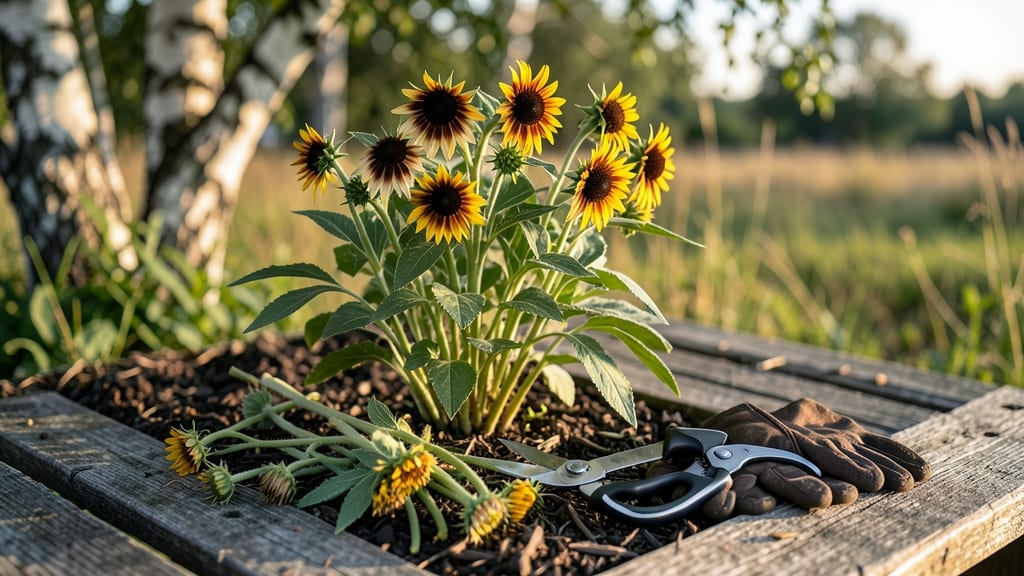
To prune rudbeckia, do it in late winter or early spring before new shoots appear, or cut back faded blooms in early fall after frost. Avoid pruning during active growth to protect plant health and encourage robust blooming.
Timing matters because rudbeckia's growth follows seasonal rhythms. 🌱 Late-winter pruning removes dead foliage while the plant is dormant, allowing fresh stems to emerge stronger. In fall, trimming spent blooms prevents seed formation and redirects energy to next year's growth.
The key is working with—not against—the plant's natural cycle, especially in colder climates where early spring pruning gives stems time to harden before summer heat.
What you cut back also depends on your goals. For cleanup pruning in late winter, aim to remove 2/3 of the plant's height—this stimulates bushier growth. In fall, focus on deadheading only, leaving the base stems intact.
Using sharp, sterilized shears prevents disease spread, and mulching after pruning helps protect roots during winter dormancy.
💡 In This Article
- Rudbeckia Growth Cycle and Pruning Timing Science
- Step-by-Step Rudbeckia Pruning Guide for Different Seasons
Rudbeckia growth cycle and pruning timing science
Rudbeckia's growth follows a clear seasonal pattern that determines the best pruning times. During dormancy (late winter to early spring), the plant's metabolic activity slows dramatically, with roots storing energy and stems lying dormant underground.
This is why late-winter pruning—typically between February and March in most USDA zones 5-9—works so effectively. Cutting back stems at this stage removes dead foliage while the plant is still in its resting phase, allowing fresh shoots to emerge from the base without competition for nutrients.
The science behind this timing involves plant hormones. When you prune during dormancy, you stimulate the production of auxin, a growth hormone that promotes cell elongation in the remaining stems.
This process creates bushier, more vigorous growth compared to pruning during active growth when the plant is already directing energy toward flowering.
In warmer climates (zones 10+), where winters are mild, prune slightly later—around late winter to early spring—to avoid encouraging early growth that might get damaged by unexpected cold snaps.
Fall pruning serves a different purpose. After the first frost, rudbeckia's foliage turns brown and dies back naturally. At this stage, the plant is preparing for winter dormancy, and cutting back spent blooms prevents seed formation. This redirection of energy helps the roots store more carbohydrates for next year's growth.
The key difference here is that you're not stimulating new growth—you're simply cleaning up to protect the plant's energy reserves. In regions with harsh winters (zones 3-4), wait until late fall when temperatures consistently drop below 40°F to avoid encouraging tender new growth that could be damaged by frost.
Climate zones play a critical role in determining the exact timing. In cooler northern climates, prune in late winter (March) to give stems time to harden before summer heat. In southern climates, where winters are shorter, prune in early spring (February) to avoid missing the optimal window.
The goal is always to prune when the plant is either dormant or transitioning out of its blooming phase—never during active growth when buds are forming or flowers are open.
What most gardeners overlook is how pruning affects the plant's root system. When you cut back stems in late winter, you're also encouraging the roots to push nutrients upward, which translates to stronger stems and more abundant blooms.
In contrast, pruning during active growth can shock the plant, leading to stunted growth or even disease susceptibility. The plant's natural defense mechanisms are weakened when you disrupt its growth cycle, making it more vulnerable to fungal infections like powdery mildew.
For reblooming varieties like 'Goldsturm' rudbeckia, timing becomes even more critical. These plants produce a second flush of blooms in late summer if given the right conditions. To encourage reblooming, deadhead spent flowers in early fall, but avoid heavy pruning—just remove the faded blooms to redirect energy.
In late winter, you can then do a more aggressive pruning to shape the plant for the next growing season. The key is balancing cleanup with the plant's natural rhythms.