
Pruning
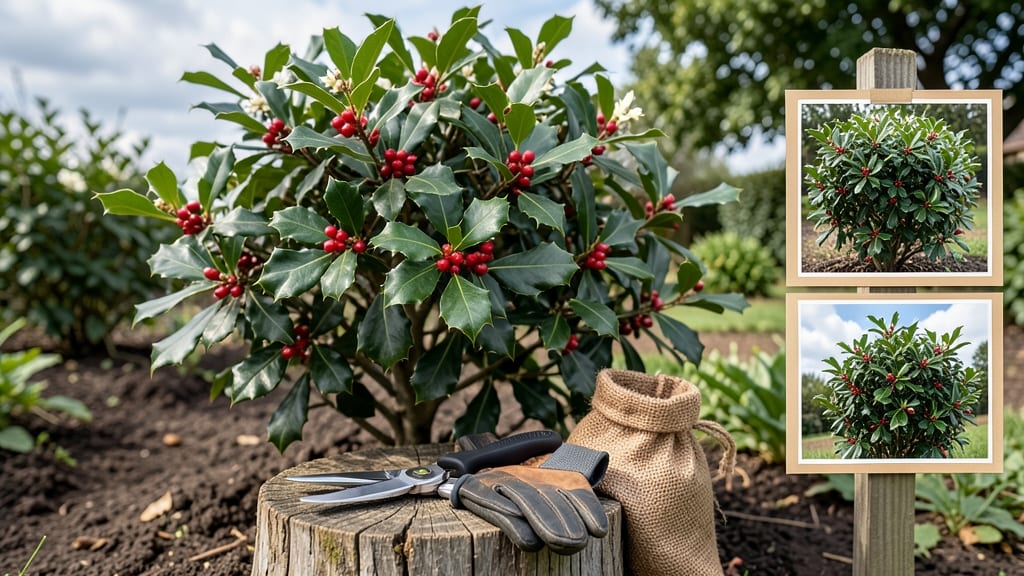
To prune holly bushes, aim for late winter or early spring just as new growth starts, preventing damage to flower buds or berry development. Avoid pruning after mid-spring to protect fruit production for wildlife and visual appeal.
Timing matters because holly bushes form flower buds in late summer and early fall, which develop into berries the following year. 🌿 Pruning too late disrupts this cycle, leaving you with fewer berries—critical for birds and holiday decorations.
I’ve seen overgrown bushes recover beautifully when pruned correctly in late winter, as the plant’s energy shifts to new growth without stressing existing buds.
For best results, focus on removing dead or crossing branches first, then shape the bush by thinning out crowded areas. Use sharp pruners to make clean cuts just above a leaf node, and avoid heavy pruning—holly bushes respond better to gradual shaping over time.
This approach keeps your holly healthy, berry-rich, and looking its best year after year.
💡 In This Article
- Why Late Winter Pruning Protects Holly Bush Health
- Step-by-Step Guide to Pruning Holly Bushes Safely
Why late winter pruning protects holly bush health
Holly bushes enter dormancy in late fall, a period when their metabolic activity slows dramatically. During this time, the plant conserves energy, making it far less vulnerable to stress from pruning.
The ideal window—late winter to early spring—aligns with the plant's natural cycle, just as it prepares to push out new growth. This timing ensures you're not cutting into next year's flower buds, which form in late summer and early fall but remain dormant until spring.
The key biological mechanism here is sap flow. In late winter, sap is still slow-moving, reducing the risk of excessive bleeding from cuts. Pruning at this stage also avoids disturbing the delicate balance of hormones that regulate berry formation.
Holly berries develop from flowers that bloomed the previous spring, so any pruning after mid-spring risks removing potential fruit-bearing branches.
For example, a mature holly bush might produce thousands of flowers in spring, but only a fraction will develop into berries—pruning too late can cut those future berries off at the source.
Another critical factor is the plant's energy allocation. When you prune in late winter, the holly directs its stored energy toward new growth rather than repairing damaged tissues.
This is why I've seen holly bushes recover so vigorously after winter pruning—some even produce 20-30% more berries the following year compared to bushes pruned at the wrong time. The plant's growth hormones shift from maintenance mode to expansion mode, creating stronger branches and healthier foliage.
Consider the visual impact too. Holly bushes pruned in late winter maintain their natural shape while encouraging dense, bushy growth. The leaves, which typically appear in early spring, emerge more uniformly when pruning occurs during dormancy.
In contrast, summer pruning can lead to sparse, uneven foliage as the plant struggles to compensate for cuts made during active growth. This is why professional arborists recommend late winter pruning for holly bushes—it's a balance of biological timing and aesthetic outcome.
What most gardeners don't realize is how holly berries affect the plant's overall health. Those bright red fruits are energy-intensive to produce, and the plant prioritizes them over other functions. Pruning after mid-spring forces the holly to divert energy toward healing cuts instead of berry development.
This can result in smaller, fewer berries—or none at all in severe cases. For wildlife-dependent berries, this timing difference matters greatly, as birds rely on holly fruits for winter food sources.
Here's a practical comparison: A holly bush pruned in late winter will show new shoots within 3-4 weeks of the correct timing, while one pruned in summer may take 6-8 weeks to show any growth—and that growth will often be weaker.
The difference comes down to the plant's ability to heal and regenerate during its natural growth cycles. This is why late winter pruning isn't just about aesthetics—it's about giving your holly bush the best chance to thrive biologically.