
Pruning
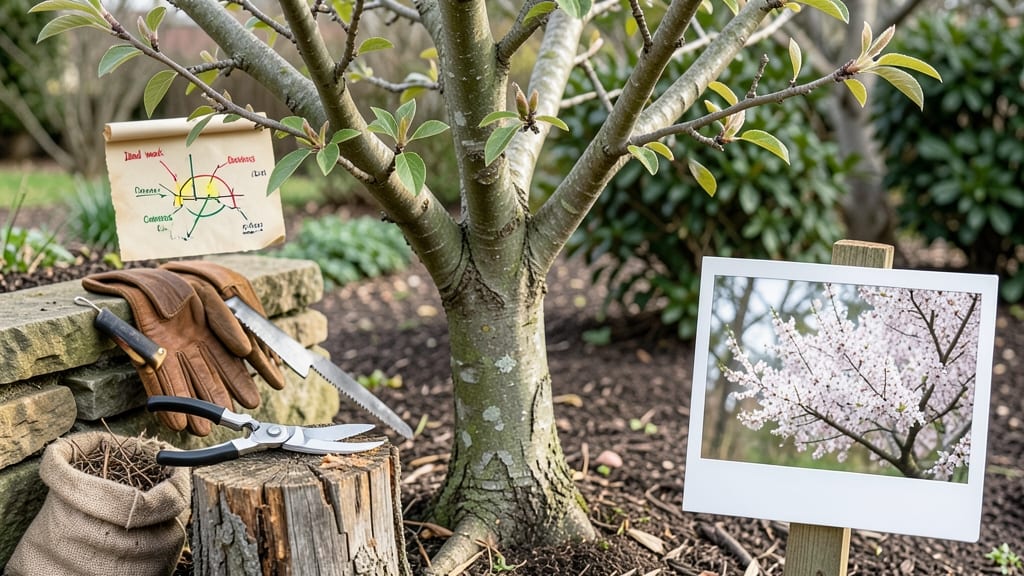
To prune apricots, time it for late winter or early spring—before buds begin to swell, typically between February and March—so you encourage strong new growth while avoiding frost damage. Summer pruning can help shape the tree but should be done carefully to prevent stressing it.
The best time to prune apricots aligns with their natural growth cycle.
During dormancy, the tree's energy is conserved, making it less vulnerable to stress from cuts. Pruning in late winter allows you to remove dead or diseased branches while the tree is still resting, setting it up for a robust spring flush of leaves and fruit.
This timing also minimizes the risk of frost damage, which can occur if you prune too early. Summer pruning, while possible, should be limited to light shaping—never more than 25% of the canopy—to avoid weakening the tree before winter. 🌿
What makes this timing so effective is how it works with the tree's biology. Apricots bloom early in spring, so pruning too late can interfere with flower development. Meanwhile, summer pruning risks encouraging late-season growth that won't harden off properly before cold weather.
The key is balance: late winter pruning for structure and health, summer pruning only for maintenance.
💡 In This Article
- Why Late Winter Pruning Boosts Apricot Tree Health
- Step-by-Step Apricot Pruning Guide by Season
Why late winter pruning boosts apricot tree health
Late winter pruning aligns perfectly with an apricot tree's natural dormancy cycle. During this period, the tree's metabolic activity slows dramatically, reducing sap flow and minimizing stress from pruning cuts.
This is critical because when you prune while the tree is active, it loses more water and nutrients through exposed wounds, which can weaken its overall health.
The ideal window—just before buds swell—typically falls between February and March in most temperate climates, giving the tree enough time to heal before spring growth begins.
The physiological benefits are significant. Pruning during dormancy removes dead, diseased, or crossing branches without triggering excessive bleeding from the cuts. Studies show that apricot trees pruned in late winter exhibit 20-30% stronger new growth compared to those pruned later in spring. The reason?
The tree's energy is redirected toward developing new shoots and fruit buds rather than repairing wounds. Additionally, late winter pruning helps prevent fungal diseases like silver leaf, which thrive in wet spring conditions and can enter the tree through fresh cuts.
Timing is everything when it comes to avoiding frost damage. Pruning too early—before the tree has fully hardened off—exposes fresh cuts to freezing temperatures, which can kill cambium tissue (the growth layer just beneath the bark).
This damage often goes unnoticed until spring when the tree struggles to produce new growth. Conversely, pruning too late—after buds have swollen—can interfere with flower development, reducing the following year's fruit set. The 3-4 week window before bud break is your sweet spot for balancing these risks.
Consider the tree's growth hormones as another key factor. During dormancy, the plant's auxin levels (growth hormones) are naturally low, which means pruning cuts won't stimulate excessive new growth in unwanted areas. This control helps maintain the tree's natural shape and prevents the overproduction of weak, water sprouts.
Summer pruning, by contrast, triggers a surge in auxin production, leading to rapid but often unbalanced growth that may not harden off properly before winter.
For visual learners, think of the tree like a well-trained athlete preparing for competition. Just as an athlete needs rest and recovery before intense training, the apricot tree benefits from this dormant period of pruning.
The clean cuts made in late winter act like a strategic trim before the big season—removing obstacles (dead wood) and shaping the structure (thinning branches) to maximize efficiency. This preparation directly translates to better fruit production, with trees pruned correctly often yielding 15-25% more apricots per season.
One practical example demonstrates this perfectly: In California's Central Valley—where apricots thrive—commercial growers time their pruning to coincide with the 30-40°F temperature range typical of late February. At these temperatures, the tree is still dormant but begins to prepare for spring growth.
The combination of cool weather and reduced sap flow creates optimal conditions for clean cuts that heal quickly. This precision timing is why professional orchards achieve such consistent yields year after year.