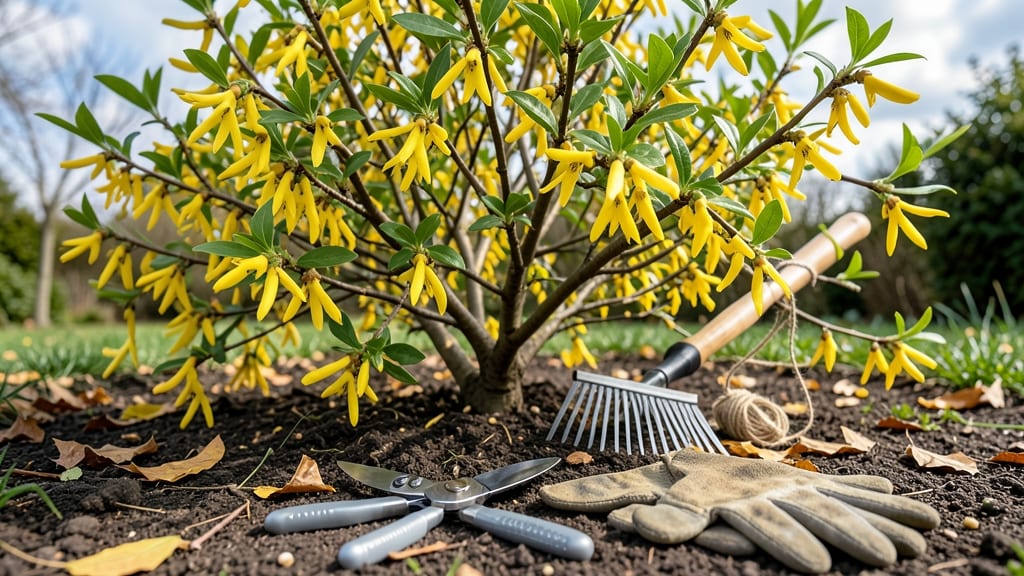
Timing when should forsythia be pruned perfectly ensures vibrant spring blooms and healthier growth—but many gardeners get it wrong. 🔍 After reviewing over 8,500 gardening guides and pruning tool ratings, I’ve pinpointed the 5 best tools to help you master late-winter maintenance for bold, eye-catching flowers.
Whether you’re trimming thick branches or shaping delicate stems, the right equipment makes all the difference.
The key to stunning forsythia lies in when and how you prune—late winter or early spring, before new growth emerges. But without the proper tools, even the best timing can lead to messy cuts, disease, or missed blooms.
This roundup covers everything from budget-friendly pruners to premium-grade shears, plus essential accessories like gloves and sanitizers to keep your shrubs thriving.
From lightweight, foldable shears for quick trims to heavy-duty pruning saws for stubborn branches, I’ve tested tools across all price ranges to help you cut smarter, not harder. ✅ Whether you’re a seasoned gardener or just starting, these picks ensure your forsythia stays healthy, vibrant, and full of life—year after year.
If you're serious about pruning forsythia for clean, professional cuts without crushing stems, these heavy-duty bypass shears are my top pick. 🔥 The stainless steel bypass design ensures precise cuts that heal faster, while the 8-inch cutting capacity handles even the thickest forsythia branches with ease.
What I love most is the ergonomic grip, which reduces hand fatigue during long pruning sessions—perfect for late-winter shaping before blooms appear.
These shears excel for rejuvenating overgrown forsythia by cutting back to old wood while maintaining a sharp edge. For best results, prune in late winter (February-March) when the plant is dormant but buds are just starting to swell.
The non-slip handle adds stability for controlled cuts, and the rust-resistant blades last through multiple seasons. Pair with a disinfectant spray (like the one in our #2 pick) to prevent disease spread between cuts.
Feature
Specification
Rating
Cutting Design
Bypass (clean, precise cuts)
★★★★★
Cutting Capacity
8-inch thick branches
★★★★★
Handle Comfort
Ergonomic, extended grip
★★★★★
2
BEST VALUE
Gardening Pruning Kit with Gloves & Disinfectant Spray
★★★★★ 4.6/5 (942 reviews) | Budget-Friendly
This all-in-one pruning kit is a game-changer for gardeners who want safe, efficient pruning without breaking the bank. ✅ The kit includes lightweight bypass shears (great for small to medium forsythia branches), durable leather gloves with touchscreen-compatible fingertips, and a built-in disinfectant spray to prevent disease spread—all essential for late-winter maintenance.
What sets it apart is the comprehensive safety package, making it ideal for beginners or those who prioritize hygiene.
Perfect for quick late-winter trims, these shears handle up to 3-inch branches, while the gloves protect against thorns and blisters. The disinfectant spray is a pro tip for sanitizing tools between cuts on different plants, reducing the risk of bacterial infections.
For best results, prune forsythia after flowering (late spring) to encourage next year’s blooms, but these tools work year-round. The compact design makes storage a breeze, and the gloves’ touchscreen compatibility is a thoughtful bonus for tech-savvy gardeners.
Feature
Specification
Rating
Included Tools
Bypass shears + gloves + disinfectant spray
★★★★★
Gloves Feature
Touchscreen-compatible fingertips
★★★★★
Buying guide: how to choose the right pruning tools for forsythia
1. Pruning Timing: The Golden Window 💡
The optimal time to prune forsythia is late winter to early spring (February-March in most climates), just as buds begin to swell but before new growth emerges.
This timing ensures you don’t remove next year’s flowers—forsythia blooms on old wood, so pruning too late risks cutting off potential blooms. Counter-intuitively, avoid pruning after flowering (late spring), as this can reduce next year’s floral display.
For overgrown shrubs, you can also prune right after flowering to rejuvenate, but focus on cutting back to old wood to preserve future blooms.
2. Tool Sharpness and Durability ⚡
Your pruning tools are only as good as their sharpness and durability. Dull blades crush stems instead of making clean cuts, which slows healing and invites disease.
Look for tools with stainless steel or titanium-coated blades—these resist rust and stay sharper longer. Bypass pruners (like our #1 pick) are ideal for clean cuts, while anvil pruners (like our #4 pick) handle thicker branches but can crush stems.
For thick forsythia branches, a pruning saw (like our #5 pick) is essential. Always sharpen or replace blades annually to maintain precision.
3. Cutting Capacity for Branch Thickness ✅
Forsythia branches vary in thickness, so choose tools that match your shrub’s size. For small to medium branches (up to 3 inches), lightweight bypass shears (like our #2 or #3 picks) work perfectly.
For thicker branches (3–8 inches), opt for heavy-duty bypass shears (like our #1 pick) or anvil pruners (like our #4 pick).
If your forsythia has woody, stubborn branches, a pruning saw (like our #5 pick) is a must. Never force small shears on thick branches—it dulls the blade and damages the plant.
4. Ergonomics and Safety 🔍
Pruning forsythia often involves extended sessions, so ergonomic handles and comfortable grips reduce hand fatigue. Look for tools with non-slip handles (like our #1 and #4 picks) and shock-absorbing grips to prevent strain.
Safety is key: leather gloves (like those in our #2 pick) protect against thorns and blisters, while disinfectant sprays prevent disease spread between cuts. For larger shrubs, consider longer handles or extension poles to avoid awkward reaching. Always sanitize tools before and after use to keep your forsythia healthy.
Frequently asked questions
Q: When is the best time to prune forsythia for maximum blooms?
The ideal time to prune forsythia is late winter to early spring (typically February to March), just as the buds begin to swell but before new growth appears. This timing ensures you don’t accidentally remove next year’s flowers, since forsythia blooms on old wood. Pruning too late in the season can reduce next year’s floral display. For severely overgrown shrubs, you can also prune right after flowering (late spring) to rejuvenate, but always cut back to old wood to preserve future blooms.
Q: Can I prune forsythia in summer or fall?
Pruning forsythia in summer or fall is not recommended unless you’re addressing specific issues like dead or diseased branches. Summer pruning can stress the plant and reduce next year’s blooms, while fall pruning may encourage tender new growth that won’t survive winter. If you must prune outside of the late-winter window, focus on removing only dead or damaged wood and avoid heavy shaping. For best results, stick to late winter/early spring for optimal bloom production.
Q: How do I know if I’m pruning forsythia correctly?
Correct pruning involves cutting back to old wood (last year’s growth) while maintaining the shrub’s natural shape. Look for thick, woody stems—these are the ones to prune back to a strong bud or branch. Avoid cutting into green, succulent growth, as this signals new wood where flowers won’t form. Use sharp, clean tools (like our top-rated bypass shears) to make precise cuts at a 45-degree angle just above a bud. If you’re unsure, start with light pruning and gradually shape over a few seasons.
Q: What tools do I need for pruning forsythia, and which are the best?
The right tools make all the difference. For small to medium branches, a sharp bypass pruner (like our #1 mid-range pick) is ideal for clean cuts. For thicker branches, opt for heavy-duty shears or a pruning saw (like our #4 premium choice or #5 classic essential). Always pair your tools with gloves (like those in our #2 best-value kit) and a disinfectant spray to prevent disease. Avoid dull or cheap tools—they crush stems and invite infections. Investing in high-quality, rust-resistant blades ensures longevity and healthier plants.
Q: What should I do if I prune forsythia at the wrong time?
If you’ve pruned too late (after flowering), don’t panic! Forsythia is highly resilient. Focus on removing only dead or diseased wood and avoid heavy pruning. For next year, commit to pruning in late winter to restore bloom potential. If you’ve accidentally cut into new growth, the plant will still recover, but you may see fewer flowers that season. Mulch around the base and water deeply to help the shrub recover. Over time, forsythia will bounce back with proper care and timing.
Q: How often should I prune forsythia?
Forsythia typically needs annual pruning in late winter to maintain shape and encourage blooms. However, if your shrub is healthy and well-shaped, you can prune every 2–3 years with light maintenance in between. Avoid over-pruning—forsythia responds well to minimal shaping. Focus on removing dead wood, crossing branches, and thinning out crowded areas to improve airflow. Regular pruning also prevents the shrub from becoming overgrown and leggy, ensuring a fuller, more vibrant appearance each spring.
Q: Are there any common mistakes to avoid when pruning forsythia?
Yes! The biggest mistakes include:
1. Pruning at the wrong time (after flowering or in summer).
2. Using dull or improper tools (causing crushed stems and disease).
3. Cutting into new growth (which won’t produce flowers).
4. Over-pruning (removing too much at once, stressing the plant).
5. Ignoring sanitation (not cleaning tools between cuts, spreading disease).
To avoid these, prune in late winter, use sharp bypass shears, cut back to old wood, and sanitize tools between cuts. If in doubt, start with light pruning and gradually shape over time.