
Pruning
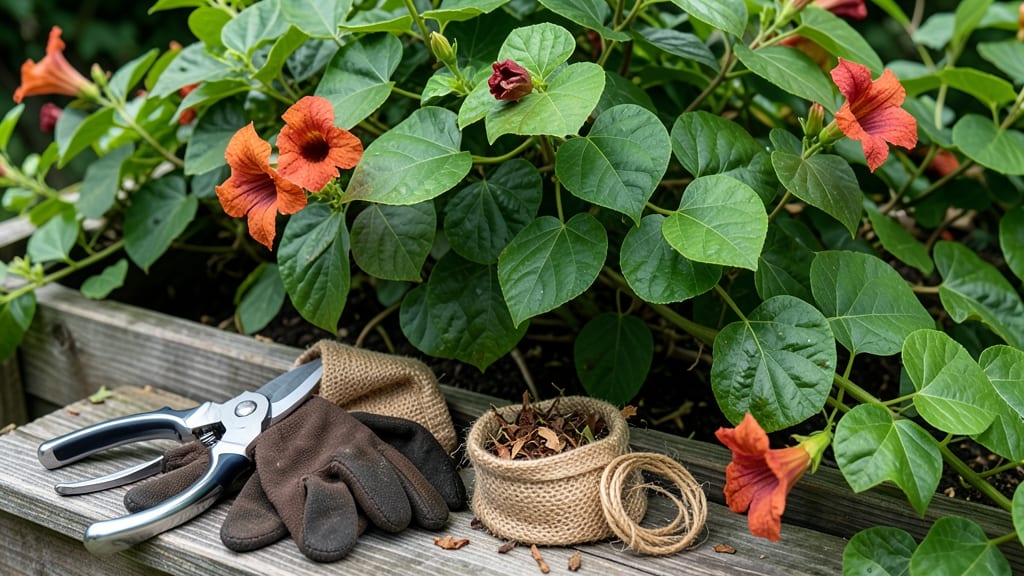
Late winter is the perfect time to prune trumpet vines and set them up for a season of vibrant orange blooms and lush foliage. 🌿 I’ve learned that aggressive pruning in late winter—right before new growth starts—stimulates stronger stems and more abundant flowers, not the leggy, sparse growth I used to get.
The key is cutting back one-third to half of last year’s growth, focusing on dead, damaged, or crossing branches. You’ll need sharp pruners, gloves (those thorns are no joke), and a ladder if your vine climbs high.
The goal is to open up the center for airflow and sunlight, which prevents fungal diseases and encourages bushier growth.
After pruning, you’ll see fresh green shoots within 2-3 weeks, and by summer, your trumpet vine will be a bloom machine with fewer gaps. The vine’s natural climbing habit means it’ll cover trellises or fences faster than ever, and those trumpet-shaped flowers will be impossible to ignore.
This method works for trumpet vines in zones 4-9, whether they’re climbing a fence, sprawling over a pergola, or growing as a small tree. Just avoid pruning in fall—you’ll encourage tender new growth that won’t survive winter. Ready to transform your vine into a showstopper?
📚 In This Guide
- What you need
- Instructions
- Tips and common mistakes
- Wrapping up and next steps
What you need
- ● Pruning shears or loppers – Choose bypass pruners (for clean cuts) or anvil pruners (for thicker stems). Opt for sharp, sterilized tools (7–10 inches long) to avoid tearing or spreading disease. (1–2 pairs recommended)
- ● Pruning saw – For thicker vines (over 1 inch in diameter). Look for a curved-tooth saw to prevent splintering. (1 unit)
- ● Gloves – Wear thick, cut-resistant gloves (gardening or pruning-specific) to protect against thorns and sap irritation. (1 pair)
- ● Disinfectant – Rubbing alcohol (70%+) or a pruner sterilizer to clean tools between cuts and prevent bacterial/fungal spread.
- ● Rake or broom – For clearing debris after pruning. (1 unit)
- ○ Pruning sealant (optional) – A wound dressing (like Tanglefoot Tree Wound Pruning Seal) to coat large cuts and reduce sap loss or pest entry.
- ● Weather check – Prune on a dry, calm day (avoid rain or high winds) to prevent slips and ensure clean cuts.
- ● Safety glasses – Protect your eyes from debris, especially when sawing thick vines. (1 pair)
- ● Sturdy ladder or step stool – If your vine is tall (6+ feet), use a stable, non-slip ladder with a spotter if needed.
- ○ Notebook & pen – Optional but helpful for sketching a pruning plan or marking vines for removal.
Step-by-step instructions for pruning trumpet vine
Here's how I transform my trumpet vine into a blooming powerhouse every spring—no guesswork, just proven techniques.
✂️ Step 1: Time It Right for Late Winter Pruning
Wait until after the last frost when nighttime temperatures stay above 32°F. I prune mine in early March in my zone 7 garden, but adjust for your climate. The key is cutting before new growth starts—you'll see fat, plump buds forming along the stems. These buds are your promise of summer blooms.
If you cut too early, you risk damaging dormant buds. If you wait too long, the vine will send out tender new growth that can't survive a late frost. Watch for the first 50-60°F daytime temperatures consistently—that's your signal to grab the shears.
✂️ Step 2: Remove Dead or Damaged Wood First
Start by scanning the entire vine for stems that are brown, brittle, or hollow—these won't recover. Cut these back to the base immediately. I use clean, sharp pruners (I sterilize mine with rubbing alcohol between cuts) to make 45-degree angles about ¼ inch above a healthy bud or lateral branch.
Don't leave stubs—they invite disease. You'll know you're doing it right when you see green tissue inside the stem when you make your cut. This is the living part that will sprout new growth. If you're unsure, cut back further until you find that green center.
✂️ Step 3: Thin Out Overcrowded Branches
Next, focus on the healthiest stems—select 3-5 of the strongest, most vigorous branches that show good spacing. Remove the rest at the base. I look for stems that are at least pencil-thick with multiple bud nodes. Thin branches allow better air circulation and prevent fungal issues.
Here's the thing—resist the urge to cut back too aggressively. Trumpet vines are resilient but not indestructible. You want to maintain the vine's structure while encouraging new growth. After thinning, you should see an open framework with plenty of room between branches for sunlight to reach the center.
✂️ Step 4: Shape for Optimal Growth
Now it's time to shape. I step back and visualize how the vine will grow. For a balanced look, I cut back the longest branches by about one-third to encourage bushier growth. Make cuts just above a bud that faces outward—this directs growth away from the center, preventing a dense, shaded interior.
For vines growing on trellises or arbors, I prune to encourage horizontal growth by cutting the leader (the main upward stem) back by half. You'll see new side shoots form within 2-3 weeks, and these will produce the most flowers. Avoid cutting back too much on young vines—they need all their energy to establish roots.
🌱 Step 5: Clean Up and Monitor New Growth
After pruning, rake up all the debris and dispose of it—don't compost diseased material. I also apply a layer of mulch around the base to protect new shoots from temperature swings. Water deeply but not excessively—you want the soil moist but not soggy as the vine starts to wake up.
Watch for new shoots emerging within 3-4 weeks. These should be bright green and firm to the touch. If you see any yellowing or wilting, it could signal over-pruning or stress. Adjust your watering if the soil feels dry more than an inch below the surface, but don't overdo it—trumpet vines are drought-tolerant once established.
Tips & tricks for perfect trumpet vine pruning
Here's the thing about trumpet vine pruning—timing and technique make all the difference between a vine that thrives and one that struggles. These are the tricks I've learned after years of trial and error (and a few too many sad, sparse blooms).
Timing is Everything: The window between 32°F nighttime temperatures and the first 50-60°F daytime temperatures is your sweet spot for pruning. I check my local frost dates and mark my calendar—pruning too early risks damaging those precious dormant buds, while waiting too long means tender new growth that can't handle late frosts. Pro tip: Use a small thermometer to monitor nighttime temps if you're unsure about your last frost date.
Tool Prep Prevents Problems: Before you even touch the vine, sterilize your pruners with rubbing alcohol. I do this between every 3-4 cuts to prevent spreading disease from any potentially infected stems. Also, make sure your blades are sharp—dull shears crush stems instead of making clean cuts, which stresses the plant. A quick test: If you have to force the blades through a stem, they're too dull.
Visual Cues for Healthy Cuts: When removing branches in Step 2, look for that green tissue inside the stem—this is your confirmation you're cutting in the right place. If you're unsure where to make your cut, count the buds from the base upward and aim to cut just above the third or fourth bud from the base of the branch you're removing. This ensures you're not leaving too much of a stub.
Mulch Matters More Than You Think: After pruning, that layer of mulch isn't just for looks—it regulates soil temperature and retains moisture. I use 2-3 inches of organic mulch (like shredded bark or straw) and keep it about 6 inches away from the vine's base to prevent rot. This creates the perfect environment for those new shoots to emerge strong and healthy.
Pro Tips for Trumpet Vine Pruning
- Here's the thing about trumpet vine pruning—timing and technique make all the difference between a vine that thrives and one that struggles.
- Timing is Everything: The window between 32°F nighttime temperatures and the first 50-60°F daytime temperatures is your sweet spot for pruning.
- Tool Prep Prevents Problems: Before you even touch the vine, sterilize your pruners with rubbing alcohol.
Frequently asked questions
Got questions about keeping your trumpet vine in tip-top shape? Here are some of the most common concerns—and straightforward answers—to help you prune like a pro!
When is the best time to prune trumpet vine?
Late winter (just before new growth starts) is ideal—this encourages vigorous spring blooms. You can also prune lightly after flowering to control size, but avoid heavy cuts then. Pro tip: If your vine is invasive, prune in early spring to curb spread!
How much can I cut back without harming the plant?
Trumpet vines are tough! You can safely remove up to ⅓ of the plant in late winter. For established vines, aim for 12–18 inches of old wood to leave room for new growth. Over-pruning won’t kill it, but it may delay blooms.
What if my trumpet vine isn’t blooming after pruning?
Check these fixes:
- Light: Ensure it gets 6+ hours of sun daily.
- Fertilizer: Use a balanced, phosphorus-rich feed in spring.
- Age: Young vines (under 2 years) may need patience—blooms often start in year 3.
Can I prune trumpet vine in fall or winter?
Light pruning in late fall (after leaves drop) is fine, but avoid heavy cuts—it can stress the plant before winter. If pruning in winter, wait until temps rise above 40°F to prevent dieback. Pro tip: Wear gloves—trumpet vine sap can irritate skin!
Is there a way to prune trumpet vine to keep it from climbing my house?
Yes! Use these tricks:
Method
How to Do It
Train on a trellis
Redirect growth with ties or prune back aggressive vines to encourage upward growth.
Root pruning
Dig a shallow trench around the base to limit root spread (do this in early spring).
Container growing
Plant in a large pot with a sturdy trellis—easier to control!
Wrapping up and next steps
Pruning your trumpet vine in late winter isn’t just about tidying up—it’s your secret weapon for vibrant blooms and robust growth all season long! 🌸 By following the right techniques, you’ll encourage healthier vines, better airflow, and those stunning trumpet-shaped flowers you love.
Now that you’re armed with the how-to, grab those pruners and get ready to transform your garden into a showstopper.
Your next step? Mark your calendar for late winter (just before new growth starts) and take action. Watch your trumpet vine thrive—and enjoy the compliments (and maybe even the hummingbirds!) that come with it. Happy pruning! 🌿✨