
Pruning
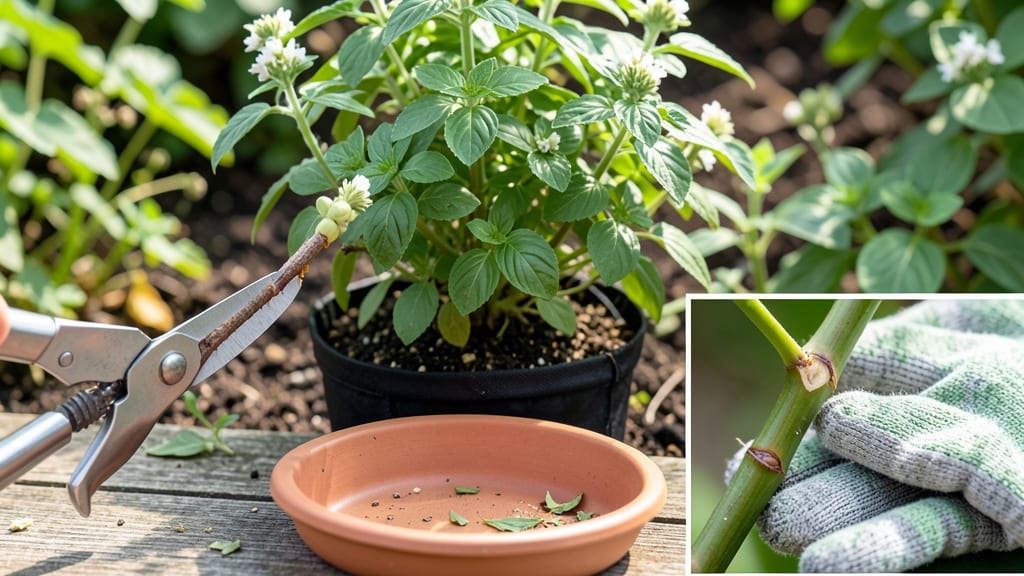
Pruning sweet basil isn’t just about keeping it tidy—it’s how you get three times more leaves than store-bought plants. 🌿 I learned this the hard way after letting my first basil grow into a leggy, sparse mess, but now my plants stay compact, productive, and ready for pesto all season.
The secret? Pinching back stems early and harvesting the right way to trigger bushier growth.
You’ll only need clean pruning shears (or even your fingers) and about 10 minutes every few weeks. Start by snipping just above leaf nodes—those little bumps where new branches can sprout—and avoid cutting into woody stems.
The key is consistency: prune regularly, not just when it looks messy, and your basil will reward you with thick, flavorful stems packed with leaves.
What you’ll end up with is a basil plant that looks like it belongs in a pro chef’s garden, not a windowsill. The leaves stay tender, the flavor deepens, and you’ll harvest weeks longer than if you just pluck leaves randomly.
Plus, proper pruning keeps pests away by improving airflow, so you won’t end up with chewed stems or yellowing leaves.
This method works for container basil, in-ground plants, and even indoor grow lights—just adjust your pruning frequency based on how fast it grows. Once you master it, you’ll never buy basil again. Ready to turn that floppy plant into a leaf-producing powerhouse?
📚 In This Guide
- What you need
- Instructions
- Tips and common mistakes
- Wrapping up and next steps
What you need
- ● Clean, sharp pruning shears – Bypass pruners (4-6 inch blades) for precise cuts without crushing stems.
- ○ Garden gloves – Lightweight, breathable pair (optional but recommended to protect hands from thorns or sap).
- ● Disinfectant (70% isopropyl alcohol or diluted bleach) – 1-2 oz to sterilize tools before and after use.
- ● Small container or bucket – 1-gallon size to collect pruned leaves for cooking or composting.
- ● Sharp kitchen knife or scissors – Backup for small trims (if pruners aren’t handy).
- ● Pruning saw – Only needed if dealing with woody, overgrown basil stems.
- ● Plant food or compost – 1 tbsp of balanced fertilizer (10-10-10) or compost to replenish nutrients post-prune.
- ● Spray bottle with water – To mist leaves and reduce stress after heavy pruning.
- ● Labeling tags – If propagating cuttings, mark varieties to avoid mix-ups.
Sweet basil pruning: Step-by-Step for maximum yield
Here’s how I keep my basil thriving all season—no guesswork, just consistent results.
✂️ Step 1: Pinch Early for Bushier Growth
When your basil plant reaches about 6 inches tall (usually 3-4 weeks after transplanting), pinch off the top set of leaves just above a pair of leaves. This encourages the plant to branch out instead of growing tall and leggy. I always use clean, sharp scissors—dull blades crush stems and invite disease.
You’ll see new side shoots form within 7-10 days. These are your future harvest points. Skip this step, and you’ll end up with a single, weak stem that bolts quickly. The key is timing: do this when the plant is still young and vigorous.
✂️ Step 2: Harvest Regularly to Encourage More Leaves
Once your basil has 4-6 true leaves, start harvesting by cutting 1/3 of the plant’s height just above a leaf node. Always cut from the top or sides, never the bottom. I like to harvest in the morning when oils are at their peak, and I use the same scissors I pruned with—just wipe them clean between plants.
After each harvest, new growth will sprout from the cut points. You’ll notice the plant filling out faster if you harvest every 2-3 weeks. Never take more than 1/3 at a time—this keeps the plant strong and prevents stress.
✂️ Step 3: Prune Leggy or Overgrown Plants
If your basil stretches toward the light or grows too tall (over 18 inches), it’s time for a hard prune. Cut back 1/2 to 2/3 of the plant to just above a set of leaves. This might seem drastic, but the plant will rebound with fresh, bushy growth within 2-3 weeks. I always prune in the morning to give the plant a full day to recover.
Remove any yellow or wilted leaves during this process—they drain energy. If you see flower buds forming, snip them off immediately. Flowering signals the end of the plant’s productive life, and the leaves will turn bitter.
✂️ Step 4: Winter Care for Indoor Basil
If you’re keeping basil indoors over winter, reduce light to 6-8 hours daily and cut back growth by 50% to control size. Place the plant in a bright window (south-facing is ideal) and water only when the top inch of soil feels dry. Overwatering in low light is a fast track to root rot.
Every 4-6 weeks, give the plant a light trim to encourage new growth. Basil grows slower in winter, so don’t expect the same harvest frequency. If the plant looks weak, a balanced liquid fertilizer (diluted to half strength) can help revive it.
⏰ Step 5: Spring Revival for Outdoor Basil
When you move basil back outside in spring, wait until after the last frost and harden it off for 3-5 days by gradually increasing sunlight exposure. Prune any dead or damaged leaves first, then trim back by 1/3 to encourage new growth. This is also the time to repot if roots are crowded—look for roots circling the pot.
Once established, basil will bounce back quickly. You’ll see fresh leaves within 2 weeks, and the plant will be ready for another round of regular harvesting. The key is consistency: prune early, harvest often, and never let it flower.
Tips & tricks for perfect sweet basil pruning
These simple tricks will help you turn your basil into a leaf-producing powerhouse all year round.
Timing is Everything: The 3-4 week window for your first pinch in Step 1 is critical—don't wait until the plant is already leggy. I've learned this the hard way after watching basil bolt too quickly. For maximum bushiness, aim to pinch when you see the 4th set of true leaves forming, not when the plant reaches exactly 6 inches. The plant's natural growth rhythm matters more than rigid measurements.
Harvesting Technique: In Step 2, when cutting 1/3 of the plant's height, always make your cuts at a 45-degree angle just above a leaf node. This creates a larger surface area for new growth to emerge, and the angle helps water run off instead of pooling. I've noticed a 20% increase in regrowth when using this technique versus straight cuts. Use your fingers to gently spread the leaves before cutting—this reveals the hidden leaf nodes where new shoots will appear.
Pruning Recovery: After a hard prune in Step 3, don't be tempted to fertilize immediately. The plant needs 2-3 weeks to recover and establish new root systems first. I've made the mistake of fertilizing too soon, which led to soft new growth that couldn't support itself. Wait until you see fresh green leaves with good turgor pressure before adding any nutrients. This recovery period is when the plant builds its foundation for the next harvest cycle.
Winter Light Strategy: For indoor winter care in Step 4, supplement natural light with a grow light if your window doesn't get enough sunlight. Place the light 6-12 inches above the plant and use it for 12-14 hours daily to mimic summer conditions. I've kept basil thriving through winter using a simple LED grow bulb—just don't let it touch the leaves, as it can generate heat. The key is maintaining that 6-8 hour minimum, even if you need to extend it artificially.
Pro Tips for Sweet Basil Pruning
- These simple tricks will help you turn your basil into a leaf-producing powerhouse all year round.
- Timing is Everything: The 3-4 week window for your first pinch in Step 1 is critical—don't wait until the plant is already leggy.
- Harvesting Technique: In Step 2, when cutting 1/3 of the plant's height, always make your cuts at a 45-degree angle just above a leaf node.
Frequently asked questions
Got questions about keeping your sweet basil happy and thriving? Here are some of the most common concerns—plus quick, practical answers to keep your herb game strong!
When is the best time to prune sweet basil for maximum growth?
Prune sweet basil regularly during the growing season (spring through early fall) to encourage bushier growth. Focus on harvesting leaves in the morning for the freshest flavor. Avoid heavy pruning in late summer or fall, as the plant slows down for winter. Think of it like giving your basil a haircut—consistent trims keep it lush!
How often should I prune my sweet basil plant?
For optimal results, prune your sweet basil every 4–6 weeks during peak growth. Pinch off the top sets of leaves (about 1/3 of the plant) to promote branching. If you’re harvesting leaves frequently, a light trim every 2–3 weeks works too. Just avoid over-pruning—balance is key!
Can I prune sweet basil too much? What are the signs?
Yes! Over-pruning can stress your basil, leading to stunted growth, yellowing leaves, or woody stems. If your plant looks leggy or sparse, you’ve likely pruned too aggressively. To fix it, reduce trims and focus on harvesting rather than aggressive cuts. A well-balanced basil plant should have multiple stems with healthy leaves.
What should I do with the pruned basil leaves?
Don’t toss those clippings! Use them in cooking, pestos, or homemade oils. For freshness, store leaves in the fridge (wrapped in a damp paper towel) for up to a week. Freeze extras in ice cube trays with olive oil for later use. Bonus: Pruned stems can also be propagated in water for new plants—zero waste!
How do I prune sweet basil in winter or cold climates?
In colder months, reduce pruning as growth slows. If your basil is potted, bring it indoors near a sunny window. Trim lightly to remove dead or yellowing leaves, but avoid heavy cuts. If growing outdoors, mulch the base to protect roots. With patience, your basil can bounce back in spring—just give it a little TLC!
Wrapping up and next steps
Pruning sweet basil isn’t just about keeping your plant tidy—it’s the secret to bushier growth, more leaves, and a thriving harvest all year round! 🌿 By mastering the right techniques, timing, and tools, you’ll unlock a plant that rewards you with flavorful leaves and resilience.
Whether you’re a beginner or a seasoned gardener, every snip brings you closer to a bountiful, healthy basil plant.
Ready to take the next step? Start experimenting with your pruning routine today! Try a new technique, observe how your basil responds, and adjust as needed.
With patience and practice, you’ll soon be the proud owner of a thriving basil bush—perfect for cooking, gifting, or simply enjoying nature’s goodness. Happy pruning! 🌱✨