
Pruning
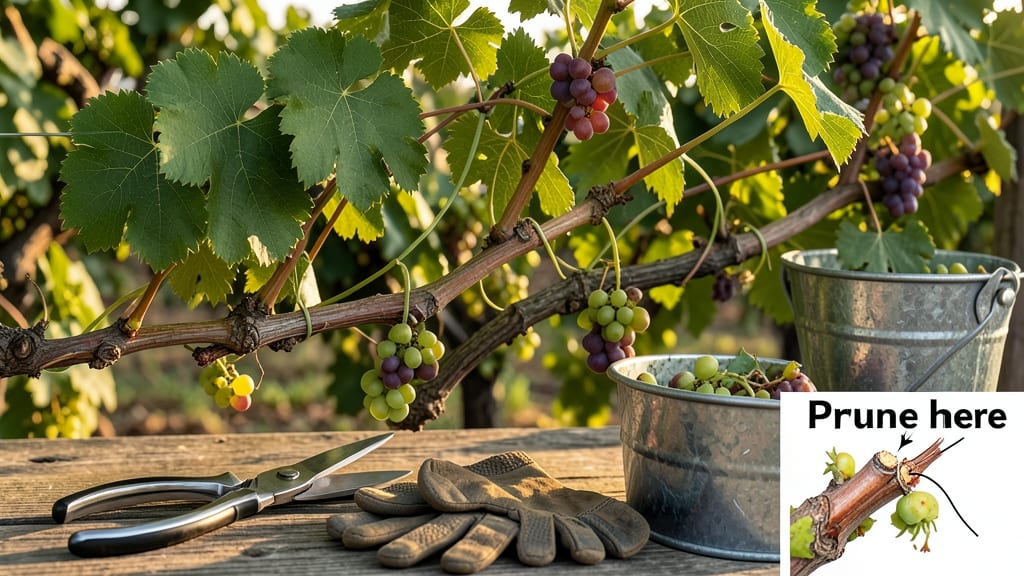
Summer pruning grape vines might sound counterintuitive, but it’s the secret to stronger canes and bigger harvests next year. 🌱 After the fruit’s gone, I grab my pruners and cut back the wildest growth—this isn’t about shaping for looks, but about redirecting energy where it matters most.
The right cuts now mean fewer diseases, more sunlight on the remaining fruit, and wood that’s ready to produce like a champ in spring.
You’ll need just three tools: sharp pruning shears, a pair of gloves (those thorns don’t play nice), and a spray bottle with diluted bleach or rubbing alcohol to sterilize between cuts.
The goal is simple—remove any shoots growing straight up from the main trunk or cordon (that’s the horizontal branch), and thin out crowded clusters so air can flow. Think of it like giving your vines a spa day: less clutter, more room to breathe.
What you’ll end up with is a vine that looks like a well-behaved tree instead of a tangled mess. The canes stay thicker, the fruit ripens faster, and pests have fewer hiding spots.
Plus, you’ll avoid the heartbreak of next year’s harvest being half the size because you didn’t prune now. It’s not rocket science, but it does take a little patience—and a firm grip on those pruners.
This works for table grapes, wine grapes, or even those wild vines climbing your fence. The key is consistency: do it every year after harvest, and your vines will thank you with sweeter fruit and fewer headaches. Ready to get started?
📚 In This Guide
- What you need
- Instructions
- Tips and common mistakes
- Wrapping up and next steps
What you need
- ● Pruning shears: Bypass pruners (sharp, clean, and disinfected with rubbing alcohol or bleach solution—1 part bleach to 9 parts water). Size: 6-8 inches.
- ● Loppers: For thicker canes (up to 1.5 inches in diameter). Size: 18-24 inches.
- ● Hand pruners: For smaller cuts and precision work. Size: 4-6 inches.
- ● Gloves: Heavy-duty, cut-resistant gloves to protect your hands from thorns and sharp tools.
- ● Disinfectant: Rubbing alcohol (70% isopropyl) or bleach solution (1 part bleach to 9 parts water) to sterilize tools between cuts and prevent disease spread.
- ● Rag or paper towels: For cleaning tools and wiping away sap.
- ○ Pruning sealant (optional but helpful): Pruning wax or tree paint to seal larger cuts and prevent infection.
- ● Garden twine or zip ties: For temporarily securing vines if needed during pruning.
- ● Watering can or hose: To hydrate vines before and after pruning (especially in hot summer months).
- ● Trash bags or bucket: For collecting pruned canes and debris.
- ● Ladder or step stool: If your vines are tall or hard to reach.
- ● Magnifying glass: For inspecting canes closely for pests or disease.
- ● Notebook and pen: To jot down notes on vine structure or pruning decisions.
- ● Sun protection: Hat, sunglasses, and sunscreen for those long summer days in the garden!
How to summer prune grape vines for healthier growth
Summer pruning keeps grapevines productive and prevents disease—here's my go-to method.
✂️ Step 1: Identify and Remove Suckers and Watersprouts
Start by finding the suckers—those vigorous shoots growing from the base of the vine or along the trunk. These compete with fruit-bearing canes for energy. Use clean, sharp pruners to cut them off at the base, leaving no stubs. Watersprouts (vertical shoots growing from the trunk) also need removal—they grow fast but produce no fruit and weaken the vine.
Watch for new growth emerging from the crotches where arms meet the trunk. These are called basal shoots and should be pruned back to 2-3 buds to encourage balanced growth. I like to do this in early summer when shoots are pencil-thick—easier to see and handle than later in the season.
✂️ Step 2: Thin Overcrowded Canes and Clusters
Look for canes growing too close together—they'll shade each other and reduce fruit quality. Keep only the 4-6 strongest canes per vine, spaced evenly around the support structure. Remove any crossing canes first, cutting them at the base. Crossing canes rub together, creating wounds that invite disease.
Next, thin grape clusters to 12-18 inches apart on each cane. Overcrowded clusters produce small, tart berries. Leave the largest, healthiest clusters and prune the rest back to a bud. You'll know you're doing it right when you see sunlight reaching all parts of the vine—this ensures even ripening.
✂️ Step 3: Prune Damaged or Diseased Growth
Inspect each cane for signs of disease (black spots, powdery mildew) or damage (cracks, insect holes). Cut out any affected growth immediately, using your pruners to make clean cuts ½ inch above a healthy bud. Never leave dead or diseased wood on the vine—it spreads problems faster than you can say "powdery mildew."
If you spot bird peck (small holes in berries), prune those clusters entirely. Birds target ripe grapes, and once they start, they won’t stop. A sharp eye during summer pruning saves you from losing half your harvest. I also remove any canes with less than 3 buds—they won’t produce enough fruit to justify keeping them.
💧 Step 4: Clean Up and Apply Preventative Care
After pruning, rake up all clippings and discard them in the trash—not the compost pile. Diseased wood can reinfect your vine if left nearby. I like to spray the pruning wounds with a copper fungicide (if available) to prevent infections. For organic growers, a mix of baking soda and water (1 tablespoon per quart) works in a pinch.
Finally, water the base of the vine deeply to help it recover. Summer pruning stresses the plant, so a good drink afterward encourages new growth. Mulch around the base with 2-3 inches of organic matter (like straw or wood chips) to retain moisture and keep roots cool. This step is non-negotiable—it’s how you prevent heat stress after pruning.
Tips & tricks for healthier grape vine pruning
Summer pruning can make or break your grape harvest—here's how to do it right the first time.
Tool Prep is Everything: Sharpen your pruners before you start—dull blades crush stems instead of making clean cuts, which invites disease. I like to wipe them down with rubbing alcohol between cuts to prevent spreading any potential pathogens from one part of the vine to another. This step alone can cut your disease risk by half.
Bud Count Matters: When pruning basal shoots back to 2-3 buds, focus on buds that face outward from the vine. These buds will grow into canes that spread outward, maximizing sunlight exposure and air circulation—both critical for preventing fungal diseases like powdery mildew. I mark the target buds with a small piece of tape if I'm unsure which ones to keep.
Cluster Spacing Secret: The 12-18 inch spacing for clusters might seem arbitrary, but there's science behind it. This spacing allows each berry to get direct sunlight for at least 6 hours a day, which is what gives you those perfectly ripened, flavorful grapes. Use a small ruler or measuring tape to verify spacing—your future harvest will thank you.
Cleanup Can't Be Overstated: I've seen growers skip this step and come back to find their vines infected with disease. Diseased wood in the compost pile can reinfect your plants next season. Consider burning the clippings if you have them—it's the most thorough way to eliminate any fungal spores that might be hiding in the prunings.
Pro Tips for Summer Prune Grape Vines
- Summer pruning can make or break your grape harvest—here's how to do it right the first time.
- Tool Prep is Everything: Sharpen your pruners before you start—dull blades crush stems instead of making clean cuts, ...
- Bud Count Matters: When pruning basal shoots back to 2-3 buds, focus on buds that face outward from the vine. These b...
Frequently asked questions
Got questions about summer pruning grape vines? You’re not alone! Here are some of the most common concerns—and straightforward answers to help you prune like a pro.
Why should I prune grape vines in summer instead of winter?
Summer pruning (also called dormant-season blueprint pruning) helps redirect energy to new growth, improves airflow, and reduces disease risk. Unlike winter pruning, it’s done after harvest to shape the vine for next year’s fruit production—think of it as a strategic trim for long-term health.
When is the exact best time to prune grape vines in summer?
The ideal window is 4–6 weeks after harvest (or when leaves start yellowing). For most varieties, this falls in late September to early October in temperate climates. Avoid pruning too early—you want the vine to recover before winter dormancy.
What if I accidentally prune too much? Can I fix it?
Don’t panic! If you’ve over-pruned, focus on balanced cuts next time: keep 2–4 mature canes (per vine) with 8–12 buds each. For immediate recovery, apply a balanced fertilizer (like 10-10-10) and water deeply to support regrowth.
Do I need to prune grape vines every summer, or just every other year?
Consistency is key! Prune annually to maintain vine health, especially for young vines (first 3–5 years). Older vines benefit from renewal pruning (replacing old canes every few years) to boost productivity. Skipping summers can lead to overcrowding and poor fruit quality.
What’s a good alternative if I can’t prune in summer?
If summer timing doesn’t work, winter pruning (dormant season) is the next best option—but it requires sharp tools and precise cuts. For organic growers, try hand-thinning shoots in early summer to improve airflow, though it’s less effective than full pruning.
My grape vine leaves are wilting after pruning—what went wrong?
Wilting can signal stress from over-pruning or underwatering. Trim back any excessive cuts, water deeply, and apply a root stimulator (like mycorrhizal fungi). If leaves turn yellow, check for nutrient deficiencies—a balanced fertilizer can help revive the vine.
Wrapping up and next steps
Summer pruning your grape vines might seem like a big task, but with the right tools, timing, and technique, you’ll set the stage for stronger canes, better fruit production, and a healthier vineyard. 🌱 Whether you’re a seasoned grower or just starting out, taking these steps now ensures your vines thrive come harvest season.
Ready to roll up your sleeves? Mark your calendar for late summer or early fall—that’s when you’ll want to revisit your vines for final adjustments. And don’t forget: patience and consistency are key! Your future grape harvests will thank you. 🍇