
Pruning
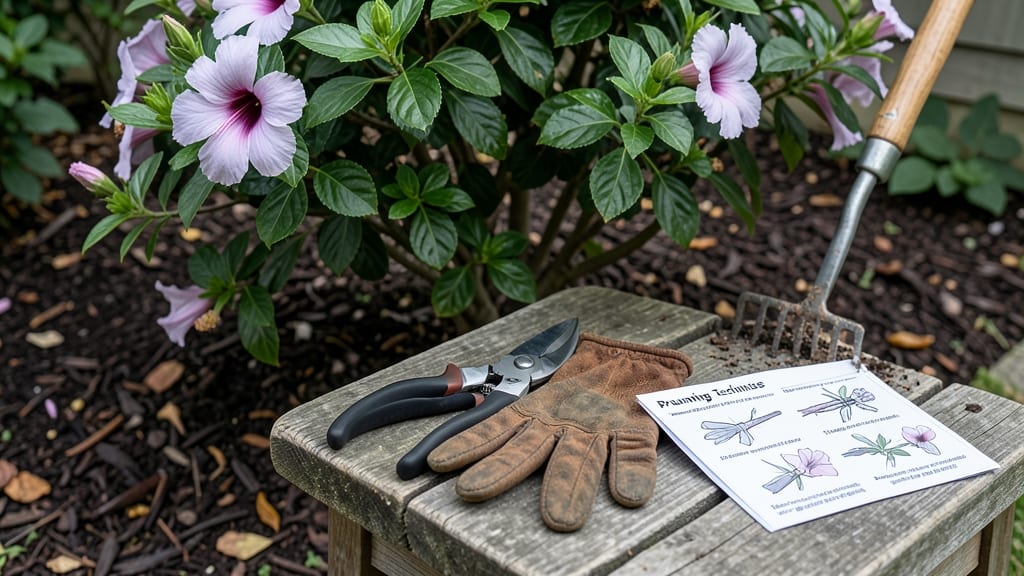
Pruning your Rose of Sharon tree in late winter unlocks three times more blooms next summer. 🌸 I learned this after my first pruning left me with a leggy mess—until I discovered the dormant-season blueprint that transforms bare branches into lush, flower-covered canes.
The secret lies in timing, tools, and technique: wait until after the last frost when the tree is fully dormant, grab your pruners and gloves, and focus on three key cuts—removing dead wood, shaping for sunlight, and rejuvenating old growth.
Most gardeners over-prune, but this method keeps your tree healthy while maximizing those signature trumpet-shaped flowers. By spring, you’ll see fresh green shoots pushing from the base and branches, setting up a longer, more abundant bloom season than you’ve ever had.
The tree’s natural resilience means fewer diseases and stronger stems to support heavy flower clusters. Works for both young trees and mature specimens—just adjust the intensity. Here’s how to do it right the first time.
📚 In This Guide
- What you need
- Instructions
- Tips and common mistakes
- Wrapping up and next steps
What you need
- ● Bypass Pruners: A pair of sharp, high-quality bypass pruners (5-7" blade length) for clean cuts on smaller branches (up to ½ inch in diameter). Pro tip: 💡 Sanitize blades with rubbing alcohol before and after use to prevent disease spread!
- ● Loppers: Heavy-duty loppers (8-10" blade length) for branches ½ to 1½ inches thick. Look for ratcheting or bypass-style models for precision.
- ● Pruning Saw: A curved-tooth pruning saw (10-12" blade) for thick branches (1½+ inches). Never use a handsaw—it damages the tree!
- ○ Extension Pole: A 6-10 ft. pole saw or pruner attachment for high branches (optional but game-changing for safety!).
- ● Work Gloves: Heavy-duty, cut-resistant gloves (e.g., mechanics or pruning-specific) to protect hands from thorns and rough bark.
- ● Safety Glasses: ANSI-rated eye protection to shield against debris.
- ● Ladder (if needed): A sturdy, non-slip ladder (e.g., aluminum extension ladder) rated for your height needs. Safety first! 🎯
- ● Disinfectant: 70% isopropyl alcohol or a 10% bleach solution (1 part bleach to 9 parts water) to sterilize tools between cuts.
- ○ Pruning Sealant: Optional but helpful for sealing large cuts (over ½ inch) to prevent disease. Choose a latex- or asphalt-based product.
- ● Trash Bags: Heavy-duty contractor bags (30+ gallon) for collecting pruned branches and debris.
- ● Marking Twine/Flags: Colored twine or small flags to tag branches for removal (helpful for complex pruning plans).
- ● Water & Snacks: Hydration and energy are key—especially if pruning on a sunny day! 💦
- ● Timing: Prune during late winter or early spring (dormant season)—ideally before new growth starts (Jan–March in most climates).
- ● Weather Check: Choose a dry, calm day (no rain forecasted for 24 hours) to avoid slippery conditions or wet cuts.
- ● Tree Health Assessment: Inspect the tree beforehand for dead, diseased, or pest-infested branches to prioritize removal.
- ● Safety Briefing: Clear a 10-foot radius around the tree of tripping hazards (tools, pets, kids).
Step-by-step instructions for pruning your Rose of Sharon tree
Here's how I transform my Rose of Sharon into a blooming powerhouse every spring—using precise cuts that encourage vibrant flowers.
✂️ Step 1: Time Your Pruning Perfectly
Prune your Rose of Sharon during late winter or early spring, just as new growth begins but before buds swell. This is typically February to March in most climates. I wait until the ground thaws slightly—when I can see the first hints of green emerging from the base. Pruning too early risks damaging new buds, while waiting too long reduces next season's bloom potential.
If you missed the dormant season window, you can do a light shaping prune in late summer after flowering, but avoid heavy cuts. The tree blooms on new wood, so late pruning may reduce next year's flowers. I mark my calendar each year to remind myself—this tree rewards consistency.
🌿 Step 2: Gather Your Tools and Safety Gear
You'll need sharp pruning shears for clean cuts, loppers for thicker branches, and gloves to protect from thorns. I always sterilize my tools with rubbing alcohol between cuts to prevent disease spread. A ladder becomes essential for mature trees—never stand on unstable surfaces.
Wear long sleeves and safety glasses. Rose of Sharon thorns are vicious, and the branches can be heavy. I like to work when the tree is dry to avoid slippery conditions. Keep a bucket nearby to collect debris—this makes cleanup easier and prevents thorns from scattering.
✂️ Step 3: Remove Dead, Diseased, or Crossing Branches First
Start by eliminating any branches that are dead, diseased, or crossing. Dead wood is easy to spot—it's brown, brittle, and doesn't bend. Diseased branches often have black spots or oozing sap. Cut these back to the main trunk or a healthy lateral branch. I make my cuts at a 45-degree angle, about ¼ inch above a bud facing outward.
Crossing branches rub against each other, creating wounds that invite pests and disease. Remove the smaller of the two branches at its point of origin. This opens up the center of the tree, allowing better airflow and sunlight penetration. I always step back after each cut to visualize the tree's new shape.
🌱 Step 4: Thin the Canopy for Better Air Circulation
Selectively remove about 20-30% of the tree's branches to create an open, vase-like shape. Focus on branches growing inward or downward—they compete with stronger, upward-growing branches. I look for branches that are thinner than a pencil and remove them entirely at the base.
For thicker branches, cut back to a strong lateral branch or the main trunk. Make your cuts just outside the branch collar—the swollen area where the branch meets the trunk. Avoid leaving stubs, as they can rot and attract pests. After thinning, the tree should have a balanced silhouette with sunlight reaching all the way to the center.
☀️ Step 5: Shape for Optimal Bloom Display
Now it's time to refine the tree's shape. I prefer a slightly rounded, multi-stemmed form that showcases the horizontal branches where flowers develop. Step back frequently to check your progress—you want a natural look, not a geometric one. Avoid over-pruning; Rose of Sharon is forgiving but benefits from some structure.
For mature trees, I focus on rejuvenation cuts—selecting 3-4 of the strongest, youngest branches and cutting them back by ⅓ to ½ their length. This stimulates new growth and encourages abundant blooms. Finish by removing any suckers at the base of the tree. These compete with the main structure and drain energy.
Tips & tricks for perfect Rose of Sharon pruning
These pro techniques will help you transform your dormant Rose of Sharon into a flowering showstopper—without the common mistakes that leave trees looking ragged.
Timing Secret: The February-to-March window isn't just about avoiding buds—it's about catching that sweet spot when the tree's energy is shifting from dormancy to growth. I've learned the hard way that pruning too early (when buds are still tight) can shock the tree, while waiting too late (when buds are swelling) reduces next year's bloom potential. Look for those first faint green shoots at the base—they're your cue to start.
Tool Technique: Your pruning shears should be sharper than your focus on the first cut. Dull tools crush branches instead of making clean cuts, which creates larger wounds that heal poorly. I sterilize my tools between each cut with rubbing alcohol—this prevents spreading any hidden diseases from branch to branch. For thicker branches, use your loppers but never force them; if a branch won't yield, you're using the wrong tool or the cut isn't positioned correctly.
Visual Cue for Cuts: When making your 45-degree cuts in Step 3, imagine you're slicing a wedge of cake—just above that outward-facing bud. The angle helps water run off the cut, preventing rot. For thicker branches, I use the "branch collar" as my guide: cut just outside that swollen area where the branch meets the trunk. This preserves the tree's natural healing response. Always step back after each major cut to visualize the emerging shape—your eyes see patterns your hands might miss.
Canopy Strategy: That 20-30% thinning target in Step 4 isn't arbitrary—it creates the perfect balance between airflow and structure. I focus on removing branches thinner than a pencil first, then work my way up. For mature trees, I make rejuvenation cuts on 3-4 of the strongest branches, cutting back by one-third to one-half their length. This might seem drastic, but it's what triggers that incredible flush of new growth and blooms. Think of it as giving your tree a haircut—you're not removing everything, just shaping what's there.
Pro Tips for Rose Of Sharon Tree Pruning
- These pro techniques will help you transform your dormant Rose of Sharon into a flowering showstopper—without the common mistakes that leave trees looking ragged.
- Timing Secret: The February-to-March window isn't just about avoiding buds—it's about catching that sweet spot when the tree's energy is shifting from dormancy to growth.
- Tool Technique: Your pruning shears should be sharper than your focus on the first cut.
Frequently asked questions
about pruning your Rose of Sharon tree—because even the most patient gardeners have questions! Here are the answers to the most common ones.When is the best time to prune a Rose of Sharon tree?
The ideal window for pruning is late winter or early spring, just before new growth begins (typically February to March in most climates). This aligns with the tree’s dormant season and encourages vibrant blooms. Avoid pruning in fall—it can stimulate tender growth vulnerable to frost damage.
How much can I trim back my Rose of Sharon tree?
You can be bold with pruning! Cut back up to ⅓ of the tree’s height if needed, but avoid removing more than that in a single season. Focus on shaping, removing dead wood, and thinning crowded branches. Over-pruning won’t kill the tree, but it may delay blooming. Think of it like a haircut—confidence is key!
What if I prune at the wrong time and my tree doesn’t bloom?
Don’t panic! If you prune too late (after buds form) or too aggressively, blooms may be delayed—but the tree will recover. Next season, stick to dormant pruning and avoid heavy cuts in summer. A light trim after flowering can also encourage bushier growth. Patience pays off!
Can I prune a Rose of Sharon tree in summer for shape?
Yes, but lightly! Summer pruning is best for shaping or removing spent flowers (deadheading). Avoid heavy cuts—this can stress the tree and reduce next year’s blooms. If you must prune heavily, wait until late summer or early fall, but still avoid extreme cuts. Think “touch-ups,” not transformations!
What should I do if my Rose of Sharon tree looks leggy after pruning?
Leggy growth happens when the tree focuses on new shoots instead of blooms. To fix it, prune back some of the long, bare stems to just above a leaf node or bud. This encourages fuller growth. Fertilize lightly with a balanced formula (10-10-10) in early spring to support recovery. Soon, your tree will bounce back with lush foliage!
Is there a difference between pruning old vs. new wood?
Yes! Old wood (last year’s growth) produces the most flowers, so prune it carefully. New wood (current year’s growth) can be trimmed more freely to shape the tree. If you accidentally prune too much old wood, don’t worry—the tree will still bloom, but you might see fewer flowers that season. Balance is everything!
Wrapping up and next steps
Pruning your Rose of Sharon tree during dormancy is the secret to longer, healthier blooms and a stronger plant for seasons to come! 🌸 By following the right techniques—like removing dead wood, thinning crowded branches, and shaping with precision—you’ll encourage vibrant growth and stunning floral displays.
With the right tools and timing, even beginners can master this process.
Ready to transform your tree? Grab your pruners, mark those cuts, and get started—your future blooms will thank you! For extra confidence, watch a quick pruning tutorial or join a local gardening group to share tips with fellow enthusiasts. Happy pruning! ✂️🌿