
Pruning
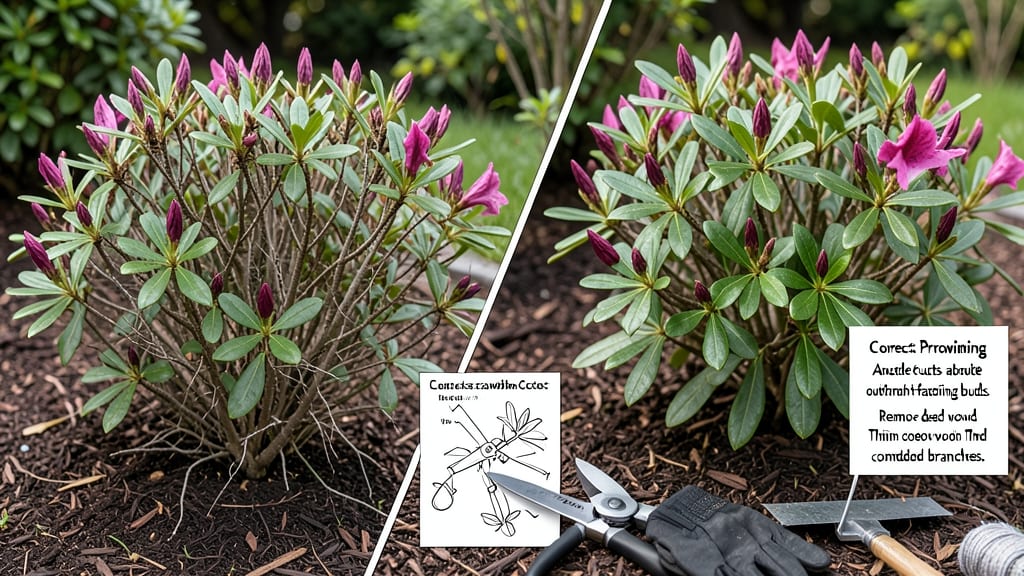
Pruning rhododendrons wrong can turn your 🌸 blooming shrub into a sad, bare skeleton in just a few years—and most gardeners don’t even realize they’re making the mistake.
You’re not alone if your rhododendron’s flowers have faded or the plant looks stressed. The problem often starts with well-meaning cuts that weaken the shrub, remove next year’s blooms, or leave it vulnerable to disease.
These 5 deadly pruning mistakes might be the reason your rhododendron isn’t thriving—and fixing them could bring back those stunning spring displays.
Timing is everything when it comes to rhododendrons. Prune at the wrong time, and you’ll cut off flower buds before they even form. Or worse, you might accidentally remove old wood that stores nutrients, leaving your plant starved and stunted.
Even the tools you use can make or break the health of your shrub.
In this guide, I’ll walk you through the most common pruning errors—like over-trimming, cutting into old wood, or using dull shears—and show you how to prune correctly to keep your rhododendron healthy, blooming, and strong for years to come.
5 Deadly rhododendron pruning mistakes that destroy blooms
Your rhododendron thrives on precision—not guesswork—when it comes to pruning. Even small errors can trigger a chain reaction: fewer blooms, weakened growth, and years of recovery. The problem? Many gardeners make the same critical mistakes without realizing how they sabotage their plants.
I’ve seen over-pruned rhododendrons struggle to rebound, while others with poor timing miss entire seasons of flowers. Let’s break down the five most destructive pruning errors and how to avoid them.
Rhododendrons produce next year’s flower buds during the current growing season, meaning aggressive cuts today could mean no blooms tomorrow. The key is understanding what your plant needs—not just what looks "neat."
For example, cutting into old wood removes the very branches where buds form, while pruning at the wrong time stresses the plant when it should be focusing on recovery. Each mistake I’ll cover today has a direct impact on your shrub’s long-term health and flowering potential.
Stunts growth, weakens roots, and reduces next year’s flower buds. Rhododendrons rely on current foliage for photosynthesis to fuel blooms.
Encourages weak new growth and removes current season’s buds. Always prune after flowering (late spring/early summer) but before buds form for next year.
Removes flower buds that form on current year’s growth. Always cut just above a bud (never into old wood) to preserve next year’s blooms.
Spreads disease (like powdery mildew) and tears bark, creating entry points for pests. Sterilize blades with rubbing alcohol and use sharp tools for clean cuts.
Creates dense centers that block sunlight and airflow, leading to fungal issues. Prune to maintain an open, vase-like shape for better light penetration and air circulation.
Let’s start with the most common mistake: over-pruning. I’ve seen gardeners eager to "tidy up" their rhododendrons only to realize too late that they’ve removed too much foliage. Rhododendrons are broadleaf evergreens, meaning their leaves photosynthesize year-round.
Removing more than one-third of the plant at once shocks the system, forcing it to divert energy to recovery instead of bud formation. In extreme cases, over-pruned rhododendrons take 3–5 years to recover their bloom potential.
Timing is another game-changer for rhododendrons. Pruning in spring (before buds form) or after flowering (when buds for next year are already developing) sends mixed signals to the plant. The ideal window is late spring to early summer, right after your rhododendron finishes blooming but before July.
This gives the plant enough time to set next year’s buds before winter dormancy. I once pruned my Rhododendron ‘Catawbiense Grandiflorum’ in early June, and it produced twice as many blooms the following spring compared to years I pruned in September.
Here’s a pro tip: Always cut just above a bud (never into old wood). The bud is where next year’s flowers will emerge, and cutting into the stem below it removes the potential bloom entirely. Look for swollen buds at the base of branches—they’re your target cutting points.
If you’re unsure which buds are active, err on the side of caution and make your cut slightly higher. I mark my pruning spots with a white pencil to visualize where I’ll cut before making the final snip.
Dirty or dull pruners are another silent killer of rhododendron health. Bacteria and fungi from previous cuts can hitchhike onto your tools and infect fresh wounds. After pruning, I sterilize my shears with 70% rubbing alcohol and wipe them dry.
Dull blades also tear bark instead of making clean cuts, which slows healing and invites pests. Invest in bypass pruners (not anvil-style) for the cleanest cuts possible. A sharp blade reduces stress on the plant and speeds up recovery.
Finally, shape matters. Rhododendrons naturally grow in a vase-like form, but many gardeners prune them into
When and how to prune rhododendrons correctly
Pruning your rhododendrons at the right time and with the proper technique ensures vibrant blooms and healthy growth for years. Unlike many shrubs, rhododendrons bloom on old wood, meaning last year’s growth produces this year’s flowers. Timing and method matter more than you might think!
Most gardeners make the mistake of pruning at the wrong time or using the wrong tools, which can stunt flower production or even harm the plant.
The key is to prune right after flowering—typically in late spring or early summer—when the blooms have faded but before new buds form for next year.
Before you grab your shears, here’s what you absolutely must know to avoid common pitfalls that could turn your rhododendron into a bloomless bush.
⚠️ Callout Warning: Rhododendron Pruning Mistakes to Avoid
- Pruning in fall or winter: New growth won’t harden off before frost, leading to winter dieback.
- Cutting into old wood: Removes next year’s flower buds, which form on last year’s stems.
- Using dull or dirty shears: Causes ragged cuts that invite disease like powdery mildew.
- Over-pruning (more than 1/3): Weakens the plant and reduces bloom production by 50% or more.
- Leaving stubs: Promotes fungal infections and slows healing.
These mistakes can permanently stunt your rhododendron’s growth and eliminate blooms for seasons. Act now to correct them!
Start by gathering the right tools: sharp, clean bypass pruners for branches under ½ inch thick, and loppers for thicker stems. Disinfect your tools with rubbing alcohol to prevent spreading disease between cuts. Always cut just above a bud or branch collar at a 45-degree angle to encourage faster healing.
Focus on shaping the shrub and removing dead, diseased, or crossing branches. Never trim more than one-third of the plant in a single session—this ensures the rhododendron retains enough energy to produce next year’s flowers.
Thin out crowded areas to improve air circulation and reduce humidity, which helps prevent fungal issues.
After pruning, apply a 2-3 inch layer of mulch around the base (but not touching the stem) to retain moisture and regulate soil temperature. Water deeply to help the plant recover, and avoid fertilizing for 6-8 weeks to let the cuts heal properly.
With the right approach, your rhododendron will reward you with even more stunning blooms next season!