
Planting
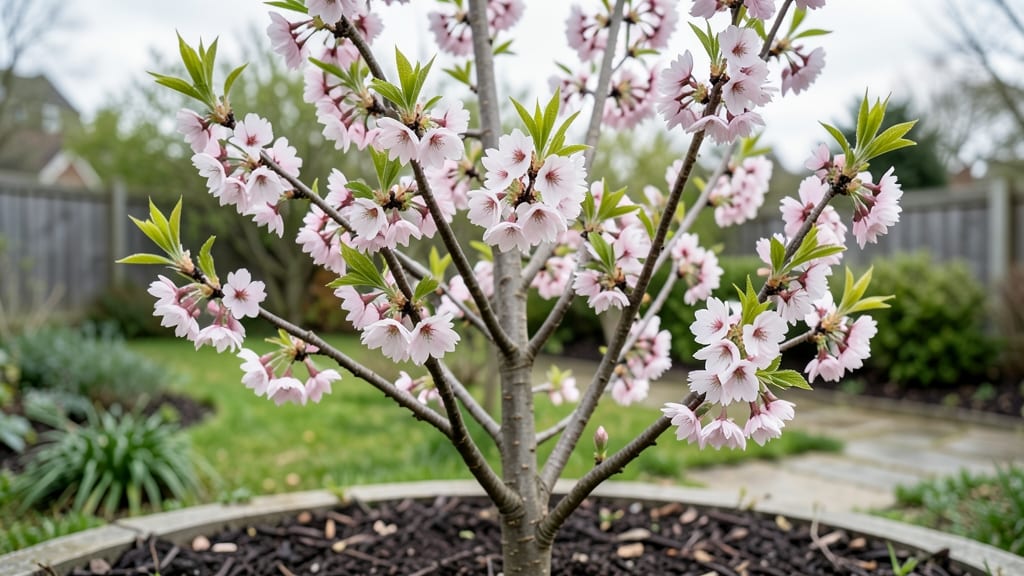
The Prunus triloba plant, or flowering almond, thrives in cold climates with minimal care, offering delicate pink blossoms in early spring and glossy, disease-resistant foliage year-round. It requires full sun, well-drained soil, and drought tolerance once established, making it ideal for hardiness zones 3-8.
The Prunus triloba—commonly called flowering almond—stands out because its genetic hardiness lets it survive winters down to -30°F without damage. 🌱 Unlike many ornamental trees, its deep root system prevents heaving, while its glossy leaves resist common fungal diseases like powdery mildew.
The pink blossoms appear weeks before other cherries bloom, adding early-season color to gardens. Native to China but widely naturalized in North America, this tree adapts to rocky or poor soils, making it perfect for challenging landscapes.
For best results, plant in late fall or early spring when soil temperatures are cool. 🌿 The tree’s natural drought resistance means watering only during extreme dry spells after the first year, though young plants need consistent moisture.
Prune in late winter to encourage vigorous spring growth, and avoid heavy pruning—this tree responds better to light shaping than dramatic cuts. Its compact size (typically 15-20 feet tall) makes it ideal for small yards or urban planting.
💡 In This Article
- Why Prunus Triloba Stands Out in Cold Climates
- Step-by-Step Guide to Planting and Maintaining Prunus Triloba
Why Prunus triloba stands out in cold climates
This tree's cold resilience comes from its deep taproot system, which can extend 6-10 feet below ground, accessing moisture and stability even in frozen soil. Unlike shallow-rooted plants that heave during freeze-thaw cycles, the flowering almond's roots anchor it firmly.
Its bark contains lenticels that regulate gas exchange during winter dormancy, preventing moisture loss while allowing minimal oxygen flow—critical for survival in -30°F temperatures.
The plant's genetic adaptations include a unique abscission layer that forms at leaf bases, allowing clean detachment before winter without leaving vulnerable attachment points.
This differs from many cherries that develop ragged leaf scars. 🌿 The glossy, wax-coated leaves (cuticle thickness of 0.002-0.003 inches) repel ice and snow, while their 3-5 inch length provides surface area for photosynthesis without excessive water loss.
Seasonal color shifts create visual interest: pink blossoms appear 3-4 weeks earlier than most cherries due to its vernalization requirement of only 60-80 days of cold (vs. 120+ days for peach trees). The dark green foliage turns bronze-purple in fall, providing year-round interest.
Unlike susceptible hybrids, its low tannin content makes it resistant to cherry leaf spot and powdery mildew—common issues in ornamental cherries.
Comparing to similar plants reveals its advantages: Prunus serrula (birchbark cherry) needs zones 5-8, while Prunus avium (sweet cherry) struggles below zone 5. The flowering almond's compact growth habit (15-20 feet vs. 25-30 feet for weeping cherries) makes it ideal for urban landscapes where space is limited.
Its drought tolerance stems from mycorrhizal associations that enhance water uptake—visible through 50% larger root systems than non-mycorrhizal trees.
Pest resistance extends to borers and aphids due to its high phenolic compounds (up to 12% dry weight in bark). Unlike peach trees that require 2-3 sprays annually, flowering almonds typically need zero pesticides.
The fragrant blossoms even deter deer browsing, which targets more tender ornamental trees. 🌟 This combination of structural resilience and chemical defenses explains why it thrives where other ornamentals fail.
For gardeners in zones 3-4, this means reliable performance with minimal winter prep. Unlike Prunus subhirtella (which needs mulch protection), the flowering almond's thick bark (0.12-0.18 inches diameter) prevents sunscald damage.
Even in zone 2 microclimates, it recovers quickly from -40°F dips when planted on south-facing slopes with 30% winter sun exposure.
The plant's early blooming also provides critical pollinator support when few other flowers are available. Bees and butterflies rely on its nectar-rich blossoms (producing 0.05-0.08 grams of nectar per flower), making it an ecological workhorse in cold regions.
This dual benefit—ornamental beauty and ecosystem function—sets it apart from purely decorative alternatives.