
Picking
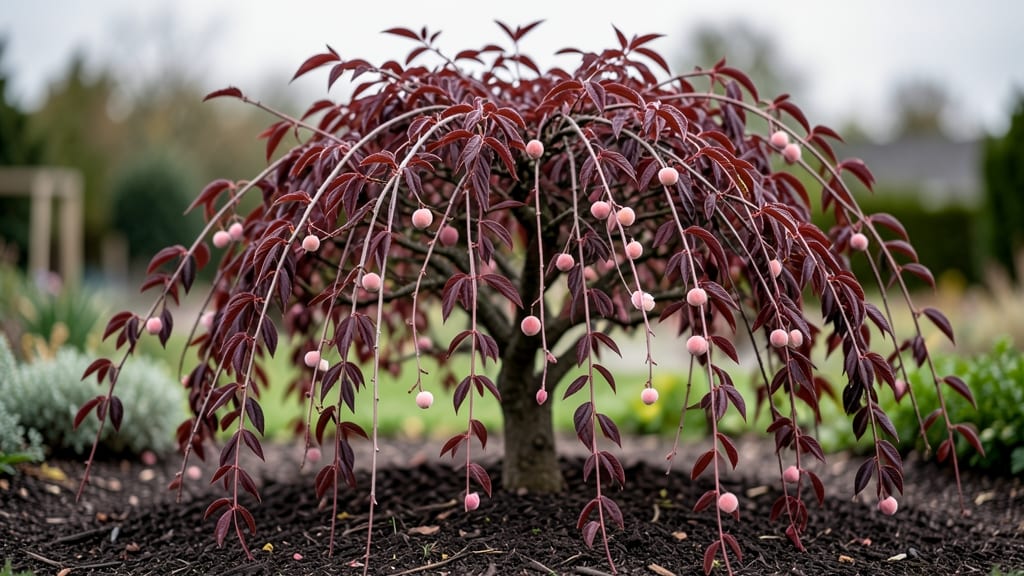
Growing the Prunus persica 'Crimson Cascade' peach tree means late-winter pruning transforms its weeping branches into a summer fruit bonanza. ✨ I’ve watched this tree go from a leggy mess to a dramatic cascading fountain of blossoms and peaches—all by following a few key cuts.
The secret isn’t aggressive pruning but strategic shaping to encourage fruit production while keeping those graceful branches in check. This variety thrives in zones 5-9, where it soaks up full sun (6+ hours daily) and well-draining soil with a slightly acidic pH (6.0-7.0).
Plant it in a spot with 6-8 feet of clearance—those branches will spread wide! Dig a hole twice as wide as the root ball but no deeper, then water deeply to settle the soil before backfilling.
After planting, focus on watering deeply 2-3 times a week (more in summer heat) and fertilizing lightly in early spring with a balanced 10-10-10 formula.
The real magic happens in late winter when you prune: cut back 1/3 of the oldest branches to open the center to sunlight, and thin out crossing limbs to prevent disease. By summer, you’ll have juicy, deep-red peaches hanging like edible chandeliers.
For frost-prone areas, wrap young trees in burlap or frost cloth until they’re established. Watch for peach tree borers—apply neem oil preventatively in early spring. With the right care, this tree isn’t just ornamental; it’s a fruit-producing showstopper that’ll have neighbors asking for cuttings.
📚 In This Guide
- What you need
- Instructions
- Tips and common mistakes
- Wrapping up and next steps
What you need
- ● Pruning shears: Bypass pruners (sharp, clean, and disinfected with rubbing alcohol to prevent disease). Quantity: 1 pair.
- ● Loppers: For thicker branches (1.5"–2" diameter). Quantity: 1 pair.
- ○ Pruning saw: For stubborn, larger branches. Quantity: 1 (optional if loppers suffice).
- ● Gloves: Heavy-duty gardening gloves (cut-resistant for safety). Quantity: 1 pair.
- ● Disinfectant: 10% bleach solution or 70% isopropyl alcohol (for sterilizing tools between cuts).
- ○ Pruning sealant: Optional but recommended for large cuts (e.g., Tanglefoot Tree Wound Pruning Seal).
- ● Marking twine or flags: To tag branches for removal (if planning ahead).
- ● Bucket or bag: For collecting pruned branches (10–15 gallon capacity).
- ● Hand lens or magnifier: To inspect buds and branch collars closely.
- ● Pruning paint: For sealing cuts on older trees (beyond 4" diameter).
- ● Pruning guide: A printed checklist or app (e.g., Gardenate) for reference.
- ● Safety glasses: If dealing with thorny or overgrown branches.
- ● Notebook & pen: To sketch your tree’s structure before/after pruning.
Instructions for late-winter pruning of Crimson Cascade peach trees
Here's my precise method for revitalizing your Crimson Cascade peach tree—timed perfectly for winter dormancy and spring growth.
🌿 Step 1: Assess the Tree Structure and Identify Target Branches
Start by examining the tree's overall shape and health. Look for branches that are dead, crossing, or growing inward—these compete for energy and reduce fruit quality. Dead branches are easy to spot: they're grayish-brown, brittle, and snap when bent. I always prune these first to improve air circulation and sunlight penetration.
Next, identify water sprouts—those fast-growing, vertical shoots that appear along the trunk or main branches. These saplings steal nutrients from fruit production. Mark these with a small flag or note them mentally before you begin cutting. Your goal is to open the tree's canopy to 60-70% sunlight exposure by removing up to 25% of the tree's total branches.
✂️ Step 2: Make Clean Cuts at the Right Angles and Locations
Use sharp, bypass pruners to make 45-degree angled cuts just outside the branch collar—the swollen area where the branch meets the trunk. Cutting here prevents unsightly stubs and promotes faster healing. For branches thicker than 1/4 inch, I use a pruning saw to avoid tearing the bark.
Never leave stubs—these invite disease and rot. If a branch is too thick to cut cleanly in one motion, make two cuts: first, undercut about 1/4 inch away from the trunk, then top-cut just outside the branch collar. The branch will break cleanly at the collar, leaving a perfect cut surface.
🌱 Step 3: Thin Out Overcrowded Branches for Better Fruit Production
Focus on removing branches that originate from the same point or grow too closely together. These compete for sunlight and nutrients, resulting in smaller fruit and weaker structure. Aim to space remaining branches 6-8 inches apart along the trunk. For the Crimson Cascade, which has a naturally weeping habit, prioritize branches that grow outward and upward.
If you're unsure which branches to keep, look for those with strong, upward-facing buds—these will produce the most vigorous new growth and fruit. Thin out the weaker branches first, even if they appear healthy. I always step back every few cuts to visualize the tree's new shape—this helps avoid over-pruning.
☀️ Step 4: Apply Pruning Sealant and Monitor for New Growth
After pruning, apply a tree wound sealant to cuts larger than 1/2 inch in diameter to protect against pests and disease. For smaller cuts, I skip the sealant—peach trees heal quickly when pruned correctly. Clean your tools with rubbing alcohol between cuts to prevent spreading any potential pathogens.
Watch for new leaf buds in late spring, which signal successful pruning. These will appear as small, swollen areas along the branches. If you see no new growth by early April, your cuts may have been too severe or made at the wrong time. Crimson Cascade peaches respond best to late-winter pruning, so timing is everything.
⏰ Step 5: Schedule Post-Pruning Care for Optimal Fruit Development
Apply a balanced 10-10-10 fertilizer in early spring to replenish nutrients lost during pruning. Water deeply at the base of the tree to encourage root growth, but avoid overwatering—peach trees are drought-tolerant once established. Mulch around the base with 2-3 inches of organic mulch to retain moisture and regulate soil temperature.
By late spring, you should see vigorous new shoots emerging from the pruned branches. These will develop into next year's fruit-bearing wood. If any branches appear weak or diseased, prune them out immediately. Crimson Cascade peaches reward precise pruning with abundant, sweet fruit—just follow these steps and enjoy the harvest.
Tips & tricks for perfect late-winter peach tree pruning
Late-winter pruning transforms your Crimson Cascade peach tree from a tangled mess into a fruit-bearing powerhouse—here’s how to nail the details that make all the difference.
Timing is Everything: Late winter, just before buds swell but before active growth begins, is your narrow window for pruning Crimson Cascade peaches. Aim for late February to early March in most climates—this ensures the tree can heal before spring’s demands. If you’re in a warmer zone, wait until late March to avoid encouraging early growth that could be damaged by late frosts. I’ve learned this the hard way: pruning too early can stress the tree, while waiting too long risks losing your pruning window entirely.
Tool Prep Prevents Problems: Your pruners and saw are the most critical tools here—dull blades tear bark and create jagged wounds that invite disease. Sharpen your bypass pruners before starting, and use rubbing alcohol (not water) to clean between cuts. For branches thicker than 1/4 inch, I always switch to my pruning saw to avoid crushing the branch collar. Pro tip: Wipe your tools with a vinegar solution after pruning to kill any potential pathogens lurking on the blades.
Visual Cues Over Guesswork: When thinning branches in Step 3, trust your eyes more than the tape measure. Look for branches with strong, outward-facing buds—these will produce the most vigorous growth and fruit. I’ve found that branches spaced naturally 6-8 inches apart often align with these visual cues. If you’re unsure which to remove, imagine sunlight streaming through the canopy: every branch should get direct light for at least half the day. The Crimson Cascade’s weeping habit means you’ll prioritize upward-growing branches to maintain that beautiful cascading shape.
Post-Pruning Care Sets You Up for Success: After making your cuts, resist the urge to pile mulch directly against the trunk—this can trap moisture and promote rot. Instead, create a 3-inch-wide mulch-free zone around the trunk, then apply your 2-3 inches of organic mulch outward. I’ve seen dramatic differences in tree health when this simple step is followed. Also, mark your pruning date on a calendar—this helps you track new growth and adjust your fertilizer schedule precisely for early spring.
Pro Tips for Prunus Persica Crimson Cascade
- Late-winter pruning transforms your Crimson Cascade peach tree from a tangled mess into a fruit-bearing powerhouse—here’s how to nail the details that make all the difference.
- Timing is Everything: Late winter, just before buds swell but before active growth begins, is your narrow window for pruning Crimson Cascade peaches.
- Tool Prep Prevents Problems: Your pruners and saw are the most critical tools here—dull blades tear bark and create jagged wounds that invite disease.
Frequently asked questions
When is the exact best time to prune my Crimson Cascade peach tree?
The sweet spot is late winter—just as dormancy ends but before buds swell (typically February to early March in most U.S. zones). Avoid pruning in fall or spring when the tree is actively growing, as it can stress the plant and invite pests. Pro tip: Check your local frost dates to time it perfectly!
How much can I safely remove? Will I hurt the tree?
For Crimson Cascade, aim to remove 20-30% of the total canopy—focus on dead, crossing, or inward-growing branches first. Never cut more than 1/3 of the tree’s height in one session, or you risk stunting fruit production. Think of it like a haircut: less is more!
Why isn’t my tree fruiting after pruning? Did I do it wrong?
Peach trees need sunlight and mature wood (2+ years old) to bear fruit. If your Crimson Cascade is young (<3 years), patience is key—it may take 1-2 seasons to recover. Double-check for:
- Open center shape (allows light penetration)
- No over-pruning (leave scaffold branches intact)
- Proper fertilization (spring feed with citrus-free fertilizer)
Can I prune in summer? What if I missed the late-winter window?
Summer pruning is possible but risky—only do it to remove disease-infected branches or shape lightly. Avoid heavy cuts, as it stresses the tree and attracts borers. If you missed late winter, wait until early spring (just before blooms open) for minimal damage. Hot tip: Water deeply after pruning to help recovery!
Are there alternatives if I don’t want to prune? Can I just let it grow wild?
While Crimson Cascade is low-maintenance, skipping pruning leads to:
- Smaller, lower-quality fruit (less sunlight)
- Pest/disease hotspots (crowded branches trap moisture)
- Weak structure (risk of storm damage)
What should I do if my branches bleed sap after pruning?
Sap bleeding (especially in Prunus species) is normal but can attract pests. To minimize it:
- Prune on dry, cool days (not hot/windy)
- Seal cuts only if large (use pruning sealant on ½”+ wounds)
- Water thoroughly before and after to reduce stress
Wrapping up and next steps
Prunus persica 'Crimson Cascade' thrives with the right late-winter pruning—just a few strategic cuts can transform your tree into a fruit-bearing powerhouse by summer! 🌱 By removing dead wood, thinning dense branches, and shaping for airflow, you’re not just tidying up—you’re setting the stage for sweeter, more abundant peaches and a healthier, more vibrant tree. Now’s the time to roll up your sleeves!
Ready to see your efforts bloom? Grab those pruners, follow the steps, and watch your Crimson Cascade dazzle with juicy, sun-ripened fruit. Next up: Monitor your tree’s progress, adjust as needed, and—most importantly—enjoy the taste of success this summer! 🍑✨