
Pruning
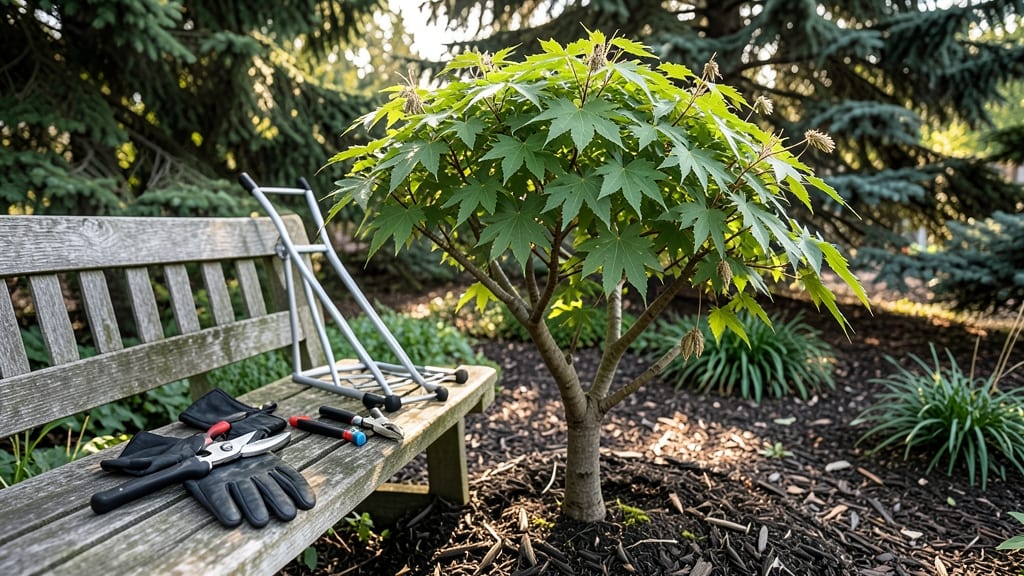
Pruning vine maple in late winter reveals its hidden potential—thicker stems, fuller branches, and a canopy that stays lush all year. 🌿 I learned the hard way that skipping this step means leggy growth and fewer fall colors, but a few sharp cuts in the right season transforms everything.
The key is timing: dormant pruning (when the tree isn’t actively growing) gives you cleaner cuts and less stress on the plant.
You’ll need just three tools: sharp bypass pruners for smaller branches, loppers for thicker stems, and a saw for anything over 2 inches in diameter. Work on a dry day when the tree’s sap isn’t flowing—this minimizes bleeding and speeds up healing.
Start by removing dead or crossing branches first; these compete for energy and weaken the tree’s structure over time.
The payoff comes in summer, when your vine maple bursts with vibrant foliage instead of sparse, sun-scorched leaves. Proper pruning also opens up the center of the tree, letting light reach lower branches and encouraging stronger growth.
Even a 10-minute session makes a difference—just avoid cutting more than 25% of the canopy in one season.
For beginners, the biggest mistake is over-pruning or making jagged cuts that invite disease. Always cut just outside the branch collar (the swollen area where the branch meets the trunk) and seal larger wounds with pruning sealant if needed.
Repeat this process every 2-3 years, and your vine maple will reward you with years of healthy, picturesque growth.
📚 In This Guide
- What you need
- Instructions
- Tips and common mistakes
- Wrapping up and next steps
What you need
- ● Bypass pruning shears – Sharp, clean blades (5-8 inch handle) for cutting small branches (¼ inch to ½ inch diameter). Pro tip: 💡 Oil the blades after each use to prevent rust!
- ● Loppers – Heavy-duty, 18-24 inch long, for branches ½ to 1½ inches thick. Look for ratcheting or bypass styles for precision.
- ● Pruning saw – A curved-tooth saw (8-10 inch blade) for branches 1½+ inches in diameter. 🔥 Avoid cheap saws—they dull fast and tear wood!
- ● Extension pole – 6-10 feet long with a saw or shears attachment for hard-to-reach branches. ✨ Saves time and reduces ladder risks!
- ● Gloves – Heavy-duty, cut-resistant gloves (e.g., Mechanix or pruning-specific) to protect hands from thorns and sharp edges.
- ● Safety glasses – ANSI-rated to shield eyes from debris. 🌡️ Non-negotiable—safety first!
- ● Ladder or stump – Sturdy, 4+ foot ladder (or a sturdy stump) for accessing higher branches. 🎯 Always secure it on level ground!
- ○ Disinfectant (70% isopropyl alcohol or pruning sealant) – Wipe tools between cuts to prevent disease spread. 💡 Optional but highly recommended for large pruning sessions.
- ○ Tree wound dressing – Pruning paste (optional; research shows it’s often unnecessary for maples, but some swear by it for larger cuts).
- ● Trash bags or bucket – For collecting pruned branches and debris. 🌿 Eco-friendly tip: Mulch small branches on-site!
- ● Notepad & pen – To sketch a quick map of cuts or note areas needing follow-up.
- ● First-aid kit – Basic kit for minor cuts or scrapes. ⏰ Better safe than sorry!
- ● Check the weather: Prune on a dry, calm day (avoid wind or rain within 24 hours).
- ● Wear long sleeves and pants to protect from thorns and UV exposure.
- ● Confirm the tree is dormant (late fall/winter) for minimal stress. 🌡️ Late winter is ideal—avoid pruning in extreme cold.
- ● Have a clear plan: Sketch or mentally map out which branches to remove (dead, crossing, or overcrowded).
Step-by-Step guide to pruning vine maple trees
Here's my go-to method for transforming a dense vine maple into a healthy, balanced tree.
🪴 Step 1: Assess the Tree Structure and Plan Your Cuts
Start by examining the tree from all angles—look for branches that cross, rub together, or grow inward. These are your first targets because they compete for sunlight and nutrients, creating weak spots. I like to sketch a rough outline of the tree shape I want, focusing on an open center that allows light to reach the trunk.
Use a small flag or piece of tape to mark branches you plan to remove. This prevents over-cutting in one area and helps maintain the tree's natural balance. Vine maples respond well to gradual shaping, so avoid removing more than 25% of the canopy in a single session—this prevents stress that could invite pests or disease.
✂️ Step 2: Remove Dead, Diseased, or Damaged Branches First
Grab your pruning shears and start with the easy stuff: any branches that are dead, diseased, or broken. These are the ones with no leaves, discolored bark, or signs of fungal growth like black spots or mold. Cut these back to the nearest healthy bud or branch collar—the swollen area where the branch meets the trunk.
Make your cuts at a 45-degree angle, about ¼ inch above the bud, so water runs off instead of pooling. If you're dealing with larger branches, use your loppers and cut just outside the branch collar. Vine maples are forgiving, but leaving dead wood invites pests and weakens the tree over time.
🌿 Step 3: Thin the Canopy for Better Airflow and Light
Now focus on thinning the canopy by removing branches that are growing inward or crossing others. Start from the outer edges and work your way in, always cutting back to a healthy bud. Vine maples have a tendency to grow densely, so aim to create an open center with 6-8 inches of space between branches.
Watch for branches that are growing straight up—they can become weak and break under snow or wind. Instead, encourage lateral growth by cutting these back to a side branch or bud that grows outward. You'll see the tree's natural shape emerge as you remove competing growth.
⏰ Step 4: Shape the Tree for Balance and Aesthetics
Step back and evaluate the tree's overall shape. Vine maples have a lovely, layered look, so I focus on maintaining that while keeping the height manageable. Use your hand as a guide—if a branch is thicker than your wrist, it's a major branch and should be cut back to a lateral branch or bud.
For smaller branches, you can make more precise cuts to refine the shape. Always cut just above a bud that faces the direction you want the branch to grow. Avoid cutting too close to the trunk—this can leave unsightly stubs and invite decay. Vine maples are resilient, but proper cuts make all the difference in their long-term health.
💧 Step 5: Clean Up and Monitor for Recovery
After pruning, rake up all the debris and dispose of it properly—this prevents fungal spores from lingering near the tree. Give the pruned areas a light application of pruning sealant (optional but helpful for larger cuts) to protect against disease and pests.
Keep an eye on the tree over the next few weeks. You'll notice new growth emerging from the buds you left behind—a sign the tree is healing well. Water deeply if the weather is dry, but avoid overwatering, as vine maples are drought-tolerant once established. Prune again in late winter or early spring if needed, but dormant season is the best time for major shaping.
Tips & tricks for pruning vine maple trees
Real talk: Pruning vine maple trees can feel overwhelming if you're not sure where to start. Here's what I've learned after years of shaping these gorgeous trees—focus on these key details to avoid common mistakes.
Branch Selection Strategy: In Step 1, when assessing your tree, prioritize branches that are growing toward the center or crossing others. These are the ones causing the most competition for sunlight and nutrients. I've found that removing just 3-5 of these "problem branches" can dramatically improve airflow and light penetration. Think of it like decluttering your closet—you don't need to remove everything, just the pieces that are causing the most congestion.
Cutting Technique Matters: The 45-degree angle and ¼-inch spacing mentioned in Step 2 are critical for proper healing. I learned this the hard way after making sloppy cuts that left ugly stubs. Use your pruning shears to make clean cuts just outside the branch collar—this allows the wound to seal properly and prevents water from pooling. For larger branches, always cut in three steps: first undercut, then make the final cut just outside the collar, and finally remove the stub.
Canopy Spacing Secret: When thinning in Step 3, aim for that 6-8 inch spacing between branches. This might seem generous, but it's what allows sunlight to reach all parts of the canopy. I like to use a tape measure to check spacing—it's amazing how much better the tree looks with proper spacing. Remember, vine maples have a natural layered look, so we're not going for a completely open center, just one with good airflow.
Season Timing Tip: Dormant season pruning (late winter/early spring) is ideal because the tree isn't actively growing, so it can focus its energy on healing the cuts. I've found that pruning at this time also gives you a clear view of the tree's structure without leaves getting in the way. If you must prune outside this window, do it on a cool, overcast day to reduce stress on the tree.
Pro Tips for Pruning Vine Maple
- Real talk: Pruning vine maple trees can feel overwhelming if you're not sure where to start.
- Branch Selection Strategy: In Step 1, when assessing your tree, prioritize branches that are growing toward the center or crossing others.
- Cutting Technique Matters: The 45-degree angle and ¼-inch spacing mentioned in Step 2 are critical for proper healing.
Frequently asked questions
Got questions about pruning vine maple? You're not alone!
Here are answers to the most common concerns—whether you're a newbie or a seasoned gardener looking for a quick refresher.
When is the best time to prune vine maple?
The ideal window is late winter to early spring (before buds swell), or dormant season (Nov–March in most climates). Avoid pruning in fall—it invites disease. For heavy shaping, split tasks into 2–3 sessions to reduce stress on the tree. Learn more about seasonal timing.
How do I know which branches to cut?
Focus on:
- Dead/dying branches (snap test: if brittle, it’s gone).
- Crossing or rubbing branches (friction weakens the tree).
- Suckers or water sprouts (fast-growing, vertical shoots).
- Overcrowded growth (thin out to improve airflow).
Can I prune vine maple in summer? What are the risks?
Summer pruning is possible but risky—it stresses the tree and attracts pests. If you must, lightly prune to remove only deadwood or safety hazards. Wait until late summer (after 60% of new growth hardens) to minimize shock. See summer care tips.
What if my vine maple bleeds sap after pruning?
Sap bleeding (especially in early spring) is normal but unsightly. To reduce it:
- Prune on dry, cool days (avoid warm weather).
- Use sharp tools for clean cuts (dull blades tear tissue).
- Seal cuts only if the tree is young or heavily damaged (use pruning sealant sparingly).
Are there alternatives to pruning if my vine maple is small?
For young or delicate vine maples, selective thinning works better than heavy pruning. Try:
- Pinching (removing new growth tips in spring to encourage bushiness).
- Directional training (tying branches to stakes to guide growth).
- Avoiding “lion’s tailing” (cutting back to stubs—this stresses the tree).
Wrapping up and next steps
Pruning your vine maple during dormancy isn’t just about tidying up—it’s a gift to your tree’s long-term health!
By following the right techniques, you’ll encourage lush foliage, stronger branches, and a stunning canopy year after year. 🌿 Now that you’re equipped with the know-how, grab those pruners and give your vine maple the care it deserves—your future self (and your tree!) will thank you.
Ready to take the next step? Mark your calendar for late winter or early spring—this is prime time to prune—and watch your vine maple thrive! 🌟