
Pruning
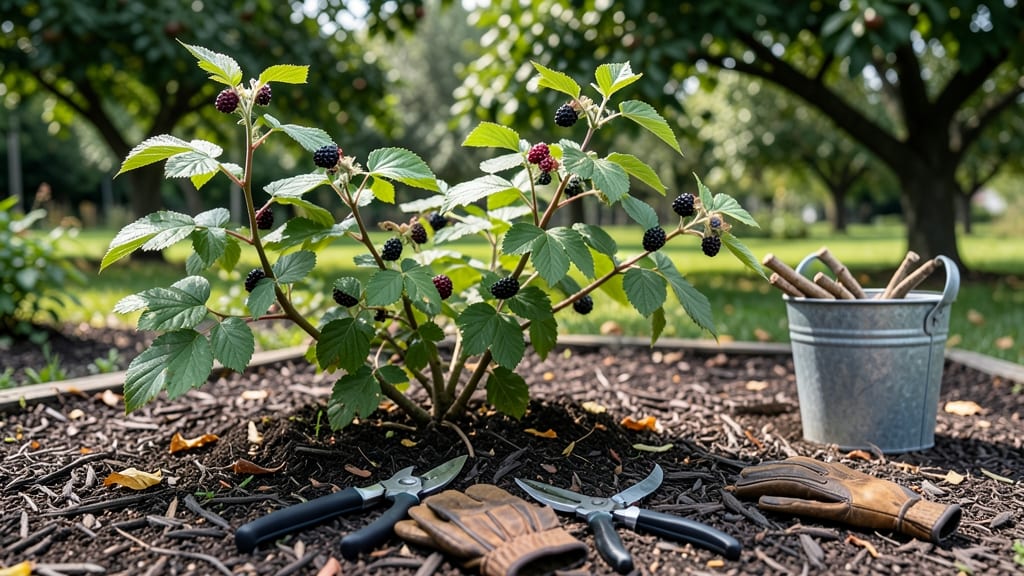
Pruning thornless blackberry plants in late winter reveals the secret to bountiful harvests—and I’ve finally cracked the code after years of tangled canes and disappointing yields. 🌿 The key isn’t just cutting back; it’s shaping the plant for strength, airflow, and fruit production before spring arrives.
Most gardeners rush this step, but taking time now means healthier canes and double the berries by summer.
You’ll need just three tools: sharp pruners, gloves (thorns are still sharp!), and a notepad to track your cuts. The goal is to remove last year’s fruited canes—they’re done bearing—and keep the newest, thickest canes for next season.
Think of it like training a vine: prune aggressively now, and the plant rewards you with stronger growth and fewer diseases. I learned this the hard way when my berries shrank after skipping pruning—now I mark the canes with flags for easy identification.
By early spring, you’ll see new shoots bursting from the base, and those are your future fruit producers. The pruned plant will also breathe easier, reducing fungal risks and letting sunlight reach all the canes.
This method works for both floricane (summer-bearing) and primocane (fall-bearing) varieties—just adjust the timing slightly. The payoff? Juicier berries, fewer pests, and a garden bed that’s easier to manage.
Here’s the best part: once you’ve done it once, you’ll spot the perfect cuts every year. Start with just a few canes to build confidence, and soon you’ll be pruning like a pro—no more tangled messes or wasted energy.
The dormant season is your chance to set the stage for a productive summer. Let’s get those shears ready!
📚 In This Guide
- What you need
- Instructions
- Tips and common mistakes
- Wrapping up and next steps
What you need
- ● Pruning shears or loppers – Choose bypass pruners (sharp, clean blades) for clean cuts. Opt for 8- to 10-inch loppers for thicker canes (1-inch diameter or larger). Disinfect blades with rubbing alcohol between cuts to prevent disease spread.
- ● Gloves – Wear gardening gloves (preferably thick, cut-resistant) to protect your hands from thorns and scratches.
- ● Pruning saw – For very thick canes (over 1.5 inches), a fine-tooth pruning saw ensures clean cuts without tearing.
- ● Rake or broom – To clear away debris, fallen leaves, and old cane fragments after pruning.
- ● Labeling tags or markers – If you’re tagging canes (e.g., marking primocanes vs. floricanes), use waterproof plant tags or a permanent marker.
- ● Compost bin or bag – For disposing of diseased or damaged canes (do not compost these—burn or trash them instead).
- ● Water and spray bottle – To sterilize tools and dampen cuts if needed (especially in dry climates).
- ● Knee pads or stool – For comfort if your blackberries are in a large patch or hard-to-reach areas.
- ● Disinfectant spray – A 10% bleach solution (1 part bleach to 9 parts water) for deep cleaning tools between plants.
- ● Pruning sealant – Not always necessary, but a tree wound pruning paste can help large cuts heal faster in extreme climates.
- ● Camera or phone – Snap before-and-after photos to track progress and learn from year to year!
- ● Mulch (straw or wood chips) – Apply a 2-3 inch layer after pruning to retain moisture and suppress weeds.
Step-by-step guide to pruning thornless blackberry plants
Here’s the method I’ve used for years to keep my thornless blackberries thriving—clean cuts, fewer canes, and fruit that’s bigger than ever.
✂️ Step 1: Time Your Pruning for Dormancy
Prune late winter or early spring, just before buds swell but before new growth begins. I aim for February to early March in my zone 7 garden, when temperatures hover around 40-50°F. Pruning too early risks cold damage to fresh cuts, while waiting too long encourages early growth that frost can kill.
Look for dormant canes—they’re stiff, brown, and devoid of leaves. If you see any green or swollen buds, wait a few more weeks. The goal is to remove last year’s fruit-bearing canes while keeping the new, vigorous growth intact.
🌿 Step 2: Identify and Remove Last Year’s Canes
Thornless blackberries produce fruit on second-year canes, which are the ones that fruited last season. These canes are thicker, often with visible scars where fruit attached. Cut them out completely at the base—no stubs. I use sharp loppers to make clean cuts just above the soil line, which prevents disease from lingering in old wood.
Leave the first-year canes—they’re thinner, green, and didn’t produce fruit last year. These will bear next season’s harvest. If you’re unsure, snap a cane: if it’s brittle, it’s last year’s and should go. If it bends, it’s still productive.
✂️ Step 3: Thin Overcrowded Canes for Airflow
Blackberries thrive when canes have space to grow. Aim for 4-6 of the strongest, healthiest canes per plant. Remove any weak, diseased, or crossing canes first—these compete for nutrients and invite pests. Cut at a 45-degree angle about ¼ inch above a bud to encourage upward growth.
If your plant has more than 8-10 canes, thin aggressively. I’ve seen growers hesitate to cut, but fewer canes mean bigger berries and easier harvesting. After thinning, step back and check for gaps—sunlight should reach the center of the plant.
🪴 Step 4: Clean Up and Fertilize for New Growth
Rake up and dispose of all pruned canes—don’t compost them, as they may harbor disease. I burn mine or bag them for trash to prevent reinfection. Next, spread a 2-3 inch layer of mulch around the base, keeping it 6 inches away from the crown to prevent rot.
Apply a balanced 10-10-10 fertilizer at ½ pound per 100 square feet in early spring, just as new shoots emerge. Water deeply to help roots absorb nutrients. Avoid heavy nitrogen now—you want strong stems, not leafy growth at the expense of fruit.
⏰ Step 5: Monitor and Support Through Spring
Check your plants in 4-6 weeks for new shoots. If any canes grow too close together, remove the weakest immediately. Install T-posts or stakes now to support canes as they grow—thornless varieties still need guidance to prevent flopping.
Watch for white flowers in early spring, signaling fruit development. This is your cue to reduce nitrogen and increase phosphorus (like a 5-10-10 fertilizer) to boost flowering. A well-pruned plant will reward you with heavier, sweeter berries by summer.
Tips & tricks for pruning thornless blackberry plants
Here's what I've learned after years of trial and error with my own blackberry patch—these details make all the difference between a decent harvest and a spectacular one.
Timing is Everything: That February to early March window is non-negotiable for zone 7 growers. I've learned the hard way that pruning too early (below 40°F) can shock the plant, while waiting past bud swell risks frost damage to tender new growth. Check your local frost dates—your goal is to prune when daytime temps consistently stay above 45°F.
Tool Selection Matters: Don't use dull shears—they crush canes and create jagged cuts that invite disease. I invest in sharp loppers (I use Felco F-2) for clean cuts at the soil line. For larger plants, a pruning saw works better than shears for thick canes. Always sterilize tools with rubbing alcohol between cuts to prevent spreading pathogens.
Visual Cues for Identification: The snap test is your best friend when distinguishing old from new canes. Second-year canes (the ones to remove) should snap like dry kindling, while first-year canes bend like green willow branches. I also look for the characteristic "fruit scars" on old canes—these are telltale signs of last season's harvest spots.
Post-Pruning Care: After thinning, I always do a final inspection for any remaining crossing canes that might rub together. This friction creates wounds that attract pests. I also mark my plants with small flags to identify the 4-6 strongest canes I'm keeping—this visual reminder helps me avoid over-thinning later in the season.
Pro Tips for Pruning Thornless Blackberry Plants
- Here's what I've learned after years of trial and error with my own blackberry patch—these details make all the difference between a decent harvest and a spectacular one.
- Timing is Everything: That February to early March window is non-negotiable for zone 7 growers.
- Tool Selection Matters: Don't use dull shears—they crush canes and create jagged cuts that invite disease.
Frequently asked questions
Got questions about pruning your thornless blackberry plants? You’re not alone! Here are some of the most common concerns—and straightforward answers—to help you tackle the task with confidence.
When is the best time to prune thornless blackberry plants?
The ideal window is late winter or early spring, just before new growth begins. For most climates, this means pruning between February and March (or after the last frost). Pruning in dormant season (when the plant isn’t actively growing) minimizes stress and reduces disease risk. Avoid pruning in fall—it can leave canes vulnerable to winter damage.
How do I tell the difference between primocanes and florocanes?
This is key to pruning correctly! Primocanes are the current year’s growth—they’re green, flexible, and thinner. Florocanes are the older canes that fruited last year—they’re woody, thicker, and often have dried leaves. Thornless varieties make this easier to spot since you won’t have thorns to confuse you!
Do I need to cut all the canes down to the ground?
Not necessarily! For florocanes (last year’s fruiting canes), cut them back to the ground after harvest. But primocanes (this year’s growth) should be pruned lightly—just remove dead or weak canes, leaving the strong ones to grow. Pro tip: Leave 2–3 of the healthiest primocanes per plant to ensure next year’s fruit.
What if I missed the dormant season and my blackberries are already growing?
Don’t panic! You can still prune, but focus on removing dead, diseased, or crossing canes to improve airflow. Avoid heavy pruning—it can stress the plant. Instead, wait until next dormant season for a full reset. If you must prune now, do it on a dry, cool day to reduce shock.
Can I use hedge shears or do I need special pruning tools?
While sharp pruning shears or loppers are ideal for clean cuts, hedge shears can work in a pinch for larger jobs. Just ensure they’re clean and sharp to prevent tearing canes (which invites disease). For thick canes, a pruning saw is your best bet. Disinfect tools with rubbing alcohol between cuts to avoid spreading pathogens.
Will pruning reduce my blackberry harvest next year?
Not if done correctly! Proper pruning boosts fruit production by directing energy to healthy canes. Removing old, weak, or crowded growth actually increases yield and improves berry size. Just avoid over-pruning—leave enough primocanes to ensure next season’s harvest. Think of it like a haircut for your plants—less clutter, more growth!
Wrapping up and next steps
Mastering the art of pruning thornless blackberry plants during dormancy is your secret weapon for a thriving, high-yield harvest—and yes, you’ve got this! 🌱 By following this step-by-step blueprint, you’ll encourage stronger canes, better airflow, and fewer pests while keeping those berries sweet and plentiful.
Now that you’re armed with the how and why, it’s time to roll up your sleeves and give your blackberries the care they deserve.
Ready to transform your patch? Grab your pruners, mark your calendar for next winter, and start small—even a few canes make a difference! For extra confidence, check out our FAQs or dive into seasonal care tips to keep your plants happy year-round.