
Pruning
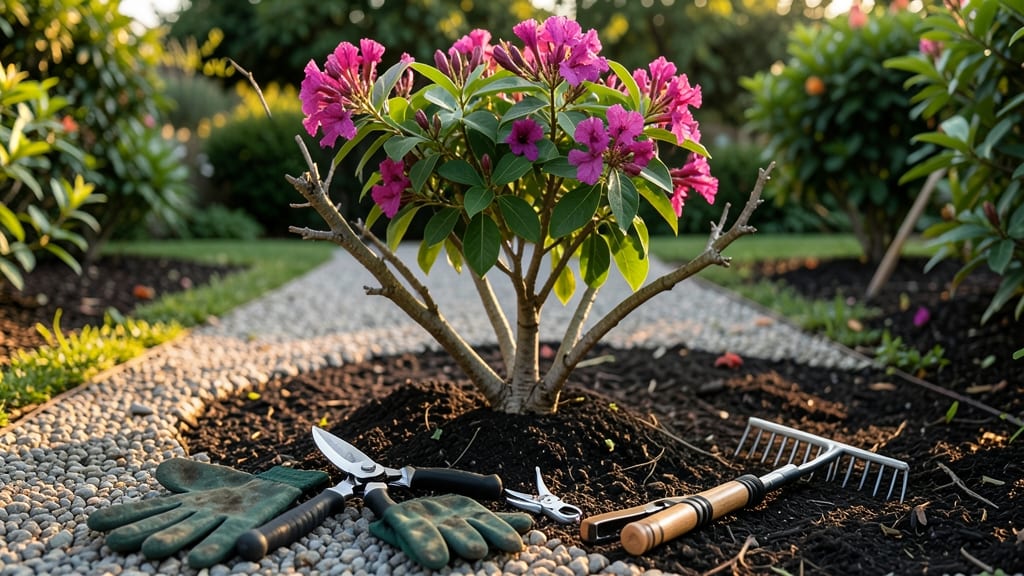
Pruning small crepe myrtles transforms them from wild shrubs into vibrant, blooming focal points—and the best time to start is late winter, before new growth begins. I’ve watched my own crepe myrtles go from tangled messes to neat, flowering trees in just one season using this straightforward approach.
The key lies in removing dead wood first, then shaping for airflow, and finally encouraging new blooms by cutting back last year’s growth. You’ll need three tools: sharp bypass pruners for clean cuts, loppers for thicker branches, and a small saw for stubborn limbs.
Work on a dry day when the tree isn’t stressed, and always sterilize your tools with rubbing alcohol to prevent disease spread. Most small crepe myrtles respond best to light pruning—never cut more than a third of the branches at once, or you risk shocking the tree.
After pruning, you’ll notice fewer crossing branches, better sunlight penetration, and—most exciting—more abundant blooms by midsummer. The tree’s natural shape emerges, and pests have fewer places to hide.
For best results, repeat this process every late winter, and your crepe myrtle will reward you with longer, healthier blooming seasons. This method works for crepe myrtles in containers, small yards, or urban gardens—anywhere space is limited but you want that classic summer display.
Avoid the common mistake of "topping" (cutting flat across the top), which stunts growth and weakens the tree. Instead, focus on open-center shaping for a balanced, thriving plant.
📚 In This Guide
- What you need
- Instructions
- Tips and common mistakes
- Wrapping up and next steps
What you need
- ● Pruning shears: Bypass pruners (for clean cuts on small branches, 4–6 inches long) or anvil pruners (budget-friendly, but best for deadwood). Sterilize with rubbing alcohol between cuts to prevent disease.
- ● Loppers: 20–24-inch loppers for thicker branches (up to 2 inches in diameter). Look for ratcheting or bypass-style for precision.
- ● Pruning saw: Curved-tooth hand saw for branches over 2 inches thick. Avoid cheap saws—they can tear wood.
- ● Gloves: Heavy-duty gardening gloves (nitrile-coated for grip and thorn protection). Consider long sleeves if your crepe myrtle has spiky branches!
- ○ Ladder (optional): Lightweight, extendable aluminum ladder (6–10 feet tall) if your tree exceeds 6 feet. Always secure it to a sturdy surface and follow 3-point contact rule for safety.
- ● Disinfectant: 70% isopropyl alcohol or bleach solution (1 part bleach to 9 parts water) to clean tools between cuts.
- ○ Pruning sealant (optional):strong> Tree wound sealant (like Tanglefoot Tree Wound Pruning Sealer) for large cuts over ½ inch. Note: Skip this for small crepe myrtles—research shows it’s often unnecessary!
- ● Trash bags or bucket: For collecting debris. A 5-gallon bucket with a lid works great for hauling clippings.
- ● Sharpie or marker: Permanent marker to label branches if you’re doing a structured pruning plan (e.g., marking "keep" or "remove" areas).
- ● Safety gear: Safety glasses (to shield from debris) and ear protection (if using a chainsaw on larger trees—though not needed for small crepe myrtles).
- ● Best time to prune: Late winter or early spring (just before new growth starts). Avoid pruning in fall—it can stimulate tender growth that won’t survive frost.
- ● Weather check: Choose a dry, calm day (no rain forecast for 24 hours). Wet wood is harder to cut and can spread disease.
- ● Tree health: Inspect your crepe myrtle for diseases (e.g., powdery mildew) or pests before pruning. Address these first—pruning won’t help if the tree is already stressed.
- ● Plan ahead: Sketch a rough outline of your tree’s shape or take photos from multiple angles. This helps visualize where to cut for an open, airy structure.
Pruning small crepe myrtle: 3-Step method for healthier blooms year-round
Here’s how to transform your crepe myrtle into a blooming powerhouse with minimal effort—just three focused steps.
Identify and Remove Dead or Diseased Wood
Start by examining the tree for branches that are completely devoid of leaves, blackened, or shriveled. These are dead and must be pruned immediately to prevent disease spread. Use sharp pruning shears to make clean cuts at a 45-degree angle, about ¼ inch above a bud or lateral branch. Avoid leaving stubs—this invites rot and weakens the tree’s structure.
Look for cankers (sunken, discolored areas) or fungal growth on branches. These are clear signs of infection. Cut 6 inches below any visible damage to ensure the entire affected section is removed. Healthy wood has a smooth, greenish-brown bark—if you see anything else, it’s time to prune.
Thin Out Crowded Branches for Better Airflow
Crepe myrtles thrive when they have room to breathe. Focus on removing thin, weak branches growing inward toward the center of the tree. These compete for sunlight and nutrients, reducing overall bloom production. Aim to create an open, vase-like shape by selectively pruning one-third of the thickest branches from the lower third of the tree each year.
Use your hands to gently bend branches—if they snap easily, they’re overcrowded and should go. For thicker branches, use loppers to make clean cuts just outside the branch collar (the swollen area where the branch meets the trunk). Never leave a stub or paint the cut—this only harms the tree in the long run.
Shape for Optimal Bloom Display
Crepe myrtles bloom on new wood, so prune right after flowering (late summer to early fall) to encourage next year’s blooms. Remove up to 25% of the tree’s height by cutting back the tallest stems to a strong lateral branch. This redirects energy into producing more flowers and thicker growth rather than just height.
Step back and assess the tree’s shape—aim for a balanced, open canopy with no branches rubbing together. Avoid heavy pruning in late winter or early spring, as this removes next year’s flower buds. If you must prune in winter, limit cuts to removing only dead wood to minimize stress.
Tips & tricks for pruning small crepe myrtle
This three-step method isn't just about cutting—it's about transforming your crepe myrtle into a blooming masterpiece. Here's what nobody tells you about making every cut count.
Timing is Everything: The instructions emphasize pruning right after flowering in late summer to early fall, but I've learned this the hard way—timing affects next year's blooms dramatically. If you prune too early, you risk removing flower buds that haven't formed yet. For southern climates, aim for late August to early September when most crepe myrtles have finished blooming. Northern gardeners can extend this window until mid-October.
Tool Precision Pays Off: While the instructions mention sharp pruning shears and loppers, I'll save you the frustration I went through: invest in a good pair of bypass pruners for clean cuts on branches up to ½-inch thick. For anything thicker, your loppers should have a bypass blade too—avoid anvil pruners at all costs, as they crush rather than cut cleanly. The cleaner your cut, the faster the tree heals and the better it blooms.
Visual Cues for Healthy Wood: The instructions mention smooth, greenish-brown bark as a sign of healthy wood, but here's what I've noticed: healthy bark should also have a slight sheen when dry, almost like polished mahogany. Any bark that's rough, peeling, or has dark streaks needs immediate attention. I've found that making cuts just outside the branch collar (that swollen area) creates a natural seal that prevents disease better than any wound dressing you can buy.
Seasonal Considerations: While the instructions focus on late summer/fall pruning, winter pruning deserves special attention. If you must prune in winter (like I did after a late-season storm), limit yourself to removing only dead wood—never more than 25% of the tree's height. The tree is already stressed in winter, and heavy pruning can shock it into producing weak growth. I've seen trees recover beautifully from winter pruning when limited to just dead branch removal.
Pro Tips for Pruning Small Crepe Myrtle
- This three-step method isn't just about cutting—it's about transforming your crepe myrtle into a blooming masterpiece.
- Timing is Everything: The instructions emphasize pruning right after flowering in late summer to early fall, but I've learned this the hard way—timing affects next year's blooms dramatically.
- For anything thicker, your loppers should have a bypass blade too—avoid anvil pruners at all costs, as they crush rather than cut cleanly.
Frequently asked questions
Got questions about pruning small crepe myrtles? You’re not alone! Here are answers to the most common concerns to help you keep your trees thriving with minimal stress.
When is the best time to prune small crepe myrtles?
Prune your crepe myrtle late winter or early spring (just before new growth starts) to avoid removing next year’s flower buds. Avoid pruning in fall or winter in cold climates—dormant trees are more vulnerable to disease.
How much can I cut back a small crepe myrtle?
For young or small trees, remove no more than 25-30% of the total growth per year. Over-pruning can stress the tree and reduce blooms. Focus on shaping and removing dead wood rather than drastic cuts.
What should I avoid when pruning?
Avoid these common mistakes:
- Topping: Cutting the top flat—this creates ugly stubs and weak growth.
- Pruning in fall/winter: Can invite pests or disease.
- Removing too many branches: Over-pruning weakens the tree.
Will pruning reduce next year’s flowers?
Not if done correctly! Crepe myrtles bloom on new wood, so pruning in late winter/early spring (before buds swell) won’t harm blooms. Just avoid heavy cuts in late summer or fall.
What if my crepe myrtle isn’t blooming after pruning?
Check these factors:
- Sunlight: Ensure it gets 6+ hours of sun daily.
- Water: Drought stress can reduce blooms.
- Fertilizer: Lightly fertilize in early spring with balanced, low-nitrogen food.
Wrapping up and next steps
Pruning your small crepe myrtle doesn’t have to be intimidating—it’s all about timing, technique, and a little patience.
By following these three simple steps, you’ll encourage vibrant blooms, stronger growth, and a tree that thrives year-round. 🌸 Now that you’re armed with the know-how, grab those shears and get pruning! The next step?
Keep an eye on your tree’s progress and adjust your pruning routine as it grows—your crepe myrtle will thank you with stunning, long-lasting flowers.