
Pruning
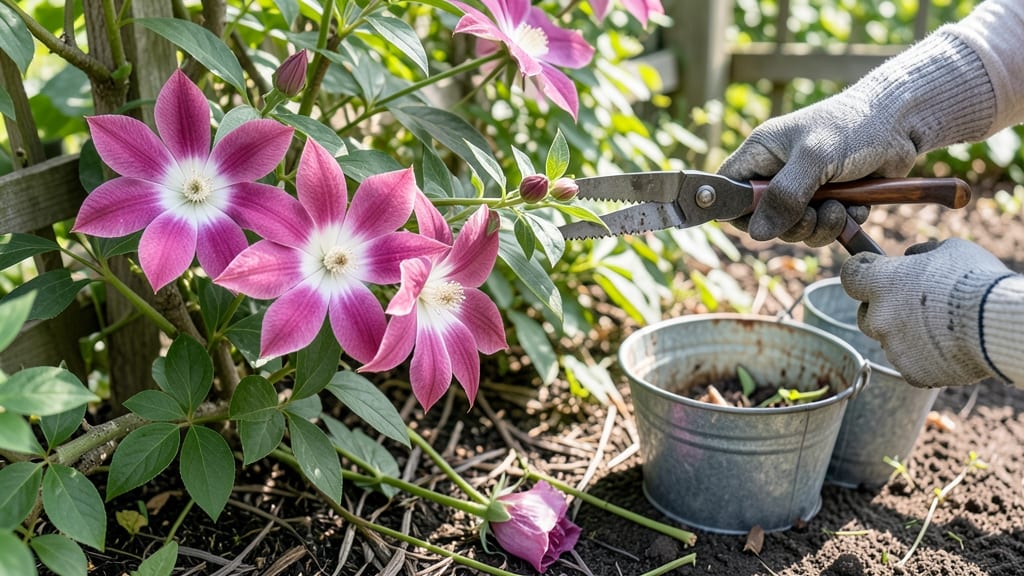
Pruning Nelly Moser clematis in late winter gives you fragrant blooms from spring to frost. 🌿 I’ve pruned this variety for years, and the key is understanding its unique growth habit—it blooms on both old and new wood, so timing matters.
Cut too early, and you lose early flowers; wait too long, and the plant gets overcrowded.
The right tools and technique make all the difference. You’ll need sharp bypass pruners, a hand saw for thicker stems, and gardening gloves—Nelly Moser’s thorns are no joke. The goal is to shape the plant into a strong, open center while encouraging airflow to prevent disease.
This variety thrives when given room to breathe, and the results are worth the effort.
After pruning, your clematis will reward you with velvety pink blooms that perfume the garden all season. The first flush of flowers arrives in early summer, and with proper care, you’ll enjoy them well into fall.
Just remember: never prune in fall or early spring, as this can remove next year’s blooms before they form.
Works for climbers on trellises, arbors, or walls—just adjust the height based on your structure. If you’ve struggled with clematis before, this method is a game-changer. Let’s get those stems trimmed and your garden smelling like heaven.
📚 In This Guide
- What you need
- Instructions
- Tips and common mistakes
- Wrapping up and next steps
What you need
- ● Sharp bypass pruners: 1 pair (clean, sterilized with rubbing alcohol to prevent disease).
- ● Loppers: 1 pair (for thicker stems, 10-12" reach).
- ● Garden gloves: 1 pair (nitrile-coated for grip and protection).
- ● Disinfectant spray: 1 bottle (70% isopropyl alcohol or 10% bleach solution).
- ○ Pruning saw: 1 (for stubborn, woody stems—optional but helpful).
- ● Plant ties or twine: 1 roll (to secure stems post-pruning).
- ● Markers or flags: 5-10 (to tag stems for reference if needed).
- ● Compost bin or bag: 1 (for clippings—Nelly Moser stems decompose easily!).
- ● Hand lens or magnifier: 1 (to inspect buds and stem health closely).
- ● Pruning sealant: 1 small tube (for large cuts—though Nelly Moser heals well without it).
- ● Pruning shears for clean-up: 1 pair (for trimming new growth later in the season).
- ● Notebook or app: 1 (to sketch your clematis’s structure pre- and post-prune).
Step-by-step instructions for pruning Nelly Moser clematis
Here's how I transform my fragrant clematis into a lush, blooming powerhouse every year.
✂️ Step 1: Identify and Mark the Pruning Zones
First, locate the crown—the thick, woody base where stems meet the soil. Nelly Moser is a Group 3 clematis, meaning it blooms on both old and new wood, so we'll use a modified pruning approach. Look for last year's flower clusters (they appear as small, dried seed heads) and this year's buds (plump, green swellings near the base of stems). Mark these with a soft tie or paint marker.
I always prune on a dry, frost-free day—this prevents sap bleeding and makes clean cuts easier. Avoid pruning after a rain; wet wood splinters and invites disease. Grab your pruners and start just above a bud facing outward on the stem. This ensures new growth will reach sunlight and air circulation.
✂️ Step 2: Remove Dead, Weak, or Crossing Stems
Cut out any stems that are brown, mushy, or hollow—these won't produce blooms and can harbor pests. Next, remove crossing or rubbing branches that tangle with each other. These compete for nutrients and create wounds where bacteria can enter. If a stem is thinner than a pencil, it's likely weak and should go.
Here's the thing—Nelly Moser can get top-heavy with too many large stems. I leave 3-5 of the strongest, healthiest stems per plant, cutting the rest back to the crown. This forces energy into fewer, more robust growth points. Always make cuts at a 45-degree angle, about ¼ inch above a bud—this prevents water from pooling and rotting the stem.
✂️ Step 3: Shape the Plant for Airflow and Light
Step back and visualize your clematis as a pyramid or vase shape—wide at the base, narrowing toward the top. This shape maximizes airflow, reducing humidity where fungal diseases like powdery mildew thrive. Trim back any long, leggy stems that stretch toward the ground, cutting them just above a strong outward-facing bud.
For stems that still have last year's flower clusters, leave them intact but shorten them by one-third. These old stems will produce early-season blooms, while the new growth will handle the summer and fall flowers. I like to leave a few longer stems (about 3 feet) to climb higher and create a dramatic focal point.
🌱 Step 4: Apply a Protective Layer and Mulch
After pruning, dust the cuts with fungicide (like copper or sulfur-based) to prevent infections. I also sprinkle a thin layer of wood ash around the base—this adds potassium and raises the soil pH slightly, which Nelly Moser prefers. Now, add 2-3 inches of organic mulch (like shredded bark or straw) around the base, keeping it 6 inches away from the stem to prevent rot.
Water deeply but not excessively—the goal is to moisten the root zone without soggy soil. Nelly Moser has shallow roots, so mulch helps retain moisture while keeping roots cool. Avoid piling mulch against the stem; this traps moisture and invites rot. Instead, create a donut shape around the plant.
☀️ Step 5: Monitor and Support New Growth
In early spring, as new shoots emerge, install support stakes or a trellis if you haven’t already. Nelly Moser’s vines can reach 10-12 feet, so sturdy support is a must. I use flexible garden ties to gently secure the stems without crushing them. Watch for new buds—they’ll appear as small, swollen nodes along the stems.
Here’s where it gets fun: pinch back the tips of new growth when they reach 6-8 inches to encourage bushier, more flowering stems. This isn’t mandatory, but it turns your clematis into a bloom machine. Keep the soil evenly moist (not soggy) and fertilize lightly with a balanced 10-10-10 formula once the first leaves appear.
Tips & tricks for pruning Nelly Moser clematis
These simple but game-changing insights will help you transform your dormant clematis into a fragrant, blooming showstopper.
Bud Identification: Nelly Moser's beauty lies in its dual blooming nature, so knowing which buds to keep is everything. The outward-facing buds are your gold—these will produce the most vibrant flowers. I use a small paint marker to tag them before cutting, making it easy to visualize where new growth will emerge. These buds should be plump and green, not shriveled or brown. If you're unsure, look for the tiny "eye" at the base of the bud—this is where the magic happens.
Cutting Technique: The 45-degree angle and ¼-inch clearance above the bud aren't just suggestions—they're non-negotiable for healthy regrowth. I've seen too many pruning jobs where cuts were too close or too straight, leading to water pooling and rot. Use sharp pruners and make the cut just above the bud at that precise angle. This small detail prevents disease and encourages vigorous new growth. Trust me on this—your clematis will thank you with lush, fragrant blooms.
Mulching Strategy: That 2-3 inches of organic mulch isn't just for looks—it's a protective layer that regulates soil temperature and retains moisture. I always create that donut shape around the plant, keeping mulch 6 inches away from the stem. This prevents rot while still protecting those shallow roots. For extra insurance, I add a light dusting of wood ash around the base—it raises the soil pH slightly, which Nelly Moser loves, and adds potassium for stronger growth.
Support System: Don't wait until spring to install support—get those stakes or trellis in place as soon as you finish pruning. Nelly Moser's vines can reach 12 feet, and without proper support, they'll flop and break. I use flexible garden ties to secure the stems without crushing them, and I always position the support so it creates that pyramid shape we talked about. This not only looks better but also maximizes airflow and sunlight exposure for all those new buds.
Pro Tips for Pruning Nelly Moser Clematis
- These simple but game-changing insights will help you transform your dormant clematis into a fragrant, blooming showstopper.
- Bud Identification: Nelly Moser's beauty lies in its dual blooming nature, so knowing which buds to keep is everything.
- Cutting Technique: The 45-degree angle and ¼-inch clearance above the bud aren't just suggestions—they're non-negotiable for healthy regrowth.
Frequently asked questions
Got questions about pruning your Nelly Moser clematis? You’re not alone!
This fragrant beauty thrives with the right care, and we’ve got answers to the most common concerns—from timing tricks to troubleshooting flops. Dive in!
When is the absolute best time to prune Nelly Moser clematis?
Prune Nelly Moser (Group 3 clematis) late winter or early spring, just before new growth starts—typically February to March in most climates. Avoid pruning in fall or summer, as this can stimulate tender growth that won’t survive winter. Pro tip: If you miss the window, wait until after the first bloom (but expect fewer flowers that season).
How much should I cut back—does it need drastic pruning?
Nelly Moser is a hard pruner, so cut back by about 1/3 of its total height—usually 12 to 24 inches from the base. Look for healthy buds (swollen nodes) about 12 inches from the ground; these will sprout new growth. Avoid over-pruning, or you’ll sacrifice blooms!
What if my clematis isn’t blooming after pruning?
No blooms? Check these fixes:
- Pruned too late: New growth needs time to harden off. Wait until next dormant season.
- Not enough sunlight: Clematis crave 6+ hours of sun. Relocate if shaded.
- Poor soil: Amend with compost or bone meal for phosphorus (bloom booster).
- Over-fertilized: Too much nitrogen = leafy monster, no flowers. Use balanced fertilizer (10-10-10).
Still stumped? Snap a photo and ask your local nursery—clematis issues often have simple fixes!
Can I prune Nelly Moser at any other time of year?
While late winter/early spring is ideal, you can do light maintenance pruning in summer to remove:
- Dead or damaged stems.
- Overcrowded growth blocking sunlight.
- Seed heads (unless you love wild clematis babies!).
Warning: Avoid heavy pruning in summer—it stresses the plant and may reduce next year’s blooms.
What if I live in a hot climate (Zone 9-10)? Does pruning change?
In warmer zones, Nelly Moser may bloom year-round, but prune in early spring (Jan-Feb) to avoid heat stress. If you’re unsure, wait until after the first frost—even in mild climates, a light freeze signals dormancy. Mulch heavily in winter to protect roots.
Wrapping up and next steps
Mastering the art of pruning Nelly Moser clematis unlocks a garden bursting with year-round fragrance and lush blooms—no green thumb required! With the right tools, timing, and technique, you’ve got everything needed to transform your vine into a showstopper. 🌸✨
Ready to take the next step? Mark your calendar for late winter or early spring (just before new growth appears) and grab your pruners—your fragrant, thriving clematis is waiting! For extra confidence, bookmark this guide or snap a photo of your vine’s structure before you start.
Happy pruning—your garden’s scented masterpiece is just a cut away! 🌿💐