
Pruning
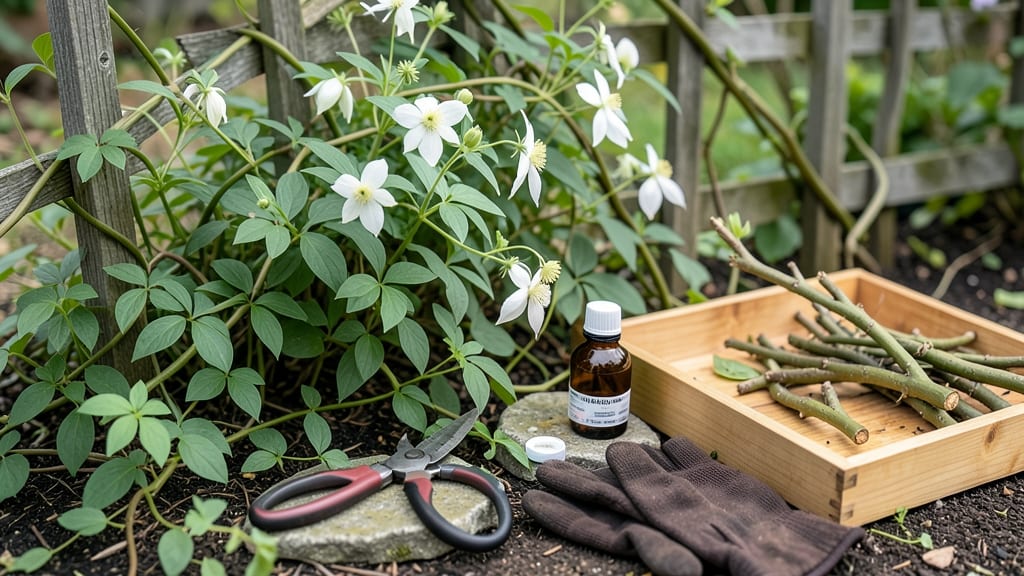
Pruning Montana clematis plants in late winter unlocks their boldest summer blooms—three times the flowers if you do it right. ✂️ I’ve watched my own vines go from sparse, tangled messes to explosive, repeat-blooming powerhouses after mastering this one technique. The key?
Timing, sharp cuts, and knowing exactly which stems to keep (and which to sacrifice). Montana clematis thrives on late-winter pruning (just as buds swell but before new growth starts).
You’ll need clean pruners, a ladder (for high vines), and a bucket for trimmings—plus a sharpie to mark stems if you’re unsure. The goal is to open up the plant’s center so sunlight and air circulate, which prevents disease and encourages stronger blooms.
After pruning, your clematis will send out new, vigorous shoots within weeks. By summer, you’ll have denser foliage and more flowers than ever before—some varieties even produce second flushes of blooms. The secret? Cutting back one-third of the oldest stems each year keeps the plant balanced and productive.
Works for all Montana clematis varieties, whether they’re climbing a trellis, scrambling over a fence, or twining through shrubs. Here’s how to do it without a single mistake.
📚 In This Guide
- What you need
- Instructions
- Tips and common mistakes
- Wrapping up and next steps
What you need
- ● Pruning shears or loppers: Bypass-style (for clean cuts), with a 4- to 6-inch blade for precision. Disinfect with rubbing alcohol between cuts to prevent disease.
- ○ Gloves: Heavy-duty, gardening-grade (cut-resistant for thorny stems). Optional: Long sleeves to shield against scratches.
- ● Pruning saw: Curved-tooth (for thick stems over ½ inch).
- ● Rake or broom: For clearing debris post-prune.
- ○ Mulch (optional but recommended): 2-3 inches of shredded bark or compost to protect roots after pruning.
- ● Know your clematis type: Montana clematis (e.g., ‘Montana’, ‘Jackmanii’) are typically Group 3—prune in late winter/early spring (before new growth starts).
- ● Check the weather: Prune on a dry, frost-free day (ideal temp: 40–60°F).
- ● Identify last year’s growth: Look for woody stems (thicker, brown) and current-season canes (green, flexible).
- ● Gather supplies: Have a bucket or bag for trimmings (compost or dispose of).
Step-by-Step instructions for pruning Montana clematis plants
Here's the precise late-winter method I've used for years to coax Montana clematis into their most spectacular summer blooms.
✂️ Step 1: Identify Last Year's Growth and Mark Cutting Points
First, locate the largest buds along each stem—these are your growth points for the coming season. Montana clematis (Clematis montana) blooms on new wood, so you'll prune back to just above these buds. I use a permanent marker to circle the strongest, outward-facing buds spaced 12-18 inches apart along each stem.
Look for buds that appear plump and slightly swollen—they're ready to break dormancy. Avoid cutting near any dead or shriveled growth (it'll be brown and brittle). If you're unsure, make your cut slightly higher than questionable growth—you can always trim more later. This is where patience pays off; rushing leads to weak regrowth.
✂️ Step 2: Make Clean Cuts at the Right Angle
Use sharp, clean pruners to make your cuts at a 45-degree angle, about ¼ inch above the marked bud. The angled cut prevents water from pooling, which can rot the stem. I always sterilize my pruners with rubbing alcohol between cuts to avoid spreading disease between stems.
Never leave stubs or tear the stem—this invites infection. For thicker stems, make two cuts: first a shallow notch, then a full cut just outside it. This prevents the bark from splitting. After each cut, step back to check your spacing. You want 6-12 inches between cuts on mature plants to allow airflow and prevent fungal issues.
✂️ Step 3: Remove Dead Wood and Thin Overcrowded Growth
Now's the time to eliminate any dead, diseased, or crossing branches. Dead wood is easy to spot—it's hollow when you tap it or has no green pith inside. Remove these completely at the base. For crossing branches, cut the one growing inward to create better airflow and sunlight penetration.
Thin out the center of the plant if growth appears too dense. Aim for an open, vase-like shape with the strongest stems radiating outward. I usually remove about 20-30% of the total growth in this step—this might sound aggressive, but Montana clematis responds beautifully to this rejuvenation. Watch for any suckers growing from the base; these are best removed entirely to focus energy on the main stems.
🌱 Step 4: Apply Wound Treatment and Fertilize for New Growth
After pruning, I apply a thin layer of pruning sealant to all cuts larger than ½ inch in diameter. This prevents disease entry points. For smaller cuts, the natural healing process works fine. Follow up by applying a balanced, slow-release fertilizer (10-10-10 ratio) around the base, keeping it 6 inches away from the stems.
Water deeply after fertilizing to help nutrients penetrate the soil. This is the perfect time to add 2-3 inches of organic mulch around the base, but keep it 3 inches away from the stem to prevent rot. The mulch will protect roots from late-winter temperature swings while retaining moisture for the coming growth spurt.
☀️ Step 5: Monitor and Support New Growth
Once new shoots emerge (usually within 3-4 weeks of pruning), watch for pale green leaves and tender new growth. These are your signals that the plant is actively growing. Install your support structure now—Montana clematis can grow 12-15 feet annually, so a sturdy trellis or arbor is essential.
Gently tie the main stems to the support using soft plant ties, being careful not to damage the bark. As growth progresses, you'll need to adjust ties every 2-3 weeks to accommodate the increasing stem diameter. Keep the area around the base weed-free, as competition for nutrients will slow your clematis' vigorous growth. This is where consistent care pays off with dramatic summer blooms.
Tips & tricks for pruning Montana clematis plants
These precision tips will help you transform your Montana clematis into a summer blooming powerhouse with minimal stress.
Bud Selection Insight: In Step 1, focus on buds that face outward—they'll grow toward sunlight and produce the most vigorous new growth. I've found that slightly larger buds (about the size of a pea) tend to produce stronger stems than smaller ones. If you're unsure about a bud's viability, make your cut just above it rather than risking a weak growth point. The key is patience here; don't rush to cut near questionable buds.
Cutting Technique Precision: When making those 45-degree cuts in Step 2, visualize slicing a pie—your cut should be clean and smooth, not jagged. For thicker stems, the two-cut method prevents bark splitting, but I've also discovered that using a sharp, clean pruner reduces the need for this technique entirely. Always sterilize between cuts, especially if you're working with multiple plants or have diseased growth elsewhere in your garden.
Pruning Strategy: The 20-30% thinning recommendation in Step 3 might seem aggressive, but Montana clematis actually thrives when given room to breathe. I've seen plants double their bloom production after aggressive thinning because the remaining stems receive more sunlight and nutrients. Remember that these plants can grow 12-15 feet annually, so creating an open structure now prevents future crowding issues. Look for stems that cross or rub against each other—these are prime candidates for removal.
Post-Pruning Care: After applying wound treatment in Step 4, I've noticed that adding a thin layer of compost (about 1 inch) around the base helps retain moisture while the plant recovers. The 2-3 inches of mulch mentioned is perfect, but don't forget to water deeply after applying it—this helps settle the mulch and prevents it from blowing away. The 3-4 week window for new growth emergence is your best indicator that everything is progressing well.
Pro Tips for Pruning Montana Clematis Plants
- These precision tips will help you transform your Montana clematis into a summer blooming powerhouse with minimal stress.
- Bud Selection Insight: In Step 1, focus on buds that face outward—they'll grow toward sunlight and produce the most vigorous new growth.
- Cutting Technique Precision: When making those 45-degree cuts in Step 2, visualize slicing a pie—your cut should be clean and smooth, not jagged.
Frequently asked questions
Got questions about pruning your Montana clematis? You’re not alone! Here are answers to the most common ones—so you can confidently tackle late-winter pruning like a pro.
When is the exact best time to prune Montana clematis?
Prune in late winter (February–early March) before new growth starts. This gives plants time to recover before summer’s heat. If you miss the window, never prune in fall—it can invite disease. Pro tip: Wait until soil is workable but not yet warm.
How much should I cut back—half, two-thirds, or more?
Montana clematis (Group 1) thrives with hard pruning—cut back by 1/3 to 1/2 of last year’s growth. Remove dead/diseased stems entirely, but leave 2–3 healthy buds on remaining stems. Never prune to bare wood—this can stress the plant.
What if I prune too late? Will my clematis still bloom?
Late pruning (April+) won’t kill your clematis, but it may delay blooms or reduce flower size. If you must prune later, do it lightly—just remove dead stems. For best results, stick to the late-winter timeline. Good news: Montana clematis is forgiving and often rebounds quickly!
Can I prune in cold weather? What if it freezes?
Prune on mild (30–50°F) days to avoid shocking the plant. If frost is forecast, wait. Cold weather won’t harm dormant clematis, but wet, icy conditions can spread disease. Use sterilized tools and prune in dry weather for safety.
What if my clematis isn’t blooming after pruning?
Check these fixes:
- Light: Ensure it gets 6+ hours of sun (Montana clematis loves full sun).
- Soil: Amend with compost—poor soil = fewer blooms.
- Water: Deep water 1–2x/week during dry spells.
- Pruning: Verify you left 2–3 buds per stem.
Wrapping up and next steps
Pruning your Montana clematis in late winter isn’t just a chore—it’s your secret weapon for stunning summer blooms! 🌸 By mastering the right cuts, timing, and tools, you’ll encourage lush growth, prevent disease, and keep your vines thriving for years.
Remember: patience and precision pay off in vibrant, healthy plants that’ll be the envy of your neighborhood.
Ready to transform your garden? Grab those pruners and start clipping with confidence—your clematis will thank you with a showstopping floral display! For extra peace of mind, bookmark this guide or jot down your notes before heading outside. Happy pruning!