
Pruning
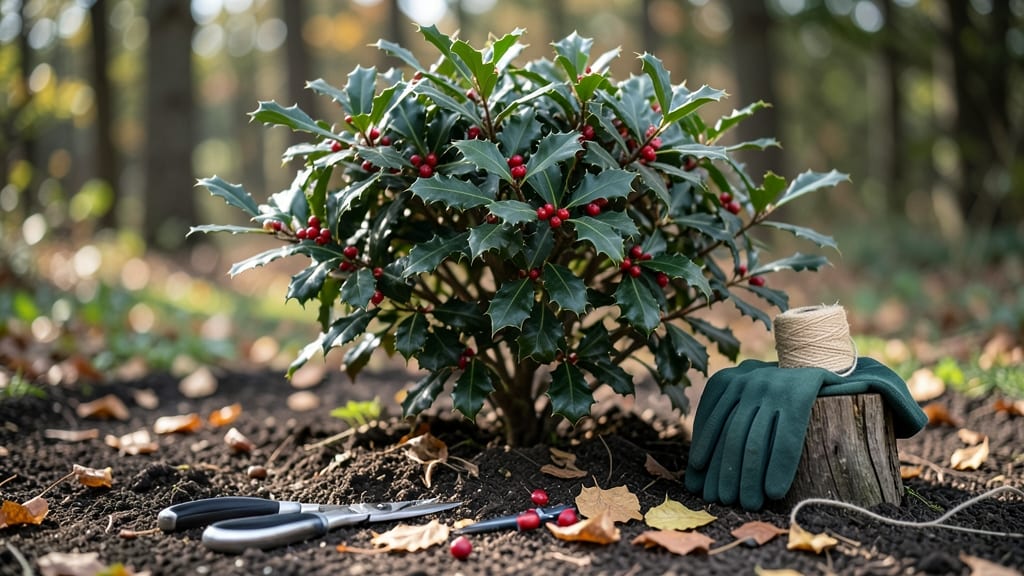
Pruning holly bushes at the wrong time can turn your lush evergreen into a leggy mess. ✂️ The best time to prune is late winter or early spring—right after the coldest stretch but before new growth starts.
This dormant-season timing ensures you won’t accidentally cut off next year’s berries or flowers, which form on old wood. Holly bushes reward patience with stronger canes and heavier berry production when pruned correctly.
Use clean, sharp pruners to make cuts just above a bud or branch collar, and remove no more than one-third of the foliage at once. Over-pruning stresses the plant, leaving it vulnerable to pests and disease. You’ll notice new growth within 4-6 weeks, with fuller branches by summer.
The key is working with the plant’s natural cycle—not against it. Skip late-spring or summer pruning unless you’re removing dead wood, as this can disrupt berry development. Works for all holly varieties, from classic English holly to dwarf types.
Just remember: timing is everything for keeping your bushes healthy and berry-laden.
📚 In This Guide
- What you need
- Instructions
- Tips and common mistakes
- Wrapping up and next steps
What you need
- ● Pruning shears: Bypass pruners (sharp, 6–8" blades) for clean cuts on small branches.
- ● Loppers: 18–24" bypass loppers for thicker stems (½"–1.5" diameter).
- ● Hand saw: Pruning saw with 8–10" blade for stubborn, woody branches (1.5"+ diameter).
- ● Gloves: Heavy-duty, cut-resistant gloves (holly spines are no joke!).
- ● Disinfectant: 70% isopropyl alcohol or bleach solution (1:9 ratio) to sterilize tools between cuts.
- ● Trash bags: 2–3 heavy-duty bags (holly leaves and clippings can be messy!).
- ● Extension pole: For reaching high branches (10–12' with a saw attachment).
- ● Marking twine: To flag branches for removal before cutting.
- ○ Pruning sealant: (Optional) For large cuts on mature holly (e.g., Tanglefoot Tree Wound Pruning Seal).
- ● Safety glasses: Protect your eyes from flying debris.
- ● Check the weather: Prune on a dry, calm day (avoid frost or rain within 24 hours).
- ● Gather a bucket of water to clean tools mid-pruning.
- ● Wear long sleeves and pants to avoid holly spine scratches.
Step-by-step guide for pruning holly bushes in dormant season
Here's the method I've used for years to keep holly bushes lush and productive—timing and technique matter most.
⏰ Step 1: Wait for the Perfect Dormant Window
Prune holly bushes late winter to early spring, just as buds swell but before new growth begins—typically February to March in most climates. This timing ensures you don't accidentally remove next year's berries, which form on old wood. I always check for bare branches with no leaves and no visible buds before grabbing my shears.
If you prune too early, you risk exposing tender new growth to late frosts. Too late, and you'll cut off potential flowering stems. Watch for daytime temperatures consistently above 40°F—that's your signal to start. Holly bushes in colder zones may need to wait until March to avoid frost damage to fresh cuts.
✂️ Step 2: Remove Dead, Diseased, or Crossing Branches First
Start by cutting out any dead, broken, or diseased branches—these are easy to spot as they're brown, brittle, or lack leaves. I make clean cuts at the branch collar (the swollen area where the branch meets the trunk) using sharp pruners. For diseased wood, sterilize your tools with rubbing alcohol between cuts to prevent spreading pathogens.
Next, remove branches that cross or rub against each other—these wounds invite pests and disease. You'll notice these as branches growing inward or touching. Cut them back to a healthy outward-facing bud. This step opens up the center of the bush, improving airflow and sunlight penetration for stronger growth.
🌿 Step 3: Thin Out Overcrowded Areas for Better Airflow
Holly bushes naturally grow dense, but too much crowding leads to weak, leggy growth. Look for branches growing straight up (called "watersprouts") or those that block light from reaching the center. These are your targets for thinning. Cut them back to the main stem or a strong lateral branch.
I aim to remove no more than 25% of the foliage in one season—holly bushes are slow to recover from heavy pruning. Focus on opening the center first, then work outward. You'll see more sunlight reaching the inner branches and fewer crowded, weak stems after this step.
🌱 Step 4: Shape the Bush for Balance and Form
Once you've removed the problem branches, step back and assess the bush's shape. Holly bushes respond well to light shaping, so avoid drastic cuts. Use your pruners to shorten overlong branches by cutting just above a leaf bud that faces outward. This encourages fuller growth in the right direction.
For a natural look, I avoid geometric shapes—holly bushes thrive with an organic, layered form. If you're growing a holly for berries, never cut back more than one-third of the plant in a single year. You'll know you're pruning correctly when the bush has a balanced silhouette with no bare spots and even distribution of foliage.
🪴 Step 5: Clean Up and Monitor for New Growth
After pruning, collect and dispose of all clippings—never leave them on the ground, as they can harbor pests or disease. I like to shred larger branches for mulch, but holly clippings are best burned or bagged. Water the base of the bush deeply but lightly to help it recover without stressing the roots.
Watch for new growth within 4-6 weeks—this is your confirmation that the pruning was successful. If you see no new buds by late spring, you may have pruned too late or too aggressively. Holly bushes are forgiving, but they need time to recover. Mulch around the base with 2-3 inches of organic mulch to protect roots and retain moisture.
Tips & tricks for perfect holly bush pruning
These little details make all the difference between a healthy holly bush and one that struggles to recover.
Timing is Everything: The dormant season window—late winter to early spring—is your golden opportunity. I can't stress enough how critical this is: pruning too early risks frost damage to new growth, while pruning too late cuts off next year's berries. Check for bare branches with no leaves and no visible buds—that's your perfect signal. Pro tip: In colder zones, wait until March when daytime temps consistently stay above 40°F for at least a week. This timing ensures you're working with the plant's natural cycle.
Tool Prep Matters: Sharp, clean tools are non-negotiable. I sterilize my pruners with rubbing alcohol between cuts—especially important when dealing with diseased branches. Dull tools crush stems instead of making clean cuts, which invites infection. For larger branches, I use bypass pruners for clean cuts at the branch collar. And here's what nobody tells you—wrap your pruners in a towel after each cut to prevent sap from gumming up the blades. That sap dries hard and makes future pruning miserable.
Visual Cues for Perfect Cuts: When shaping your holly, look for outward-facing buds when making your cuts. These buds will grow into new branches that continue the bush's natural shape. For thinning, target branches that grow straight up (watersprouts) or block center light. You'll know you're doing it right when you see more sunlight reaching the inner branches after pruning. And remember—never remove more than 25% of the foliage in one season. Holly bushes are patient but not resilient to drastic cuts.
Post-Pruning Recovery: After cleaning up, give your bush a deep but light watering to help it recover without stressing the roots. Then mulch with 2-3 inches of organic mulch to protect roots and retain moisture. Watch for new growth within 4-6 weeks—this is your confirmation that the pruning worked. If you see no new buds by late spring, you may have pruned too late or too aggressively. Holly bushes are forgiving, but they need time to bounce back, especially after significant shaping.
Pro Tips for Pruning Holly Bushes Best Time
- These little details make all the difference between a healthy holly bush and one that struggles to recover.
- Timing is Everything: The dormant season window—late winter to early spring—is your golden opportunity.
- Tool Prep Matters: Sharp, clean tools are non-negotiable.
Frequently asked questions
Got questions about pruning your holly bushes? You’re not alone—timing, technique, and aftercare can feel tricky! Here are some of the most common concerns, answered in plain language to help you prune like a pro.
When is the absolute latest I can prune my holly bushes?
While late winter/early spring (dormant season) is ideal, you can prune holly bushes up until early summer—just avoid heavy cuts after June. Pruning too late may stimulate tender new growth that could be damaged by frost. If you missed the dormant window, focus on light shaping rather than aggressive pruning.
What if I prune holly bushes in winter when they’re completely bare?
Pruning holly bushes in deep winter (Dec–Feb) is safe but not ideal. Cold stress can weaken the plant, and you might accidentally remove buds that haven’t yet formed. Wait until late winter (when buds swell but leaves haven’t emerged) for the best results. If you must prune in winter, do so on a mild day and avoid heavy cuts.
Can I prune holly bushes in summer without harming them?
Yes, but with caution! Light summer pruning (e.g., removing dead or overcrowded branches) is fine, but avoid heavy cuts. Summer growth is already stressed by heat—aggressive pruning can invite pests or disease. If you must prune, do it in early summer (June) and water thoroughly afterward to help recovery.
Will pruning my holly bushes make them bushier or just taller?
Pruning holly bushes correctly encourages bushiness! Cut just above a leaf bud (not a bare stem) to promote branching. Avoid "topping" (cutting the main stem flat)—this leads to leggy growth. For a denser shape, prune selectively to open the center and redirect energy to side shoots.
What should I do if my holly bushes bleed sap after pruning?
Sap bleeding is normal in early spring but not harmful. It’s the tree’s way of "sealing" wounds. To minimize it, prune on a cool, dry day (not warm) and use clean, sharp tools. Seal cuts with pruning sealant only if the cut is large (over 2 inches)—small cuts don’t need it and can trap moisture.
Pro Tip: Label your cuts!
If you’re pruning for shape or berry production, use a paint marker to label branches you’ve cut. This helps track growth patterns and ensures you don’t over-prune in future seasons. (Bonus: It’s a great way to remember which branches are male/female if you’re growing for berries!)
Wrapping up and next steps
Pruning your holly bushes at the right time—late winter or early spring—sets the stage for lush, vibrant growth and stunning berries. By following the steps and tips shared, you’ll encourage stronger canes, better shape, and healthier plants while avoiding common pitfalls.
Now that you’re armed with knowledge, grab those pruners and give your holly bushes the care they deserve—your future winter displays will thank you!
Next step: Mark your calendar for February or March and start planning your pruning session. Happy gardening! 🌿✂️