
Pruning
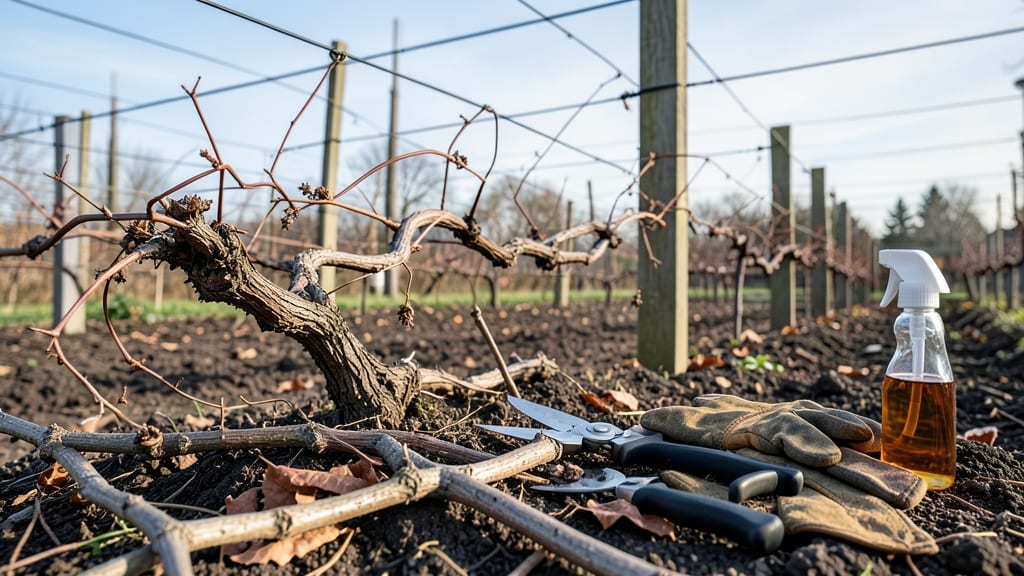
Pruning grapes for winter means trimming canes to 5-7 buds per arm, eliminating dead or weak wood, and shaping the vine for airflow. Time your cuts after dormancy (late winter) but before new shoots appear to boost next year's fruit quality.
This late-winter pruning isn't just about cleanup—it's about setting up your grapevine for a stronger harvest. 🌱 The 5-7 bud rule creates ideal fruit clusters while maintaining cane strength, while removing dead wood prevents disease.
I've found that cane pruning (keeping longer arms) works best for vigorous varieties, while spur pruning (short 2-3 bud spurs) suits compact types. The key is working when temps are above freezing but before buds swell—usually February-March in most climates, but adjust 2-4 weeks later in colder zones.
What many gardeners overlook is how pruning affects vine balance. A well-shaped vine directs energy to fruit production rather than excessive leaf growth. I recommend marking your cuts with twist ties for reference next season—this helps visualize your pruning strategy year after year.
And remember: always sterilize your tools between cuts to prevent spreading fungal infections like black rot.
💡 In This Article
- Winter Grapevine Pruning Techniques for Optimal Growth
- Tools and Safety Tips for Pruning Grapevines
Winter grapevine pruning techniques for optimal growth
Pruning grapevines in winter isn't just about trimming—it's a surgical process that determines next year's fruit quality. The 5-7 bud rule creates the perfect balance: enough buds to produce fruit clusters while maintaining cane strength.
For vigorous varieties like Concord, I use cane pruning, keeping 2-3 canes per arm with 5-7 buds each—this encourages strong growth and large fruit production.
Compact varieties like Thompson Seedless benefit from spur pruning, where you cut back to short 2-3 bud spurs spaced 8-12 inches apart to control vigor and improve cluster size.
The key to successful pruning lies in identifying dead or diseased wood. Healthy canes have smooth, greenish-brown bark that snaps cleanly when bent. Diseased wood appears cracked, discolored, or covered in fungal growth. Always cut back to the nearest healthy bud—never leave stubs, as they can harbor pathogens.
I recommend making cuts at a 45-degree angle just above a bud, about 1/4 inch above to prevent water from pooling and rotting the bud. This angled cut also helps rainwater bead off rather than seep into the wound.
Vine structure plays a crucial role in fruit production. A well-pruned vine should have a balanced canopy—neither too open nor too dense. Too much open space leads to poor fruit set, while excessive density promotes fungal diseases. I aim for a 30-40% open center to allow sunlight and airflow.
For trellised vines, I maintain 4-6 arms (permanent wood) with 2-3 canes per arm, ensuring each cane has 5-7 buds. This structure directs energy to fruit production rather than excessive leaf growth, which can dilute flavor.
Timing your pruning is equally important. The ideal window is after dormancy but before bud break—typically February-March in most climates. In colder zones (USDA Zones 4-6), wait until after the last frost date, often 2-4 weeks later than warmer regions.
Pruning too early exposes the vine to cold damage, while waiting too long risks encouraging new growth that could be killed by late frosts. I always check local weather forecasts and prune when daytime temperatures consistently stay above 40°F.
One technique I've found invaluable is marking cuts with twist ties or paint. This helps visualize your pruning strategy year after year and ensures consistency. For example, I might mark red for canes to keep and green for spurs.
This color-coding system makes it easier to identify which wood to retain and which to remove, especially on complex vines. Another pro tip: always prune on a dry, sunny day to minimize stress on the vine and reduce the risk of spreading disease through wet conditions.
What most gardeners overlook is the pruning wound's role in disease prevention. When you make a cut, the exposed wood is vulnerable to fungal infections like black rot or powdery mildew. To mitigate this, I apply a wound dressing (like pruning sealant) to larger cuts on older wood.
For smaller cuts, I rely on the vine's natural healing ability—just ensure your tools are sterilized between cuts with rubbing alcohol or a 10% bleach solution. This simple step can make the difference between a healthy vine and one struggling with disease.
Remember, the goal of winter pruning is to shape the vine for efficiency. A well-pruned grapevine will produce 20-30% more fruit with better quality and flavor. The precise cuts you make now will determine the health, productivity, and longevity of your vineyard for years to come. 🌿