
Pruning
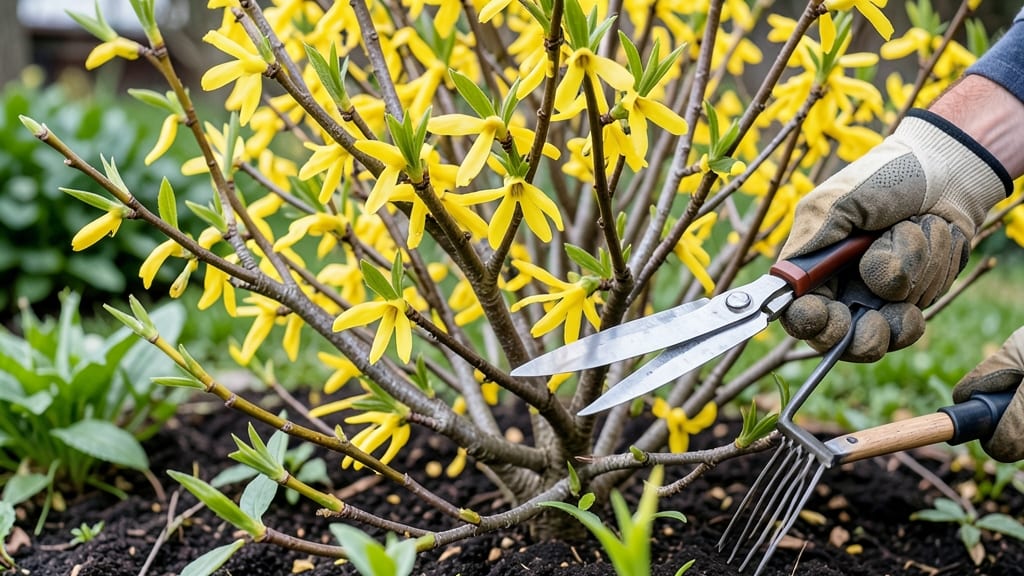
Pruning forsythia in fall is the secret to a bush that bursts with brighter blooms next spring. ✂️ I used to wait until spring, but after watching my neighbors' bushes grow leggy and sparse, I switched to fall—and now my forsythia looks like a golden cloud every March.
The key is timing: prune after the leaves drop but before hard frost sets in, when the plant is dormant but still healing.
You'll need sharp bypass pruners, loppers for thicker branches, and a pair of gloves to handle the thorns. Grab a bucket for trimmings (they make great mulch!) and a notepad to sketch your plan—this isn't about hacking back randomly.
Forsythia blooms on old wood, so we're shaping the structure, not cutting back to bare stems like with spring-flowering shrubs.
The result is a bush with better airflow, fewer pests, and stronger stems that support next year's flowers. You'll see fewer broken branches in winter storms and a cleaner shape that lets the golden blooms shine.
Plus, the new growth that emerges in spring is more vigorous because we removed last year's spent wood.
Works for zones 5-8, but adjust timing slightly in warmer climates—prune after the first frost. Here's how to do it without mistakes that ruin your bush's potential. Let's get started!
📚 In This Guide
- What you need
- Instructions
- Tips and common mistakes
- Wrapping up and next steps
What you need
- ● Pruning shears: Bypass pruners (for clean cuts on small branches, 1–2 pairs recommended). Opt for sharp, stainless steel blades (e.g., Felco or Fiskars) to avoid crushing stems.
- ● Loppers: Bypass or anvil-style (for branches ½"–2" thick, 1 pair). Choose long-handled (20–24") for reach.
- ● Pruning saw: Curved-tooth or folding saw (for thick branches >2" thick, 1 unit). A 7–10" blade works best.
- ● Gloves: Heavy-duty gardening gloves (cut-resistant, like Mechanix or Filson) to protect hands from thorns and debris.
- ● Disinfectant: Rubbing alcohol (70%+) or bleach solution (1 part bleach to 9 parts water) to sterilize tools between cuts (prevents disease spread).
- ● Trash bags or bucket: For collecting pruned branches (1–2 large bags or a 5-gallon bucket). Line with a biodegradable liner for easy cleanup.
- ● Ladder or step stool: Sturdy, non-slip (if forsythia is >6 ft tall). Ensure it’s rated for your weight and has a wide base.
- ○ Pruning sealant: (e.g., Tanglefoot Tree Wound Pruning Seal) for large cuts (>1" diameter) to reduce sap loss (optional for forsythia, but useful for oozing branches).
- ● Marking spray: White or colored spray paint to mark branches for removal (helpful for complex pruning plans).
- ● Safety gear: Safety glasses and long sleeves to protect against debris and thorns.
- ● Sharpener: Pruner sharpening stone or file to maintain tool sharpness mid-session.
- ● Wheelbarrow: For hauling heavy branches to compost or disposal.
- ● Weather check: Prune on a dry, cool day (avoid rain or extreme cold). Ideal temps: 40–60°F.
- ● Tool maintenance: Sharpen blades and clean tools before starting to ensure clean cuts.
- ● Safety first: Wear gloves and eye protection. Ensure your workspace is clear of tripping hazards.
- ● Plan ahead: Sketch a rough pruning plan (if needed) to visualize cuts and shape goals.
Step-by-step guide for pruning forsythia in fall
Fall’s the perfect time to shape forsythia—here’s how to do it right.
✂️ Step 1: Wait Until After Blooming and Leaf Drop
Prune forsythia 4-6 weeks after flowering—typically in late fall after leaves yellow and drop. This timing ensures you don’t cut off next year’s blooms, which form on old wood. If you prune too early, you risk removing flower buds before they set.
Check the branches: if they’re bare and slightly woody, it’s safe to prune. Avoid cutting in frost or freezing temps—below 40°F stresses the plant. I like to prune on a mild, dry day when the ground isn’t frozen.
✂️ Step 2: Remove Dead, Diseased, or Weak Wood First
Start by cutting out any branches that are dead (no green beneath the bark), diseased (mushrooms, black spots), or crossing (rubbing against others). Use clean, sharp pruners to make 45-degree cuts just outside the branch collar—the swollen area where the branch meets the trunk.
Don’t leave stubs—this invites rot. If a branch is thicker than your wrist, use a pruning saw. I always sanitize my tools with rubbing alcohol between cuts to prevent spreading disease.
✂️ Step 3: Thin the Canopy for Better Airflow
Step back and look at the shrub’s shape. Remove 10-20% of the oldest, thickest branches to open up the center and improve sunlight penetration. Focus on branches growing inward or downward—they block light and encourage pests.
Cut branches back to a strong outward-facing bud or side branch. Avoid leaving stubs longer than ¼ inch. This step keeps forsythia’s signature bright yellow blooms vibrant by reducing overcrowding.
✂️ Step 4: Shape the Shrub for Next Year’s Growth
Lightly trim the remaining branches to encourage a natural, rounded shape. Avoid heavy pruning—forsythia blooms on old wood, so drastic cuts reduce next year’s flowers. I like to prune just enough to maintain balance without sacrificing blooms.
If your forsythia is leggy, cut back some of the oldest stems to encourage new growth from the base. This keeps the shrub fuller and more compact. Finish by raking up fallen leaves and debris to prevent fungal issues.
✂️ Step 5: Clean Up and Store Tools
After pruning, collect all clippings and dispose of diseased branches separately. Sterilize your pruners with a 10% bleach solution (1 part bleach to 9 parts water) to kill any lingering pathogens. Wipe them dry and store in a clean, dry place.
Water the base of the shrub if fall has been particularly dry. Mulch lightly with 2-3 inches of organic mulch (like shredded bark) to protect roots over winter. This final step ensures your forsythia stays healthy until spring blooms.
Tips & tricks for pruning forsythia like a pro
Here’s how to turn fall pruning from a chore into a game-changer for next year’s blooms.
The Timing Secret: That 4-6 week window after flowering is critical because forsythia blooms on old wood. If you prune too early, you’ll snip off next year’s buds before they form. I mark my calendar for when forsythia leaves drop—usually late November in my zone 6 garden. Pro tip: Check for bare, slightly woody branches—they’re your cue that it’s safe to prune.
Tool Prep Matters: I’ve learned the hard way that dull pruners create jagged cuts that invite disease. Always use sharp tools and make clean cuts at a 45-degree angle just outside the branch collar. For thicker branches, a pruning saw is your best friend. And here’s what nobody tells you—sanitize your tools between cuts with rubbing alcohol, not just water. Disease spreads faster than you think!
Canopy Thinning Strategy: When you’re removing those 10-20% oldest branches in Step 3, focus on the thickest stems first. These are the ones that block sunlight and create pest havens. Cut back to an outward-facing bud—this encourages new growth that will push outward, creating a fuller shrub. I like to visualize the shrub’s natural shape before making any cuts, almost like sketching with my pruners.
Winter Prep That Pays Off: That final step of mulching with 2-3 inches of organic material isn’t just for looks—it’s insulation for your forsythia’s roots. I use shredded bark because it breaks down slowly and improves soil structure over time. Watering after pruning (if fall is dry) helps the plant recover before winter dormancy. This small effort makes all the difference when spring blooms arrive.
Pro Tips for Pruning Forsythia In Fall
- Here’s how to turn fall pruning from a chore into a game-changer for next year’s blooms.
- The Timing Secret: That 4-6 week window after flowering is critical because forsythia blooms on old wood.
- Tool Prep Matters: I’ve learned the hard way that dull pruners create jagged cuts that invite disease.
Frequently asked questions
Got questions about pruning forsythia in the fall? You’re not alone! Here are some of the most common concerns—and their answers—to help you prune like a pro.
Is it okay to prune forsythia in fall, or should I wait until spring?
Fall is actually an ideal time to prune forsythia—especially if you missed it in late winter. Pruning in fall (after leaf drop but before hard frost) removes dead branches and shapes the plant while it’s dormant. Just avoid heavy pruning too close to winter, as new growth may not harden off properly. Pro tip: Late fall (October-November) is your sweet spot!
How much can I trim back my forsythia without hurting it?
Forsythia is tough! You can safely remove up to ⅓ of the plant’s total volume in one season. For mature bushes, aim to thin out congested branches and open the center for airflow. Avoid cutting back into old wood (more than 2–3 years old), as forsythia blooms on new growth. Warning: Over-pruning can reduce next year’s vibrant yellow blooms!
What if I prune too late in fall, and frost hits?
If frost arrives before you finish pruning, don’t panic! Light pruning (removing dead or crossing branches) is still beneficial. However, avoid heavy cuts—wait until early spring (just before buds swell) to finish. Quick fix: Cover fresh cuts with a thin layer of pruning sealant (optional) to prevent disease in damp conditions.
Will pruning in fall affect next year’s flowers?
Not if done correctly! Forsythia blooms on new wood, so pruning in fall won’t harm next year’s flowers—as long as you avoid cutting back into old, woody stems. Focus on shaping and thinning rather than drastic reductions. Bonus: Pruning now encourages a healthier plant, which often means more blooms in spring!
What’s a good alternative if I can’t prune in fall?
If fall pruning isn’t possible, late winter (just before buds break) is the next best time. Avoid pruning after flowering, as you’ll risk cutting off next year’s blooms. For neglected forsythia, spread pruning over 2–3 years to avoid shocking the plant. Remember: A little maintenance now saves big headaches later!
Wrapping up and next steps
Pruning forsythia in fall is your golden ticket to a healthier, more vibrant plant next spring! By tackling this task now, you’re setting the stage for stronger growth, better blooms, and a cleaner canopy—without the stress of last-minute cleanup. 🌿✨
Ready to take action? Grab your pruners, mark your calendar, and give your forsythia the care it deserves before winter sets in. Your future spring garden will thank you!
Next step: Review your notes, gather your tools, and start pruning—your forsythia’s new glow is just a cut away! 🌟