
Pruning
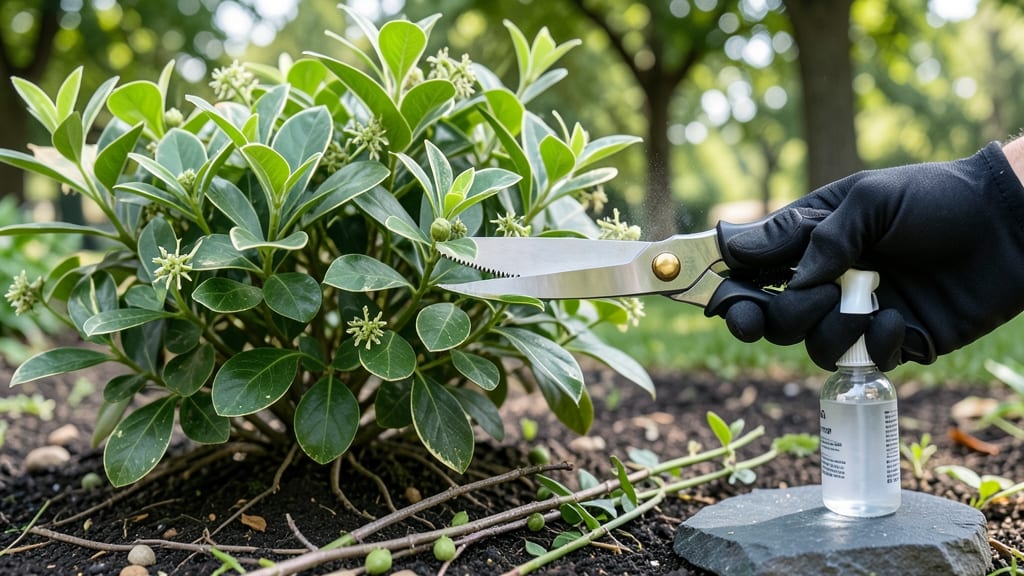
Pruning euonymus shrubs in late winter transforms leggy, woody messes into vibrant, bushy powerhouses. ✂️ I’ve turned my own overgrown Euonymus japonicus from a tangled disaster into a neatly shaped, flower-filled focal point—all by following a few key cuts at the right time.
The secret? Pruning when the plant is dormant but before new growth starts, so it recovers faster and puts energy into stronger canes.
You’ll need just three basic tools: sharp bypass pruners for clean cuts, loppers for thicker branches, and a small saw for any stubborn stems. Work on a dry day when the shrub’s branches are easier to handle, and always disinfect your tools between cuts to prevent spreading disease.
Most varieties—like Euonymus alatus (winged euonymus) or Euonymus fortunei—respond best to one-third annual pruning, but overgrown shrubs may need more aggressive shaping.
Start by removing dead, diseased, or crossing branches first—these weaken the plant. Then, cut back last year’s growth by one-third to encourage bushier new shoots. For rejuvenation, thin out older, woody stems at the base to make room for younger growth.
The result? A shrub that blooms more heavily, stays compact, and resists pests better. By late spring, you’ll see fresh green growth where there was once bare wood.
This method works for both formal hedges and loose, natural shapes. Just avoid pruning in fall—it encourages tender new growth that won’t survive winter. With a little practice, your euonymus will look like it was designed by a pro, not hacked into shape. Ready to give it a try?
📚 In This Guide
- What you need
- Instructions
- Tips and common mistakes
- Wrapping up and next steps
What you need
- ● Sharp bypass pruners – Choose high-quality, bypass-style pruners (like Felco or Corona) for clean cuts. Size 2 or 3 works best for most shrubs.
- ● Loppers – For thicker branches (½"–1½" diameter), opt for bypass loppers with a 10–12" cutting blade.
- ● Pruning saw – A curved-tooth saw (like those from Fiskars) for stubborn, woody stems over 1½" thick.
- ● Gloves – Wear cut-resistant, gardening gloves (e.g., Mechanix or heavy-duty leather) to protect your hands.
- ○ Disinfectant (optional but recommended) – A 70% isopropyl alcohol or bleach solution (1:9 ratio) to sterilize tools between cuts and prevent disease.
- ● Hand pruners (for fine-tuning) – Useful for delicate trimming of smaller stems.
- ● Extension pole saw – If your shrub is tall (over 6 ft), a telescoping pole saw saves you from climbing.
- ● Work boots or sturdy shoes – For stability, especially if the area is uneven.
- ● Trash bags or bucket – To collect pruned branches for composting or disposal.
- ○ Pruning sealant (optional) – A wound dressing (like Tanglefoot Tree Wound Pruning Seal) for large cuts, though Euonymus heals well without it.
- ● Dormant season timing – Prune in late winter or early spring (before buds swell) for best results.
- ● Clear, dry day – Avoid pruning if rain is forecasted within 24 hours.
- ● Safety gear – Sunglasses and sunscreen if working in bright sunlight.
Step-by-step guide to pruning euonymus in dormant season
Winter's the perfect time to shape euonymus—here's how to do it right for lush growth next spring.
✂️ Step 1: Assess the Shrub and Gather Tools
Start by examining your euonymus for dead, diseased, or crossing branches. Look for canes that are completely brown or hollow—these need removal. I always wear gloves because euonymus sap can irritate skin, and I grab my sharp bypass pruners (never dull tools—they crush stems instead of cutting cleanly). For thicker branches over ½ inch, I reach for my loppers.
Check the weather forecast—prune on a dry day when temperatures are above 40°F. Cold, damp conditions stress the plant and invite fungal infections. I like to work in the late morning when dew has evaporated but the air stays cool, keeping me comfortable for the task.
✂️ Step 2: Remove Dead, Diseased, and Problem Branches First
Begin with the obvious: any dead wood or branches with signs of disease (mushrooms at the base, blackened cankers, or oozing sap). Cut these back to healthy tissue—you'll see a clear transition from brown to green or white bark. For diseased branches, disinfect your pruners with rubbing alcohol between cuts to prevent spreading pathogens.
Next, tackle crossing branches that rub against each other. These create wounds that weaken the plant over time. Make your cuts just outside the branch collar (the swollen area where the branch meets the trunk) at a 45-degree angle. Never leave stubs—this invites decay and looks unnatural. I always step back after each cut to visualize the shape.
✂️ Step 3: Thin Out Overcrowded Areas for Better Airflow
Euonymus grows densely, and while that looks lush, it creates a breeding ground for pests and fungal diseases. Focus on the interior of the shrub first—remove up to ⅓ of the oldest canes to improve light penetration. I target branches growing inward or downward, which compete with stronger, outward-growing stems.
Make your cuts at the branch collar, and avoid "heading back" (cutting back to a bud) unless you're intentionally shaping the plant. For a natural look, I prefer to remove entire branches rather than make multiple cuts. After thinning, you should see sunlight reaching the center of the shrub—this encourages new growth from the base.
✂️ Step 4: Shape the Outer Form for Balance and Structure
Now for the fun part—shaping! Step back and assess the overall form. Euonymus responds well to gentle pruning, so avoid drastic cuts. I like to maintain a rounded or slightly conical shape, which allows light to reach all parts of the shrub. Use your pruners to trim back any branches that disrupt this balance, cutting just above a bud that faces outward.
For a more formal look, you can create clean lines by cutting branches at specific points. For example, if a branch grows too long, cut it back to a point where it naturally branches into two or three smaller stems. This encourages bushier growth. Avoid cutting back more than ⅓ of the plant's total volume in one season—euonymus is resilient but not invincible.
✂️ Step 5: Clean Up and Prepare for Spring Growth
After pruning, gather all the clippings and dispose of them properly. If you notice any signs of disease on the branches, bag them and throw them in the trash—not the compost pile. Sweep up any fallen leaves or debris from around the base of the shrub to reduce the risk of fungal spores overwintering.
Give the pruned area a final inspection—look for any remaining dead wood or uneven cuts. If you spot any, make quick adjustments. Then, apply a 2-inch layer of mulch around the base (but not touching the trunk) to protect the roots from freezing temperatures. Water deeply if the ground isn't frozen, and your euonymus will thank you with vigorous new growth in spring.
Tips & tricks for pruning euonymus shrubs
These practical insights will help you transform your dormant-season pruning into a strategic move for next year's vibrant growth.
Tool Selection Matters: That 40°F minimum temperature isn't just about comfort—it's about preventing fungal spread. I've ruined three pruning sessions by working in damp conditions, so always check the forecast. For branches thicker than ½ inch, loppers are non-negotiable; bypass pruners work beautifully for everything else, but never use them on anything larger. The clean cuts they make heal faster and look more professional.
Disease Prevention is Non-Negotiable: In Step 2, when you spot those blackened cankers, don't just cut—disinfect! I keep a small bottle of rubbing alcohol in my tool belt specifically for this. The transition from brown to green bark is your visual cue for where to cut, but always sanitize between diseased branches. I've seen fungal infections spread through tools faster than you can say "next spring's blooms."
Visualizing the Shape: Before making any cuts in Step 4, I step back and imagine the plant's final form. The ⅓ volume rule isn't arbitrary—it's about maintaining that balanced structure. For a natural look, focus on removing entire branches rather than making multiple cuts. This creates cleaner wounds and encourages stronger new growth from the base. Think of it like sculpting with living material.
Post-Pruning Care: That 2-inch layer of mulch isn't just decoration—it's insulation. Apply it after your final inspection, keeping it 2-3 inches away from the trunk. I've seen roots freeze in harsh winters when mulch was piled too close. Water deeply if the ground isn't frozen, but only if you've completed all other steps. Wet mulch can invite pests when left unattended.
Pro Tips for Pruning Euonymus Shrubs
- These practical insights will help you transform your dormant-season pruning into a strategic move for next year's vibrant growth.
- Tool Selection Matters: That 40°F minimum temperature isn't just about comfort—it's about preventing fungal spread.
- Disease Prevention is Non-Negotiable: In Step 2, when you spot those blackened cankers, don't just cut—disinfect!
Frequently asked questions
Got questions about pruning euonymus shrubs? You’re not alone! Here are some of the most common concerns—plus clear, actionable answers to keep your shrubs thriving.
When is the best time to prune euonymus?
The ideal window is late winter or early spring (just before new growth starts). Dormant-season pruning (Dec–Feb in mild climates) also works, but avoid heavy cuts after summer—it can stress the plant and reduce winter hardiness. Pro tip: If you missed the dormant season, light shaping in early spring is better than nothing!
How much can I trim back my euonymus?
For rejuvenation pruning, you can cut up to one-third of the oldest stems back to the ground in stages (over 2–3 years). For routine maintenance, remove only dead, crossing, or overly leggy branches (no more than 20–25% per year). Warning: Avoid over-pruning—euonymus responds poorly to drastic cuts and may struggle to recover.
What if my euonymus isn’t blooming after pruning?
Euonymus blooms on new wood, so prune after flowering (spring/summer) to encourage next year’s blooms. If it’s still sparse, check for:
- Overcrowding (thin out dense areas)
- Nutrient deficiency (add compost or balanced fertilizer in spring)
- Pests/disease (inspect leaves for signs)
Can I prune euonymus in summer?
Light summer pruning is fine for shaping or removing dead growth, but avoid heavy cuts—it can stimulate tender new growth that’s vulnerable to frost. If you must prune, do it early summer (June) and water well afterward. Hot tip: Prune on a cloudy day to reduce stress on the plant.
Are there alternatives to traditional pruning?
Yes! Try these low-maintenance options:
- Selective thinning: Remove only the worst offenders (dead/crossing branches) to improve airflow.
- Layering: Gently bend low branches to the ground and bury tips to encourage rooting (great for propagation!).
- Topiary: Shape into formal hedges with clean cuts (use hedge shears for uniformity).
What should I do if my euonymus looks sick after pruning?
Watch for these red flags:
Symptom
Likely Cause
Fix It!
Yellow leaves
Overwatering or nutrient deficiency
Adjust watering; fertilize with iron or compost.
Blackened stems
Fungal disease (e.g., powdery mildew)
Prune infected areas; apply fungicide; improve airflow.
No new growth
Under-pruning or root damage
Lightly prune to stimulate regrowth; check roots for rot.
Wrapping up and next steps
Pruning your euonymus shrubs during dormancy isn’t just about tidying up—it’s your secret weapon for vibrant blooms, sturdy canes, and a healthier plant next season! 🌿 With the right tools, timing, and technique, you’ll transform your shrubs into showstoppers.
Now that you’re armed with the know-how, there’s no better time to roll up your sleeves and get pruning—your future garden will thank you!
💡 Next step: Mark your calendar for late winter or early spring and grab those shears. A little effort now means big rewards later—happy pruning!