
Pruning
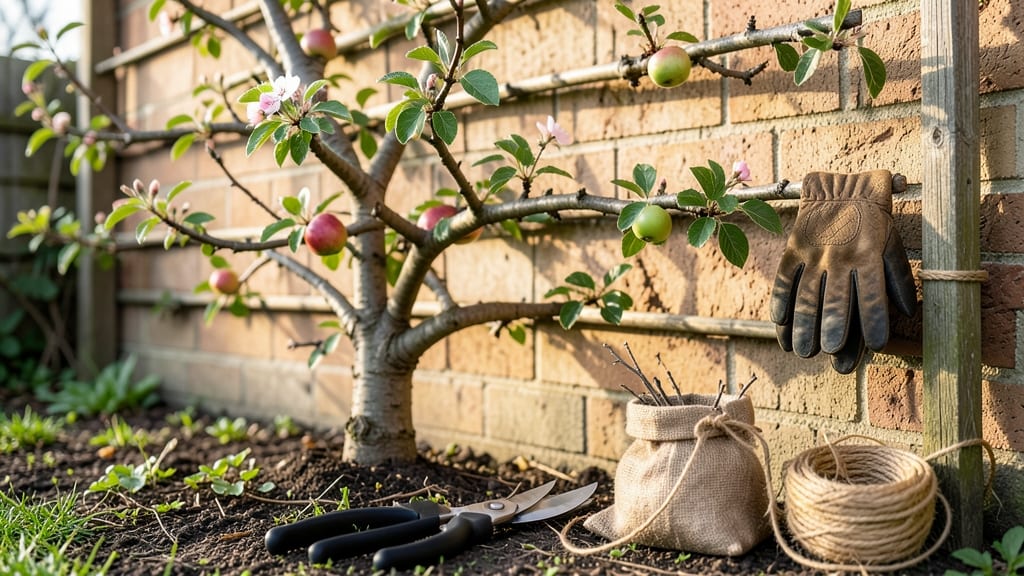
Pruning espalier apples isn't just about keeping branches tidy—it's the secret to turning a small space into a fruit-producing masterpiece. 🌳 I learned this the hard way when my first attempt produced lopsided growth and sparse harvests.
The key lies in understanding how these flat, fan-shaped trees grow differently than their upright cousins, and when to prune for maximum fruit production.
You'll need sharp pruners, a sturdy ladder (or a tall stool), and a clear vision of your desired shape—whether it's horizontal cordon, fan, or candelabra. The best time to prune is late winter or early spring before new growth begins, but light shaping can happen year-round.
My favorite trick? Pruning just after harvest to encourage next year's fruit buds while maintaining the elegant form.
By summer's end, you'll see the payoff: compact branches heavy with fruit, all within arm's reach. The trees stay manageable, produce more efficiently, and look stunning against a wall or fence.
It takes patience—your first harvest might be modest—but each pruning season gets easier as you refine your eye for balance and fruit potential.
For beginners, start with a simple horizontal cordon shape and focus on removing crossing branches first. The goal isn't perfection—it's creating an open framework where light and air circulate freely. That's what turns a decorative espalier into a productive one, year after year.
📚 In This Guide
- What you need
- Instructions
- Tips and common mistakes
- Wrapping up and next steps
What you need
- ● Hand pruners (bypass pruners): Sharp, clean, and disinfected (1 pair). Avoid dull tools—they crush branches!
- ● Loppers: For thicker branches (up to 2 inches in diameter; 1 pair).
- ○ Pruning saw: For stubborn, thick wood (optional but handy for mature trees).
- ● Rubbing alcohol (70%+) or bleach solution: To sterilize tools between cuts (1 small bottle).
- ● Garden twine or tree ties: Soft, flexible material (1 roll) to secure branches to the espalier frame.
- ● Espalier frame or trellis: Wooden, metal, or sturdy wire structure (custom-built or pre-made).
- ● Gloves: Heavy-duty gardening gloves (1 pair) to protect from thorns and splinters.
- ● Young apple tree: Dwarf or semi-dwarf varieties (e.g., ‘Gala,’ ‘Granny Smith,’ or ‘Honeycrisp’) work best. Plant in full sun (6+ hours/day).
- ● Patience: Espaliering takes years to master—start with a 2-3 year old tree for faster progress.
- ○ Optional (but helpful): Horticultural tape: For gentle branch wrapping (1 roll).
- ● Pruning sealant: To protect large cuts (small jar).
- ● Notebook: To track pruning dates and growth patterns.
Step-by-step guide to pruning espalier apples for perfect year-round shape
Here’s how I keep my espalier apple trees looking like living art while maximizing fruit production.
🪴 Step 1: Gather Your Tools and Assess the Tree
Start with sharp, clean tools—bypass pruners for branches under ¼ inch thick and a pruning saw for anything larger. Disinfect blades with rubbing alcohol to prevent disease spread. I always wear gloves to protect my hands from thorns and sap.
Examine the tree’s structure, focusing on the main branches (scaffold limbs). Look for crossing branches, dead wood, or shoots growing inward—these are your first targets. Healthy espalier trees have an open center and branches spaced evenly along the plane. Sketch a rough outline of your desired shape if needed—this keeps cuts intentional.
✂️ Step 2: Prune for Structure in Late Winter
Timing matters: prune dormant trees in late winter (just before buds swell) to avoid disease entry points. Start by removing dead, diseased, or crossing branches first—cut back to the branch collar, the swollen area where the branch meets the trunk. This prevents unsightly stubs and promotes faster healing.
Next, thin out crowded branches to improve airflow. Aim for 3-5 main scaffold limbs spaced evenly along the plane. If a branch grows too vigorously, cut it back by ⅓ to ⅕ of its length. You’ll see new growth emerge from the sides later in spring—that’s how you encourage a bushier shape. Avoid heavy pruning now; you’re shaping, not renewing.
🌿 Step 3: Summer Pruning for Fruit and Shape Refinement
Mid-summer is for light maintenance—remove suckers (wild shoots at the base) and water sprouts (vertical shoots). These steal energy from fruit production. Pinch off any growth that’s crowding the main branches or growing toward the center. Use your fingers or small pruners for precision.
Watch for fruit spurs (short branches with clusters of buds). If they’re overloaded with fruit, thin them out to 3-4 buds per spur—this ensures larger, higher-quality apples next season. You’ll know you’re doing it right when the tree’s skeleton remains visible through the foliage, and sunlight reaches all branches.
⏰ Step 4: Final Adjustments in Early Fall
In early fall, focus on cleaning up—remove any dead or diseased branches that appeared over the summer. Thin out excessive growth on the main limbs to maintain the espalier plane. Cut just above an outward-facing bud to encourage branches to grow in the right direction.
This is also the time to shape for winter. If any branches are growing too long or leggy, trim them back to ⅓ of their length. Avoid heavy cuts now—you want the tree to harden off before cold weather. Step back and admire your work; the tree should now look balanced, with an open center and branches radiating outward like a fan.
🌱 Step 5: Post-Pruning Care for Healthy Growth
After pruning, apply a layer of mulch around the base (but not touching the trunk) to retain moisture and regulate soil temperature. Water deeply if the weather has been dry, but avoid overwatering—espalier trees are drought-tolerant once established. A balanced fertilizer applied in early spring will support new growth.
Keep an eye out for new shoots in spring—they’ll tell you if the tree is responding well to your cuts. If you see vigorous growth, you’ve pruned correctly. If growth is sparse, you may have cut too aggressively. Adjust next year’s pruning accordingly. Patience is key; espalier trees take 3-5 years to fully mature but reward you with stunning form and abundant fruit.
Tips & tricks for perfect espalier apple pruning
A few key strategies will transform your espalier apple tree into a masterpiece while keeping it productive year after year.
Tool Prep Matters: I can't stress enough how important it is to disinfect your tools before you begin—rubbing alcohol works perfectly. This simple step prevents spreading disease between cuts. Also, keep your bypass pruners sharp; dull blades tear wood instead of making clean cuts, which slows healing and invites infection. I always test my tools on a small branch first to ensure they're cutting properly.
Visualize First, Cut Later: Before making a single cut in Step 1, take a step back and sketch a rough outline of your desired shape. This might sound unnecessary, but it helps you visualize the final structure. I often use a piece of twine or string to map out where my scaffold limbs should be—this keeps everything balanced and intentional. Remember, espalier trees thrive on symmetry and openness.
Bud Direction Determines Growth: When you're making those final cuts in Step 4, always look for outward-facing buds. Cutting just above one of these ensures your new growth will radiate outward from the tree's plane. I've made the mistake of cutting too close to the bud or at an angle—both result in awkward growth patterns that throw off your carefully planned shape. Take your time here; precision pays off in the coming seasons.
Post-Pruning Care is Non-Negotiable: After you've finished all your cuts, don't just walk away. The care you provide immediately after pruning makes all the difference. That layer of mulch in Step 5 isn't just decorative—it regulates soil temperature and retains moisture. I've seen trees recover beautifully from heavy pruning when given proper aftercare, while others struggled when neglected. Think of it as the cherry on top of all your hard work.
Pro Tips for Pruning Espalier Apples
- A few key strategies will transform your espalier apple tree into a masterpiece while keeping it productive year after year.
- Tool Prep Matters: I can't stress enough how important it is to disinfect your tools before you begin—rubbing alcohol works perfectly.
- Visualize First, Cut Later: Before making a single cut in Step 1, take a step back and sketch a rough outline of your desired shape.
Frequently asked questions
Got questions about keeping your espalier apple tree thriving? Here are answers to the most common ones—so you can prune like a pro!
When is the best time to prune espalier apples?
Prune espalier apples twice a year: late winter/early spring (just before buds swell) for major shaping, and summer to control growth and remove suckers. Avoid pruning in fall—it invites disease. For new trees, prioritize winter pruning to establish your framework.
How do I know if I’m pruning too much?
If you remove more than 25% of the tree’s foliage in one session, you’re over-pruning. Signs include excessive leaf drop, weak growth, or no fruit the next year. Aim to open the canopy (not strip it) to ensure sunlight reaches all branches. Start conservatively if you’re new!
Can I still get fruit if I skip pruning?
Yes, but expect fewer, smaller apples and a messier tree. Pruning improves air circulation (reducing rot), directs energy to fruit production, and keeps the tree manageable. Skipping it may lead to overcrowded branches, disease, and a harder-to-harvest yield. Think of it as “spring cleaning” for your tree!
What should I do if my espalier apple tree isn’t fruiting?
Check these fixes:
- Age: Young trees (under 3 years) focus on growth—be patient!
- Sunlight: Ensure it gets 6+ hours of direct sun daily.
- Pollination: Plant a second apple variety nearby (or a pollinator-friendly flower) if your tree isn’t self-pollinating.
- Pruning errors: Revisit your cuts—aim to keep 3–5 main scaffold branches spaced evenly.
Are there alternatives to traditional pruning?
Yes! Try these low-maintenance tweaks:
- Topiary shears: Use for cleaner cuts on horizontal branches (great for formal espalier shapes).
- Fruit tree sprays: Apply dormant oil (winter) and copper fungicide (spring) to prevent pests/diseases that stress the tree.
- Container pruning: If growing in pots, prune roots too (trim 10% annually) to encourage fruit production.
Wrapping up and next steps
Mastering the art of pruning espalier apples transforms your garden into a stunning, space-saving fruit paradise! 🌳🍏 With the right tools, timing, and techniques—like winter shaping, summer thinning, and annual maintenance—you’ll ensure a healthy, productive tree that rewards you with delicious harvests for years.
Whether you’re a beginner or refining your skills, every snip brings you closer to that picture-perfect orchard wall and a table bursting with homegrown goodness.
Ready to take the next step? Grab your pruners, sketch your dream espalier design, and start shaping! 🌟 For extra inspiration, explore espalier apple varieties that thrive in your climate, or join gardening forums to swap tips with fellow enthusiasts. Your future harvest—and your neighbors’ green envy—await!