
Pruning
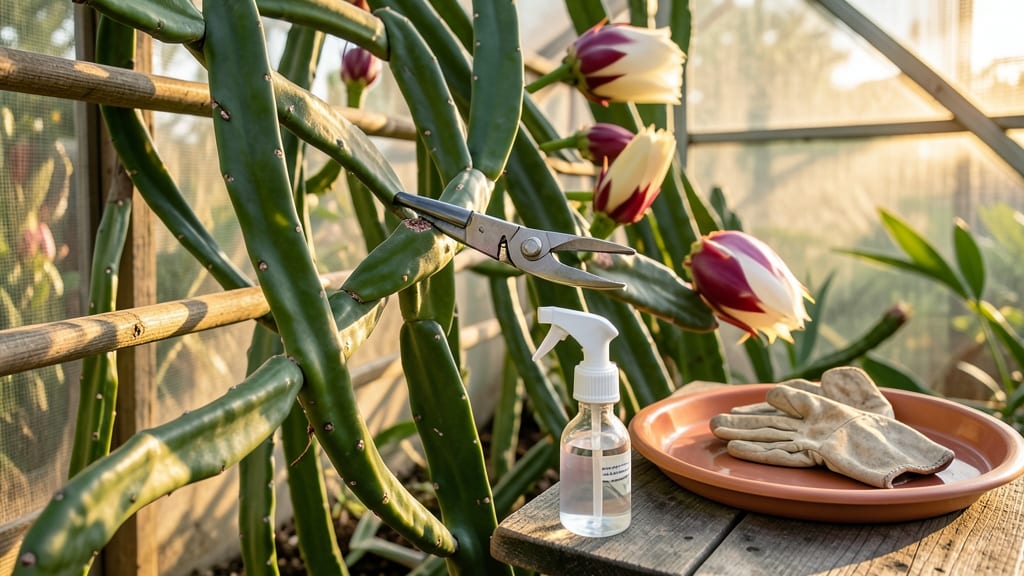
Pruning dragon fruit isn’t just about trimming branches—it’s the secret to turning your plant into a fruit-producing powerhouse. ✨ Last summer, my dragon fruit vine went from sparse blooms to a heavy harvest after I started pruning strategically, and the difference was night and day. The key? Timing it right and knowing which stems to keep.
You’ll need sharp pruners, rubbing alcohol for sterilizing cuts, and a clear day to assess your plant’s structure. The goal is to encourage airflow, redirect energy to fruit production, and remove dead or weak growth.
Most gardeners skip pruning entirely, but that’s how you end up with leggy vines and few fruits—my first year was a lesson in patience and precision.
By following this method, you’ll see new, sturdy canes emerge within weeks, each capable of producing those iconic pink or yellow fruits. The plant becomes bushier, more resilient, and—most importantly—far more productive. Think of it as giving your dragon fruit a spa day: less clutter, more energy, and better results.
Works for both outdoor plants in warm climates and container-grown vines in cooler zones. The same principles apply whether you’re dealing with a young plant or a mature one that’s been neglected. Let’s get those harvests growing!
📚 In This Guide
- What you need
- Instructions
- Tips and common mistakes
- Wrapping up and next steps
What you need
- ● Pruning shears or bypass pruners: Sharp, clean, and sterilized (70% isopropyl alcohol works great). Choose a pair with a 4- to 6-inch blade for precision cuts.
- ● Gloves: Heavy-duty gardening gloves (nitrile or leather) to protect against thorns and sap.
- ● Disinfectant (rubbing alcohol or bleach solution): Mix 1 part bleach to 9 parts water for sterilizing tools between cuts.
- ○ Rope or twine (optional but helpful):strong> For supporting heavy canes or training new growth.
- ○ Small pruning saw (optional): For thick, woody stems—look for a foldable, compact design for ease.
- ● Timing: Prune during the dry season (avoid heavy rains) or in early morning when the plant is hydrated.
- ● Weather check: Ensure temps are above 60°F (15°C) to reduce stress on the plant.
- ● Water source: Have a hose or watering can ready to hydrate the plant post-pruning.
- ● Compost or mulch: Prep a small pile to recycle pruned material (dragon fruit plants love organic matter!).
How to prune dragon fruit for maximum fruit production
Pruning dragon fruit isn't just about trimming—it's about shaping growth for bigger harvests. Here's my battle-tested approach that works year-round.
🌿 Step 1: Identify the Main Stem and Primary Branches
Start by locating your dragon fruit plant's central stem—the thick, vertical trunk that supports everything. This is your plant's backbone, and you'll want to protect it while encouraging lateral growth. Examine the primary branches (called "cladodes") that emerge from the main stem. These are the fruit-bearing arms of your plant, and they need proper pruning to produce abundant harvests.
Look for branches that are growing inward or crossing each other—these are your first candidates for removal. Use clean, sharp pruning shears to make cuts just above a leaf node (the bump where leaves attach). This ensures new growth will sprout from that point. I always make my cuts at a 45-degree angle to prevent water from pooling on the wound, which can cause rot.
✂️ Step 2: Prune for Airflow and Light Penetration
Dragon fruit plants thrive when they get plenty of airflow and sunlight. Remove any branches that are growing toward the center of the plant, as these will create a dense, shaded interior where pests and diseases love to hide. Aim to create an open, vase-like shape that allows light to reach all parts of the plant. You'll see the difference immediately—your plant will look more balanced and healthy.
Don't be afraid to cut back overgrown branches by up to one-third of their length. Focus on branches that are weaker, thinner, or not producing fruit. Make your cuts just above a leaf node, and avoid leaving stubs. The goal is to encourage new, vigorous growth from the remaining branches. I like to prune in the late morning or early afternoon when the plant is actively photosynthesizing, which helps it recover faster.
🌱 Step 3: Encourage New Growth After Pruning
After pruning, your dragon fruit plant will focus its energy on producing new growth. Keep the soil consistently moist but not soggy—water deeply once a week during dry periods, allowing the top 2-3 inches of soil to dry out between waterings. This encourages strong root development and helps the plant recover from pruning stress.
Apply a balanced, water-soluble fertilizer (like a 10-10-10 formula) every 4-6 weeks during the growing season to support new growth. You'll notice small buds forming at the leaf nodes within 2-3 weeks—these are the future branches that will bear fruit. If you see any yellowing leaves, it's a sign of overwatering or nutrient deficiency. Adjust your watering schedule or fertilizer strength accordingly.
⏰ Step 4: Seasonal Pruning Adjustments for Year-Round Growth
Dragon fruit plants grow year-round in warm climates, so your pruning strategy should adapt to the seasons. In spring, focus on removing any dead, diseased, or crossing branches to encourage new flower buds. During summer, prune lightly to maintain shape and airflow, especially after harvests when the plant is actively growing. In fall, reduce pruning to avoid stressing the plant before winter.
If you're growing dragon fruit in a cooler climate, prune lightly in late winter to remove any damaged branches and encourage new growth as temperatures warm up. Always use sterilized pruning tools to prevent the spread of disease. After each pruning session, clean your shears with rubbing alcohol to keep them sharp and bacteria-free. This small step makes a big difference in your plant's health.
Tips & tricks for pruning dragon fruit like a pro
These battle-tested tricks will help you transform your dragon fruit plant into a fruit-producing powerhouse all year long.
Precision Cutting Technique: In Step 1, when making those 45-degree cuts just above leaf nodes, I can't stress enough how important it's to use sterilized shears. I've seen too many gardeners skip this step and end up with fungal infections that spread throughout the plant. After each cut, wipe your shears with rubbing alcohol to prevent cross-contamination between branches. This single step can mean the difference between a healthy plant and one struggling with disease.
Seasonal Timing Secret: The late morning or early afternoon timing mentioned in Step 2 isn't just about convenience—it's about photosynthesis. Dragon fruit plants are most active during these hours, so pruning then helps them recover faster. If you must prune in cooler conditions, do it on sunny days when temperatures are above 65°F. I've found that plants pruned during peak sunlight show new growth within 7-10 days, while those pruned in cooler conditions can take twice as long to recover.
Visual Growth Cues: When you see those small buds forming at leaf nodes within 2-3 weeks (Step 3), that's your plant telling you it's ready for the next harvest cycle. These buds are your future fruit-bearing branches, so protect them by avoiding heavy pruning nearby. I like to mark these new growth points with a soft pencil so I can monitor their development. Watch for the buds to elongate—when they're about 2 inches long, that's when you'll start seeing flower buds form.
Climate Adaptation: For cooler climates, that late winter pruning suggestion in Step 4 is crucial. I've seen gardeners in Zone 9 try to prune too early, only to have their plants struggle when temperatures dip below 50°F. Wait until you see consistent daytime temperatures above 60°F before pruning. In colder regions, consider bringing potted dragon fruit plants indoors during winter months to protect them from frost damage while still maintaining their growth cycle.
Pro Tips for Pruning Dragon Fruit
- These battle-tested tricks will help you transform your dragon fruit plant into a fruit-producing powerhouse all year long.
- Precision Cutting Technique: In Step 1, when making those 45-degree cuts just above leaf nodes, I can't stress enough how important it's to use sterilized shears.
- Seasonal Timing Secret: The late morning or early afternoon timing mentioned in Step 2 isn't just about convenience—it's about photosynthesis.
Frequently asked questions
Got questions about pruning dragon fruit?
Here are answers to the most common ones to help you keep your plant thriving and productive!
When is the best time to prune dragon fruit?
Prune your dragon fruit plant year-round, but focus on late winter or early spring for major cuts. This timing aligns with natural growth cycles and minimizes stress. Light pruning (removing dead or overgrown branches) can happen anytime, but avoid heavy pruning during flowering or fruiting seasons to protect energy reserves.
How much should I trim off my dragon fruit plant?
For established plants, aim to remove 20-30% of the foliage during major pruning sessions. Cut back overly long or leggy branches to encourage bushier growth and better fruit production. Never trim more than 1/3 of the plant at once—this can shock the plant and reduce yields.
What should I do if my dragon fruit plant looks sad after pruning?
If your plant appears stressed (yellowing leaves, wilting, or slow regrowth), it might need extra care. Ensure it’s in bright, indirect light, keep soil moist but not soggy, and avoid fertilizing for 4-6 weeks post-pruning. Most plants recover within 2-4 weeks with proper care.
Can I propagate dragon fruit cuttings from pruned branches?
Healthy, disease-free cuttings (with 2-3 nodes) can root in water or soil. Place them in well-draining potting mix and keep them in warm, humid conditions (70-80°F). Roots typically form in 4-8 weeks, and you’ll have a new plant ready for transplanting!
Will pruning reduce my dragon fruit harvest?
Not if done correctly! Pruning actually boosts productivity by redirecting energy to healthier, more fruitful branches. Over time, a well-pruned plant yields larger, higher-quality fruits. Just avoid aggressive pruning during flowering—focus on shaping the plant in off-seasons.
Wrapping up and next steps
Pruning your dragon fruit isn’t just about keeping the plant tidy—it’s the secret to healthier growth, bigger blooms, and a year-round harvest! 🌱 By mastering the timing, techniques, and tools (like sharp pruners and organic mulch), you’ll encourage stronger stems, prevent disease, and even extend your plant’s lifespan.
Whether you’re trimming for shape, removing dead wood, or encouraging new shoots, consistency is key.
Now that you’re armed with the know-how, roll up your sleeves and get pruning! Start with just one section of your plant this week, observe how it responds, and adjust as needed.
Before you know it, you’ll be reaping vibrant, sweet dragon fruits—and maybe even sharing tips with fellow plant enthusiasts. Happy growing! 🌟