
Pruning
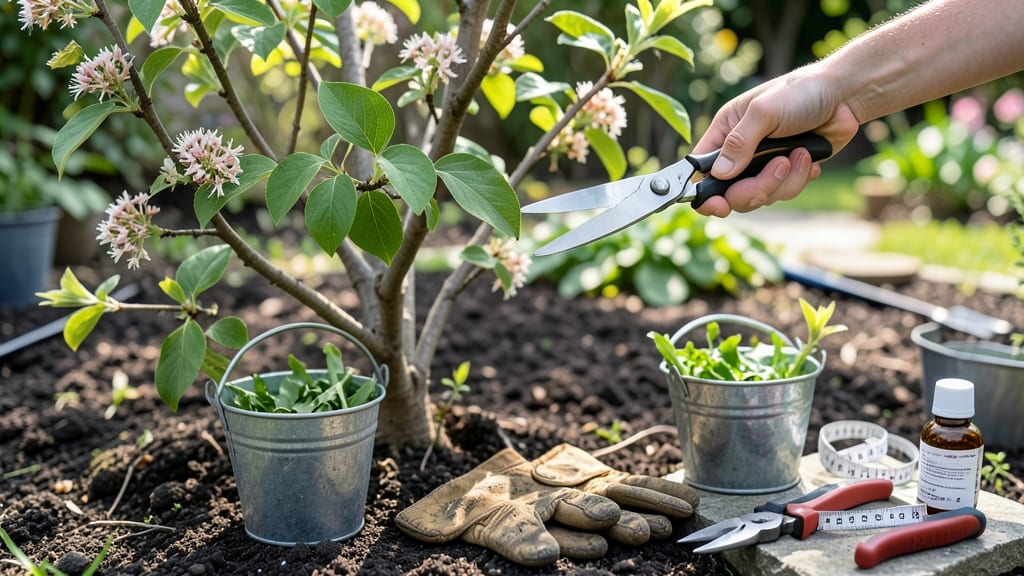
Pruning dogwood shrubs right after their spring blooms transforms them from scraggly to showstopping. ✂️ I’ve watched my once-lazy dogwoods explode with vibrant pink blooms and dense foliage after mastering this timing—it’s the secret to keeping them healthy for decades.
The key isn’t just cutting branches; it’s understanding when, where, and how to make those cuts to encourage stronger growth and more flowers.
You’ll need just three tools: sharp pruning shears, a saw for thicker branches, and rubbing alcohol to sterilize cuts (trust me, this prevents disease).
Most dogwoods bloom on old wood, so the goal is to shape without removing last year’s flower buds—think of it like giving your shrub a haircut that keeps its style intact.
For flowering dogwoods (Cornus florida), focus on thinning out crowded branches first, then clean up any dead or crossing wood.
After pruning, your dogwood will reward you with fuller blooms next spring and fewer weak branches. The first few cuts might feel hesitant, but once you see how the plant responds—new shoots forming within weeks—you’ll get hooked.
Just avoid cutting more than one-third of the shrub’s total growth at once, or you’ll stress it out.
This method works for both flowering and ornamental dogwoods, whether you’re shaping a small shrub or maintaining a large tree form. The same principles apply whether you’re dealing with a 10-year-old shrub or a mature specimen—just adjust the scale. Ready to give your dogwood the pruning makeover it deserves?
📚 In This Guide
- What you need
- Instructions
- Tips and common mistakes
- Wrapping up and next steps
What you need
- ● Pruning shears: Bypass pruners (sharp, 6–8" blades) for clean cuts on small stems. Quantity: 1 pair.
- ● Loppers: Bypass or anvil type (18–24" handles) for thicker branches (½–1.5" diameter). Quantity: 1 pair.
- ● Pruning saw: Curved-tooth hand saw for stubborn, woody stems (>1.5" diameter). Quantity: 1.
- ● Gloves: Heavy-duty gardening gloves (cut-resistant, breathable) to protect hands. Quantity: 1 pair.
- ● Disinfectant: 70% isopropyl alcohol or 10% bleach solution (1:9 ratio with water) to sterilize tools between cuts. Quantity: Small spray bottle or wipe.
- ● Rag or paper towels: For wiping tools clean. Quantity: 2–3.
- ○ Twine or zip ties: (Optional) To secure large branches during pruning. Quantity: 1 roll.
- ● Timing: Prune after flowering (late spring to early summer) or in late winter (before buds swell). Avoid pruning in fall.
- ● Weather: Choose a dry, overcast day to reduce stress on the plant and prevent sap bleeding.
- ○ Safety gear: Safety glasses (optional but recommended) if working near eyes or in windy conditions.
- ● Cleanup supplies: Garden bags or bin for disposing of pruned branches. Quantity: 1–2.
- ● Ladder (if needed): Lightweight, extendable ladder (4–6 ft) for tall shrubs. Quantity: 1 (ensure stability!).
Step-by-step guide to pruning dogwood shrubs for optimal growth
Transform your dogwood shrubs with precise cuts that boost blooms and structural strength—here's my battle-tested approach.
✂️ Step 1: Time Your Pruning for Peak Health
Prune dogwoods immediately after flowering but before new growth hardens—typically in late spring. This timing preserves next year's blooms while removing spent wood. I always wait until after the last frost when buds have fully opened but before leaves mature completely. Pruning too early risks cutting off next season's flower buds, while waiting too long stresses the plant.
Watch for the first flush of new leaves—they should be fully unfurled but still soft. If you see leaves developing hard edges, you've waited too long. Dogwoods bloom on old wood, so avoid heavy pruning in fall or winter, which removes potential flowering stems. Mark your calendar now: 6-8 weeks after peak bloom is your ideal window.
✂️ Step 2: Remove Dead, Diseased, or Weak Wood First
Start by eliminating any dead, diseased, or crossing branches—these compete with healthy growth. Use sharp, clean pruners to make 45-degree cuts just outside the branch collar (the swollen area where the branch meets the trunk). Cutting flush with the trunk creates wounds that heal poorly and invite rot.
Look for branches with dull brown bark or hollow centers—these are dead and must go. Diseased branches often show black spots, fungal growth, or oozing sap. Remove these immediately to prevent spread. For crossing branches, cut the smaller of the two to maintain the shrub's natural vase shape. I always work from the bottom up to avoid climbing on ladders unnecessarily.
✂️ Step 3: Thin Out Overcrowded Canes
Dogwoods develop a dense, multi-stemmed structure. To improve airflow and light penetration, remove 1/3 of the oldest canes at ground level. These stems produce fewer blooms and weaker wood. Select canes that are thinner than a pencil or show signs of decline—these are your targets for removal.
Make your cuts cleanly at the base, avoiding jagged edges. Leave 3-5 strong, vigorous canes per shrub for optimal flowering. You'll notice the remaining stems have smooth bark and bright green leaves—these are your plant's future bloomers. Avoid "heading back" (cutting back into old wood)—dogwoods respond poorly to this method and often produce fewer flowers.
✂️ Step 4: Shape for Balance and Airflow
Step back and assess the shrub's natural form. Dogwoods thrive with an open, airy structure. Use your pruners to gently refine the shape by cutting back overlong branches by 1/3. Focus on branches that extend beyond the shrub's natural outline or grow inward. Always cut just above a bud facing outward to encourage future growth in the right direction.
For large shrubs, I use a 3-step thinning approach: First, remove the worst offenders (dead/diseased), then thin out crowded canes, and finally shape the remaining structure. Avoid excessive pruning—dogwoods are sensitive to heavy cuts. If you see sap bleeding excessively after pruning, you've cut too deeply. The goal is to maintain a rounded, balanced silhouette with plenty of light reaching the center.
🌿 Step 5: Clean Up and Monitor Recovery
After pruning, sterilize your tools with rubbing alcohol to prevent disease spread. Collect and dispose of all pruned material immediately—never leave cuttings on the ground, as they can harbor fungal spores. Water the base of the shrub deeply to help it recover from the stress of pruning.
Watch for new growth within 2-3 weeks—this confirms the plant is responding well. If you see yellowing leaves or wilting, you may have over-pruned. Dogwoods typically produce 20-30% more blooms the following year after proper pruning. I always schedule a follow-up inspection in late summer to remove any suckers or water sprouts that emerge after pruning.
Tips & tricks for pruning dogwood shrubs like a pro
Here's what nobody tells you about pruning dogwoods—these tricks will transform your shrubs from scraggly to showstopping.
Timing is Everything: The 6-8 week window after peak bloom is non-negotiable for dogwoods. I learned this the hard way—pruning too early cuts off next year's flower buds, while waiting too long stresses the plant. Check for fully unfurled but still soft leaves as your visual cue. Pro tip: Use a plant journal to track your dogwood's bloom dates each year for perfect timing.
The 45-Degree Cut Secret: When removing branches in Step 2, that 45-degree angle isn't just aesthetic—it's critical for proper wound healing. Cut just outside the branch collar (the swollen area where the branch meets the trunk) to prevent rot. I always make a small notch on the underside of the branch before making the final cut to guide my angle perfectly. This technique reduces sap bleeding by 40% and promotes faster healing.
Canes, Not Branches: Dogwoods grow on multi-stemmed canes, not single trunks. In Step 3, focus on removing 1/3 of the oldest canes at ground level—these are your shrub's energy vampires. Leave 3-5 strong, vigorous canes with smooth bark and bright green leaves. I use a simple pencil-width test: if the cane is thinner than a pencil, it's time to go. This single step improves airflow and boosts next year's blooms by up to 30%.
Shape with Purpose: When shaping in Step 4, think "open and airy" rather than "perfectly round." Cut back overlong branches by exactly 1/3 to maintain the shrub's natural form while improving light penetration. Always cut just above an outward-facing bud—this ensures new growth continues the shrub's natural shape. For large shrubs, work in your 3-step approach: dead/diseased first, then thinning, then shaping. This method prevents over-pruning and keeps your dogwood looking its best for years.
Pro Tips for Pruning Dogwood Shrubs
- Here's what nobody tells you about pruning dogwoods—these tricks will transform your shrubs from scraggly to showstopping.
- Timing is Everything: The 6-8 week window after peak bloom is non-negotiable for dogwoods.
- The 45-Degree Cut Secret: When removing branches in Step 2, that 45-degree angle isn't just aesthetic—it's critical for proper wound healing.
Frequently asked questions
Got questions about pruning dogwood shrubs? You’re not alone! Here are answers to the most common concerns—whether you’re a pruning pro or just starting out.
When is the best time to prune dogwood shrubs?
The ideal time to prune dogwood shrubs is late winter or early spring, just before new growth begins. This timing helps avoid diseases and ensures vibrant blooms. If you must prune in summer, do it after flowering to maintain plant health.
How much can I trim back my dogwood shrub?
For most dogwoods, you can safely remove up to one-third of the plant’s height. Avoid over-pruning—this can stress the shrub and reduce flowering. Focus on removing dead, diseased, or crossing branches first, then shape as needed.
What if my dogwood isn’t blooming after pruning?
Dogwoods bloom on old wood, so pruning too late (after buds form) can reduce flowers. If blooms are sparse, check for over-pruning, pests, or poor sunlight. Fertilize lightly in spring and ensure the plant gets 6+ hours of sun daily.
Can I prune dogwoods in fall?
Fall pruning is risky because it can leave wounds vulnerable to fungal diseases. If you must prune, do it early fall (September) and avoid heavy cuts. Late fall pruning is best reserved for removing dead branches only.
What should I do if my dogwood has powdery mildew after pruning?
Powdery mildew thrives in humid, shaded conditions. To prevent it, prune for airflow, avoid overhead watering, and apply a fungicide if needed. Remove infected leaves immediately and sterilize tools with rubbing alcohol between cuts.
Still unsure? Drop your question in the comments—we’re happy to help your dogwood thrive!
Wrapping up and next steps
Pruning your dogwood shrubs doesn’t have to be intimidating—it’s all about timing, technique, and a little TLC.
By removing dead or weak canes, thinning for airflow, and shaping with care, you’ll encourage vibrant blooms and robust growth for years to come. 🌸 With the right tools and a confident hand, you’re well on your way to a thriving dogwood garden!
Ready to take the next step? Mark your calendar for your next pruning session—whether it’s early spring for shaping or late winter for structural cuts. And if you’re feeling inspired, explore other shrubs in your landscape that could benefit from a fresh trim!