
Pruning
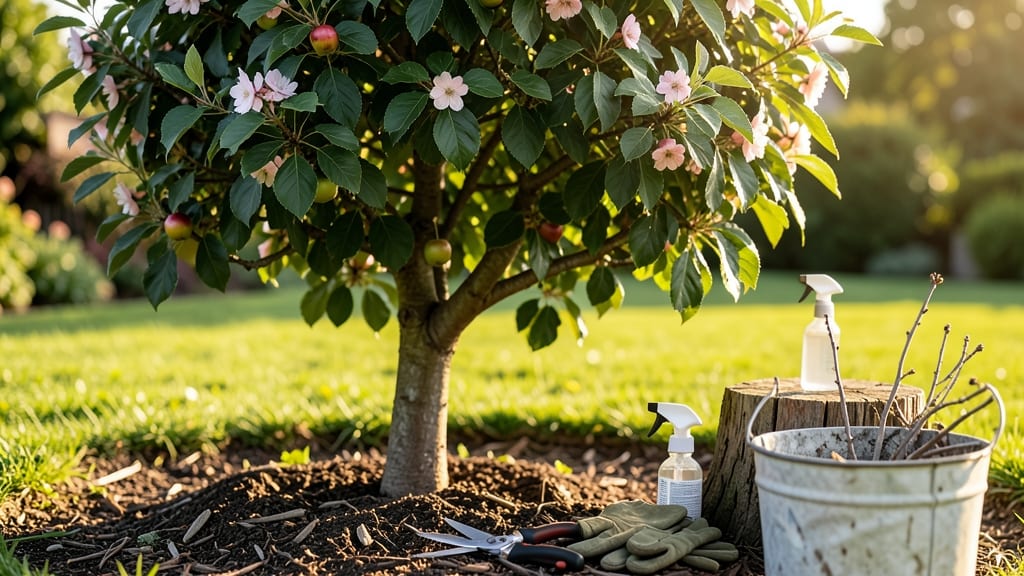
Pruning crab apple trees in late winter transforms them from tangled messes into sturdy, fruit-laden stars. ✂️ I’ve watched my once-scrubby tree bloom into a showstopper with just a few strategic cuts—no green thumb required. The key? Timing, tools, and a clear vision for its future shape.
You’ll need sharp bypass pruners, a sturdy ladder, and a 5-gallon bucket for clippings—plus a notebook to sketch your tree’s new framework. Winter’s dormant season is ideal because wounds heal faster when the tree isn’t actively growing, and you can see the structure clearly against bare branches.
By the time spring arrives, your tree will reward you with healthier canes, more abundant blooms, and a shape that lets sunlight reach every branch.
The process takes about 2-3 hours for a mature tree, and the results last for years—fewer diseases, stronger growth, and fruit that’s easier to harvest.
Works for both young saplings and established trees, and the same principles apply whether you’re shaping a formal espalier or a natural, open canopy. Let’s get those branches in order!
📚 In This Guide
- What you need
- Instructions
- Tips and common mistakes
- Wrapping up and next steps
What you need
- ● Pruning shears (bypass or anvil type) – Sharp, clean, and sized for small to medium branches (6–8" blades).
- ● Loppers (for thicker branches) – 10–14" reach, bypass-style for precision cuts.
- ● Pruning saw (for large limbs) – Curved blade, 8–10" length, for branches >1.5" in diameter.
- ● Disinfectant (rubbing alcohol or 10% bleach solution) – 1 part bleach to 9 parts water (for cleaning tools between cuts).
- ● Gloves (cut-resistant or heavy-duty) – Protects hands from thorns and rough bark.
- ● Safety glasses – Prevents debris from flying into your eyes.
- ○ Pruning sealant (optional but helpful) – For sealing larger cuts (>0.5" diameter) to prevent disease.
- ● Tarp or drop cloth – Lays under the tree to collect debris (4’x6’ or larger).
- ● Ladder (if needed) – Sturdy, extendable ladder for high branches (ensure it’s rated for your weight + tools).
- ● Pole pruner – For high branches without a ladder.
- ● Marking spray (paint) – To tag branches for removal later.
- ● Sharpener (for tools) – Keeps blades in top condition.
- ● Work boots or sturdy shoes – For traction on uneven ground.
- ● First-aid kit – Just in case!
Step-by-Step guide for pruning crab apple trees in dormant season
Here’s how I transform tangled crab apple trees into open, blooming canopies—just by working with the tree’s natural rhythm.
✂️ Step 1: Remove Dead, Diseased, or Crossing Branches First
Start by scanning the tree for branches that are completely brown, hollow, or oozing sap—these are dead or diseased and must go. Use sharp pruning shears to cut just outside the branch collar (the swollen area where the branch meets the trunk). This ensures the wound seals properly and prevents rot. I always make my cuts at a 45-degree angle about ¼ inch above a bud facing the outside of the tree.
Next, look for branches that cross or rub against each other. These create wounds where pests and diseases can enter. Remove the smaller of the two branches entirely—never leave a stub. If both are equal, cut one back to the trunk. Here’s the thing—crab apples grow fast, so removing crossing branches now saves you work later and keeps the tree’s shape open for sunlight and airflow.
✂️ Step 2: Thin the Canopy to Improve Airflow and Light Penetration
Step back and visualize the tree’s structure. Your goal is to create an open center with sunlight reaching the inner branches. Start at the top and work your way down, removing branches that grow straight upward (called "water sprouts") or those that grow inward. I aim to thin about 20-30% of the canopy—never more than that in one season. You’ll see the difference immediately: sunlight will start filtering through to the lower branches, which means more blooms next spring.
Focus on removing branches that are less than ½ inch in diameter—these are easier to cut and won’t leave large wounds. If you’re unsure whether to keep a branch, ask yourself: Does this branch contribute to the tree’s structure, or is it just taking up space? If it’s the latter, cut it. This step is where the tree’s health really improves—better airflow means fewer fungal issues and stronger fruit production.
✂️ Step 3: Shape the Tree for Balance and Future Growth
Now it’s time to refine the tree’s shape. Crab apple trees naturally grow with a rounded canopy, so I look for branches that disrupt that form. Use your pruners to trim back branches that are too long or growing at awkward angles. Cut just above an outward-facing bud to encourage growth in the direction you want. For every cut you make, imagine how the tree will fill in that space over the next few years—you’re not just pruning for today, but for the tree’s long-term health.
Pay special attention to the tree’s center. If branches are crowded there, select a few to remove entirely to open up the space. You’ll know you’ve done it right when you can see light streaming through the middle of the tree. Avoid over-pruning—never remove more than 25% of the tree’s foliage in one season. Crab apples are resilient, but they can’t recover from aggressive cuts.
🪴 Step 4: Clean Up and Protect the Tree
After pruning, rake up all the debris and dispose of it in the trash—not the compost pile. Diseased branches can harbor pathogens that survive in wood chips and reinfect your tree. Wipe down your pruning tools with a 10% bleach solution (1 part bleach to 9 parts water) to kill any lingering bacteria or fungi. I also apply a thin layer of pruning sealant to cuts larger than ½ inch in diameter to prevent disease entry, though smaller cuts don’t need it—they’ll heal on their own.
Finally, give the tree a good drink of water to help it recover from the stress of pruning. The roots will need to work overtime to support new growth, so mulch the base with 2-3 inches of organic mulch, keeping it 6 inches away from the trunk. This protects the roots from temperature swings and retains moisture. Step back and admire your work—the tree will thank you with stronger branches, more blooms, and better fruit next season.
Tips & tricks for pruning crab apple trees
Transforming your tangled crab apple tree into a thriving, blooming beauty starts with these game-changing pruning insights.
Branch Collar Precision: When removing branches in Step 1, the branch collar is your secret weapon. Look for that swollen ridge where the branch meets the trunk—cut just outside it, never flush with the trunk. This ensures the wound seals properly, preventing rot and disease. I've seen too many trees suffer from improper cuts that leave open wounds. The 45-degree angle and ¼-inch clearance above an outward-facing bud aren't arbitrary—they're what allows the tree to heal naturally and grow in the direction you want.
Visualizing the Canopy: Before making any cuts in Step 2, step back and squint at your tree. Imagine sunlight streaming through the center—this is your goal. The 20-30% thinning guideline isn't just a number; it's about creating that open center. I like to use a string line or garden hose to visualize the ideal shape before I start cutting. This helps me see which branches are truly getting in the way of airflow and light penetration. Remember, you're not just pruning branches—you're sculpting the tree's future growth pattern.
Seasonal Timing Matters: Dormant season pruning (late winter to early spring) is ideal because the tree's defenses are down, making it easier to see the structure without foliage. But here's what nobody tells you—if you must prune in summer, do it on a cloudy day to reduce stress on the tree. The key is to work with the tree's natural rhythm, not against it. Summer pruning can stimulate new growth that won't harden off before winter, leaving it vulnerable to cold damage.
Pro Tips for Pruning Crab Apple Trees
- Transforming your tangled crab apple tree into a thriving, blooming beauty starts with these game-changing pruning insights.
- Branch Collar Precision: When removing branches in Step 1, the branch collar is your secret weapon.
- Visualizing the Canopy: Before making any cuts in Step 2, step back and squint at your tree.
Frequently asked questions
Got questions about pruning your crab apple tree? You’re not alone!
Here are answers to the most common concerns—from timing to tools—to help you prune like a pro.
When is the best time to prune crab apple trees?
Dormant season (late winter to early spring, before buds swell) is ideal—typically January through March. This minimizes stress and disease risk. Avoid pruning in fall or during active growth unless removing deadwood. Pro tip: A light frost can even help sterilize cuts!
How often should I prune my crab apple tree?
Prune annually for young trees (first 3–5 years) to shape structure, then every 2–3 years for mature trees. Focus on removing dead, diseased, or crossing branches each time. Over-pruning weakens the tree—never remove more than 25% of the canopy in one session.
What’s the right way to cut branches—should I use shears or a saw?
Use bypass pruners for branches ½-inch thick or smaller, and a pruning saw for thicker limbs. Cut just outside the branch collar (the swollen area where the branch meets the trunk) at a 45-degree angle. Avoid leaving stubs—this invites decay. Bonus: Sterilize tools with rubbing alcohol between cuts!
Will pruning reduce my crab apple tree’s fruit production?
Not if done correctly! Pruning opens the canopy to sunlight, which actually boosts fruit quality and yield. However, avoid heavy pruning in fruit-bearing years—focus on structural cuts. Thin out crowded branches to improve air circulation, reducing disease and pests that can harm fruit.
My crab apple tree is bleeding sap after pruning—is this normal?
Yes! Some trees (especially in late winter/early spring) may “bleed” sap, but it’s harmless. To minimize it, prune on dry, cool days and avoid pruning when temperatures fluctuate. If bleeding is excessive, seal cuts with pruning sealant (though many experts argue fresh cuts heal better without it).
Can I prune crab apple trees in summer instead of winter?
Summer pruning is possible but riskier—it stresses the tree and can invite pests/diseases. If you must, lightly thin the canopy in late summer (after harvest) to improve airflow. Always prioritize dormant-season pruning for best results. Warning: Avoid heavy cuts during active growth!
Wrapping up and next steps
Pruning your crab apple tree during the dormant season is like giving it a fresh start—clearer canes, more vibrant blooms, and fewer pests are just around the corner! 🌳✨ With the right tools, timing, and technique, you’ll transform your tree into a healthy, fruitful centerpiece.
Now that you’re armed with knowledge, grab those shears and get pruning—your tree (and future harvests) will thank you!
Ready to take it further? Plan a follow-up session in late winter or early spring to refine your cuts and monitor new growth. Happy pruning!