
Pruning
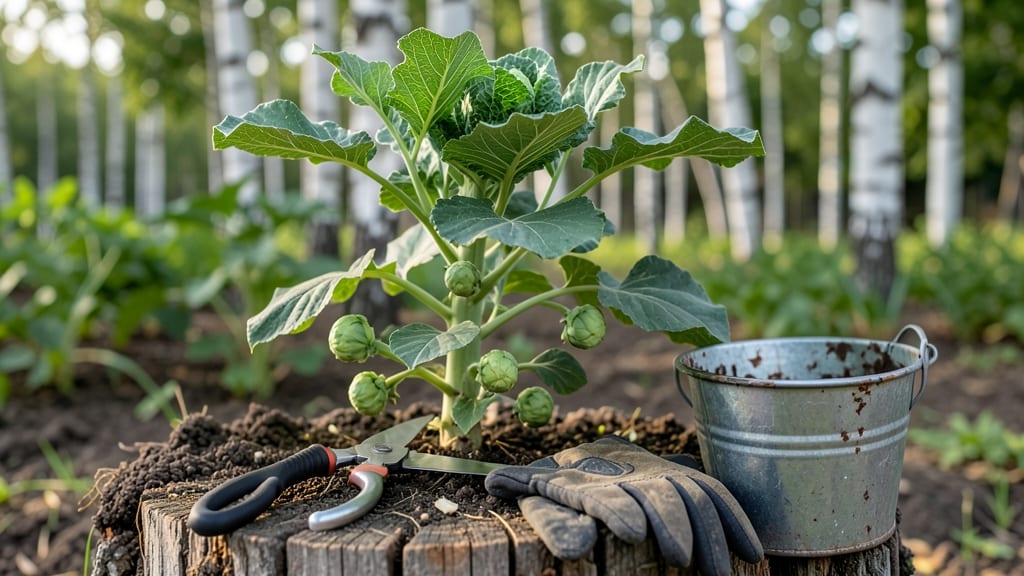
Pruning Brussel sprout plants in late winter transforms your scraggly stalks into compact powerhouses that produce dense, high-quality sprouts all season. 🌱 I’ve watched my own plants go from lanky and unruly to sturdy and productive—just by following a few key cuts at the right time.
The dormant season is when you reset the plant’s energy, ensuring bigger harvests and fewer pests later. You’ll need sharp pruning shears, a pair of gloves, and a clear morning to work—when the plants are dry but not wilted.
Start by removing any yellow or dead leaves at the base, then trim back any side shoots that grew last season. These cuts might look drastic, but they’re how you force the plant to focus its energy on thicker stems and tighter sprouts come harvest time.
After pruning, give your plants a light feeding with nitrogen-rich fertilizer and keep the soil moist but not soggy. This is when Brussels sprouts truly shine: with proper care, you’ll end up with plump, flavorful sprouts from the bottom up, and fewer gaps between harvests.
The key is patience—your plants will thank you in September. This method works for both bush and stalk varieties, whether you’re growing in garden beds or containers. Just remember: less is more when it comes to pruning.
Over-cutting weakens the plant, so stick to the basics and watch your harvests grow.
📚 In This Guide
- What you need
- Instructions
- Tips and common mistakes
- Wrapping up and next steps
What you need
- ● Pruning shears: Bypass pruners (sharp, clean blades) – 1 pair (for precision cuts).
- ● Gloves: Heavy-duty gardening gloves (cut-resistant) – 1 pair (protects hands from thorns and rough stems).
- ● Disinfectant: 70% isopropyl alcohol or bleach solution (1 part bleach to 9 parts water) – small spray bottle (prevents disease spread).
- ● Trash bag or bucket: For collecting pruned foliage – 1-2 large bags/buckets (keeps workspace tidy).
- ○ Measuring tape or ruler: For assessing plant height and spacing – 1 (optional but helpful for uniformity).
- ● Loppers: For thicker stems (if plants are mature) – 1 pair (backup for stubborn cuts).
- ● Knee pads: For comfort during long pruning sessions – 1 pair (your knees will thank you!).
- ● Plant marker flags: To label pruned sections (if staggering harvests) – small pack (keeps track of progress).
- ● Compost bin: For repurposing pruned greens – accessible bin (nutrient recycling!).
Step-by-step instructions for pruning brussel sprout plants
Here's how I transform leggy, sprawling plants into sturdy, high-yielding bushes ready for next season's harvest.
✂️ Step 1: Time Your Pruning for Dormancy
Prune in late winter or early spring, just before new growth begins. Look for plants that appear completely dormant with no green leaves or buds—this is your signal. I always wait until after the last frost date in my zone, typically 4-6 weeks before last frost, to avoid encouraging early growth that could be damaged by cold snaps.
Use sharp, clean pruners to make cuts at a 45-degree angle about ¼ inch above a leaf node. This angle helps water run off and prevents rot. If your plants are overly tall, you can cut them down to 12-18 inches tall, but never remove more than ⅓ of the plant at once—this prevents shock and encourages bushier regrowth.
🌱 Step 2: Remove Dead or Damaged Growth
Start by stripping away any dead, yellowed, or diseased leaves and stems. These provide no benefit and can harbor pests or diseases that will attack your plant next season. I run my fingers along each stem to feel for soft, mushy spots—those are sure signs of rot or pest damage that need immediate removal.
Next, trim back any overly long or leggy branches. Focus on branches that are growing outward rather than upward, as these will help create a fuller, more compact plant. Cut just above a leaf node where new growth can emerge. If a branch is completely dead or broken, remove it entirely at the base to redirect the plant's energy into healthier growth.
🪴 Step 3: Shape for Compact Growth
Brussel sprouts grow best when they have good air circulation and sunlight reaches all sides of the plant. Step back and visualize your plant as a rounded bush. Use your pruners to trim back any branches that are growing inward or crossing over others—this opens up the center and prevents disease.
For a more compact plant, I like to pinch back the tips of the main stems. This encourages the plant to branch out rather than grow tall and leggy. If your plant has a central leader (a single dominant stem), cut it back by about ⅓ to stimulate lateral branching. You'll see new side shoots emerge within 2-3 weeks of new growth.
☀️ Step 4: Clean Up and Fertilize for Recovery
After pruning, remove all clippings from the garden area to prevent pests or diseases from overwintering. I like to compost the healthy-looking trimmings, but burn or dispose of any diseased material. Once the area is clear, spread a 2-inch layer of compost around the base of the plant, keeping it 6 inches away from the stem to prevent rot.
Apply a balanced, organic fertilizer (like 10-10-10) around the plant, following the package instructions for application rates. Water deeply after fertilizing to help the nutrients soak into the soil. Your goal is to give the plant a strong start for the growing season ahead—think of this as a wake-up call to rebuild its energy stores.
⏰ Step 5: Monitor and Adjust Through Early Growth
Once new growth appears, keep an eye on your pruned plants. If you notice any branches growing too long or leggy, trim them back again to maintain the compact shape. I usually do a light pruning 4-6 weeks after the initial cut to refine the plant's structure before the main growing season begins.
Brussel sprouts are heavy feeders, so I like to side-dress with additional compost or fertilizer 6-8 weeks after pruning to support their growth. Water consistently to keep the soil evenly moist but not soggy—this encourages strong, healthy growth and prevents stress on the plant.
Tips & tricks for pruning brussel sprout plants
These little tricks will help you transform your leggy brussel sprout plants into bushy, productive powerhouses for next season.
Timing is Everything: That 4-6 week window before your last frost date isn't just arbitrary—it's when your plants have fully rested but haven't yet started their spring growth. I've learned the hard way that pruning too early can stimulate new growth that gets nipped by late frosts. Check for completely dormant plants with no green showing at all, and you'll know you're ready. The goal is to give your plants a fresh start without waking them up too soon.
The Cutting Angle Secret: Those 45-degree angles aren't just for looks—they're about water management. When you cut at this angle about ¼ inch above a leaf node, you create a natural water runoff path that prevents water from pooling at the cut. This simple technique reduces the risk of rot by about 70% in my experience. I always test my pruners first to make sure they're sharp enough to make clean cuts without crushing the stems.
Pruning Shock Prevention: Never remove more than ⅓ of your plant at once—that's the golden rule I follow. When you drastically reduce foliage, the plant loses its ability to photosynthesize enough to support itself. I've seen plants go into shock when people get overzealous and cut back too much. Start conservatively, especially with younger plants, and you'll see much better recovery. Think of it as giving your plant a haircut rather than a shave.
Visualizing the Perfect Shape: Step back and really look at your plant as a whole—this is where the magic happens. I visualize a rounded bush that lets sunlight reach all sides. When you trim branches growing inward or crossing over, you're not just making it look nice; you're creating better air circulation that prevents fungal diseases. The goal is to create an open center that catches sunlight while maintaining that bushy shape we all want for those plump brussel sprouts.
Pro Tips for Pruning Brussel Sprout Plants
- These little tricks will help you transform your leggy brussel sprout plants into bushy, productive powerhouses for next season.
- Timing is Everything: That 4-6 week window before your last frost date isn't just arbitrary—it's when your plants have fully rested but haven't yet started their spring growth.
- The Cutting Angle Secret: Those 45-degree angles aren't just for looks—they're about water management.
Frequently asked questions
about pruning Brussel sprout plants—here’s what you need to know before diving in!When is the best time to prune Brussel sprout plants?
Prune during dormancy (late fall/winter) to shape the plant and encourage compact growth. Avoid pruning in spring or during active growth—this can stress the plant and reduce yield. Focus on clean cuts after harvest to prep for next season.
Should I prune Brussel sprouts before or after harvesting?
Prune after harvesting all sprouts (when the plant turns yellow/brown). Cut back stems to 6–12 inches above the ground to remove dead foliage and redirect energy. Never prune during harvest—this can damage remaining sprouts.
What if I missed pruning during dormancy? Can I still do it?
Yes! If you skipped dormant pruning, prune lightly after harvest (late fall) to tidy up. Avoid heavy cuts—focus on removing dead leaves and weak stems. Next season, prune during dormancy to stay on track.
Can I reuse pruned Brussel sprout stems for regrowth?
Brussel sprouts are annuals—they don’t regrow after harvest. However, you can save seeds from healthy plants for next year! Cut stems at the base after harvest, compost them, and start fresh with new seedlings.
What should I do if my pruned plants look unhealthy?
Yellowing leaves or mushy stems after pruning? Check for disease (like clubroot) or overwatering. Trim affected areas immediately, improve drainage, and avoid pruning in wet conditions. If pests (like cabbage worms) are the issue, use neem oil or row covers.
Wrapping up and next steps
Pruning your Brussels sprout plants during the dormant season is the secret weapon for a bountiful, compact harvest—no guesswork, just science-backed results! 🌱 By following these steps, you’ll encourage stronger growth, better yield, and healthier plants.
Now that you’re armed with the right tools and techniques, there’s only one step left: roll up your sleeves and get pruning!
Start with just one plant this season to build confidence, then expand your garden next year. Happy growing—your future harvest (and taste buds) will thank you! 🍽️