
Pruning
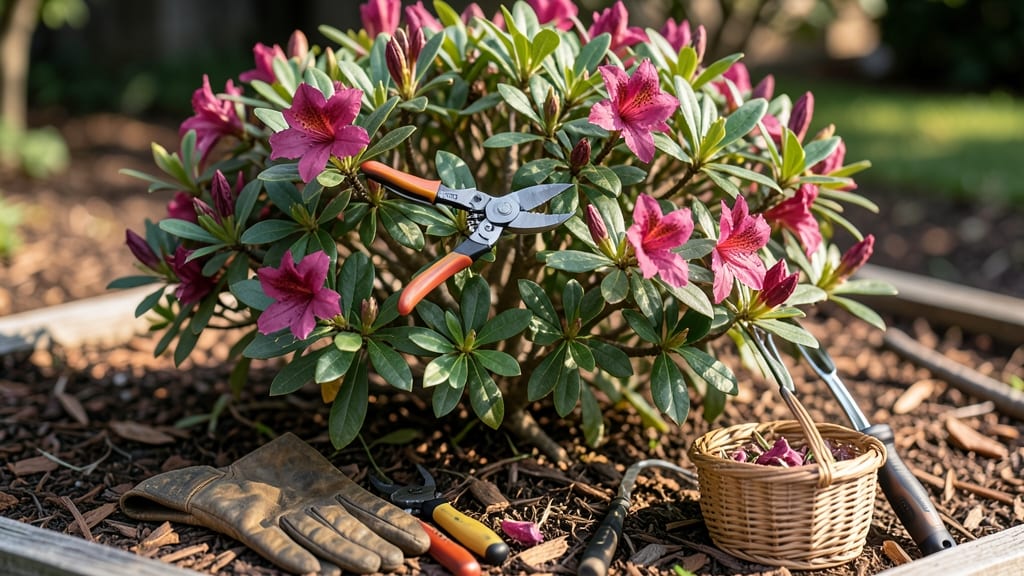
Pruning back azaleas in late winter transforms them from ragged shrubs into showstopping bloomers by spring. 🌸 I’ve watched my azaleas go from sparse and sad to lush and bursting with color—all because I learned the right timing and technique.
The key is cutting after they bloom, but before new growth starts, to encourage fresh, vibrant flowers while keeping the plant’s natural shape.
You’ll need just a few simple tools: sharp pruning shears (clean and sharp is critical), gloves to protect your hands, and a bucket for clippings. The process is straightforward but requires patience—azaleas respond best to gradual pruning over a few years, not drastic cuts.
I made the mistake of trimming too much at once, and my plant took forever to recover.
Start by removing any dead, crossing, or inward-growing branches first. Then, cut back the remaining stems by about one-third to encourage bushier growth. Focus on shaping the outer edges to maintain that classic azalea silhouette.
The result? A plant that blooms like crazy in spring, with flowers so dense they look like they’re spilling over.
This method works for all azalea varieties—whether you’ve got the classic evergreen types or deciduous kinds. The only rule is to avoid pruning in fall, as it can damage new flower buds. With this approach, your azaleas will thank you with vibrant blooms year after year.
📚 In This Guide
- What you need
- Instructions
- Tips and common mistakes
- Wrapping up and next steps
What you need
- ● Pruning shears or loppers: Choose bypass pruners (sharp, clean cuts) or loppers (for thicker branches). Size: 6–10 inches, with ergonomic grips for comfort.
- ● Hand pruners: For smaller branches (¼ inch or less). Look for bypass-style to avoid crushing stems.
- ● Disposable gloves: Nitrile or leather (thick enough to protect against thorns and sap). Pack of 2–3 pairs.
- ● Heavy-duty trash bags: 3–5 gallon-sized bags for debris. Kraft or biodegradable options work best.
- ● Hose or bucket of water: For cleaning tools post-pruning and rinsing sap off blades.
- ● Rake or leaf blower: To gather fallen leaves/branches efficiently. A bow rake (for small areas) or leaf blower (for larger yards) works.
- ● Pruning saw: For stubborn, thick branches (rare in azaleas but handy for overgrown shrubs). Curved blade recommended.
- ● Sterilizing solution: 70% isopropyl alcohol or bleach-water mix (1 part bleach to 9 parts water) to disinfect tools between cuts (prevents disease spread).
- ● Ladder or step stool: If your azaleas are taller than 5–6 feet. Ensure it’s stable and rated for your weight.
- ● Sharpie or marker: To label pruned branches if you’re training the shrub (e.g., marking new growth areas).
- ● Compost bin or bin liner: To repurpose pruned branches as mulch or compost (if disease-free).
Step-by-step guide to pruning back azaleas
Here's how I transform my azaleas every late winter—it takes just 30 minutes and sets the stage for stunning spring blooms.
✂️ Step 1: Time Your Pruning for Best Results
Prune azaleas immediately after they finish blooming but no later than early summer—ideally in late winter before new growth begins. This timing ensures you don’t cut off next year’s flower buds, which form on last year’s wood. Azaleas bloom on old growth, so you’ll want to avoid heavy pruning in fall or early spring when buds are already setting.
Check your local frost dates—pruning too early can expose tender new growth to cold snaps. I wait until mid-February in my zone (6b), when daytime temperatures consistently stay above 40°F. If you’re unsure, look for last year’s flower stems (they’re woody and brown) and avoid cutting them back completely.
✂️ Step 2: Gather the Right Tools and Safety Gear
Use sharp, clean pruning shears (bypass pruners work best) to make clean cuts without tearing the bark. Disinfect your tools with rubbing alcohol between cuts to prevent spreading disease. I also wear gloves—azaleas can have thorns, and their leaves sometimes cause skin irritation.
Grab a small hand saw for any thick, stubborn branches over ½ inch in diameter. Avoid using hedge trimmers—they shred branches and leave jagged edges that invite pests. Keep a bucket nearby to collect clippings; you can compost them later (they’re nitrogen-rich).
✂️ Step 3: Shape the Bush for Airflow and Light
Start by removing dead, diseased, or crossing branches first—these compete for energy and block airflow. Cut these back to the main stem or where they intersect with another branch. Next, thin out the center of the bush by selectively removing up to ⅓ of the oldest stems at ground level. This opens up the plant and encourages new growth from the base.
For shaping, focus on creating an open, vase-like form. Step back every few cuts to visualize the overall shape—you want a balanced, rounded silhouette. Avoid cutting into the center leader (the main upright stem) unless it’s damaged. Azaleas naturally grow in layers, so preserve that natural tiered look.
⏰ Step 4: Prune for Next Year’s Blooms
Now, trim back the remaining branches by one-third of their length. Make cuts just above a leaf bud or outward-facing branch—this encourages growth in the right direction. Angle your cuts slightly downward to prevent water from pooling on the wound. Avoid "heading back" (cutting into the middle of a branch), as this creates weak, leggy growth.
Watch for flower buds—they look like small, plump bumps along last year’s branches. Leave these untouched! If you accidentally cut them off, don’t worry—new buds will form on the remaining stems. After pruning, give your azalea a deep watering to help it recover and reduce stress.
🌿 Step 5: Clean Up and Monitor for Recovery
Rake up all clippings and dispose of any diseased branches separately. Apply a 2-inch layer of mulch around the base (but not touching the trunk) to retain moisture and regulate soil temperature. I use pine bark mulch because it’s acidic, which azaleas love. Water lightly for the first 2-3 weeks post-pruning to encourage new growth.
Keep an eye out for new shoots emerging from the base—this is a sign your pruning worked! If you notice yellowing leaves or wilting, it might mean you pruned too aggressively or the plant is stressed. Azaleas are tough, but they’ll bounce back with proper care. By late spring, you’ll see fresh, vibrant foliage—and those spectacular blooms you’ve been waiting for.
Tips & tricks for perfect azalea pruning
Here's what I've learned after years of trial and error with my own azalea bushes—these tricks will help you avoid common mistakes and get the best results.
Timing is Everything: That 30-minute pruning window is just the active cutting time, but the real work happens in planning. I always mark my calendar for mid-February in my zone—this ensures I'm ready when the time comes. Pro tip: Set a reminder for 2 weeks before your target date to gather tools and check your pruners' sharpness. Azaleas reward patience with more abundant blooms when pruned at the right time.
Tool Prep Matters: I can't stress enough how important it is to disinfect your pruning shears between cuts using rubbing alcohol. I keep a small spray bottle of 70% isopropyl alcohol in my gardening toolkit. This prevents spreading diseases like powdery mildew or bacterial leaf spot that can devastate your azalea. Also, test your pruners on a small branch first—if they don't cut cleanly, sharpen them before starting.
Visual Cues for Better Pruning: In Step 4, when you're making those one-third cuts, look for the "leaf bud triangle" where the branch meets the main stem. This V-shaped area is where new growth emerges. Cut just above this triangle at a 45-degree angle to direct water away from the wound. I like to think of it as creating a tiny roof that keeps rain from pooling on the cut. This simple technique reduces the risk of rot and encourages stronger regrowth.
Post-Pruning Care: The 2-3 weeks of light watering after pruning is crucial but often overlooked. I set a timer on my phone for 2 weeks to remind me to water lightly every 3-4 days. Deep watering right after pruning helps the plant recover, but too much water can suffocate roots. Think of it as giving your azalea a gentle drink rather than a bath—just enough to keep the soil moist but not soggy.
Pro Tips for Pruning Back Azaleas
- Here's what I've learned after years of trial and error with my own azalea bushes—these tricks will help you avoid common mistakes and get the best results.
- Timing is Everything: That 30-minute pruning window is just the active cutting time, but the real work happens in planning.
- Tool Prep Matters: I can't stress enough how important it is to disinfect your pruning shears between cuts using rubbing alcohol.
Frequently asked questions
Got questions about pruning azaleas?
Here are answers to the most common ones—so you can confidently shape your shrubs for stunning spring blooms!
When is the best time to prune azaleas?
Late winter (just after flowering or before buds swell) is ideal—typically February to early March in most climates. This timing avoids stressing the plant and encourages vibrant spring blooms. Never prune in fall; it can trigger late growth that’s vulnerable to frost damage.
How much can I cut back my azalea?
For most azaleas, light pruning (10–30%) is enough to maintain shape and airflow. Avoid heavy cuts—never trim more than one-third of the plant at once. Over-pruning can reduce flowering and stress the shrub. Tip: Focus on removing dead, crossing, or overcrowded branches first!
What if I missed the late-winter window?
Don’t panic! You can prune azaleas after flowering (late spring/early summer), but expect fewer blooms next year. Avoid pruning in late summer or fall, as new growth won’t harden off before winter. If you’re late, prioritize deadwood removal and light shaping.
Why aren’t my azaleas blooming after pruning?
Azaleas bloom on old wood, so heavy pruning (especially in summer) can reduce flowers. If blooms are sparse, check for:
- Over-pruning (stick to light cuts).
- Poor nutrition (feed with acid-loving fertilizer in early spring).
- Sun exposure (too much sun = stress; partial shade is best).
Can I prune azaleas if they’re diseased or pests are present?
Yes! Prune out infected or pest-infested branches first—sterilize tools with rubbing alcohol between cuts to prevent spreading. Look for:
- Yellowing leaves (fungus like phytophthora).
- Webbing or sawdust-like frass (azalea lace bugs).
- Black spots (anthracnose).
Wrapping up and next steps
Pruning back azaleas in late winter isn’t just about tidying up—it’s your secret weapon for show-stopping spring blooms! 🌸 With the right tools, timing, and technique, you’ll encourage healthier growth and a more vibrant display.
Remember, patience and precision are key, and soon, your garden will be bursting with color.
Ready to transform your azaleas? Grab your pruners and start planning your late-winter pruning session—your future blooms will thank you!