
Pruning
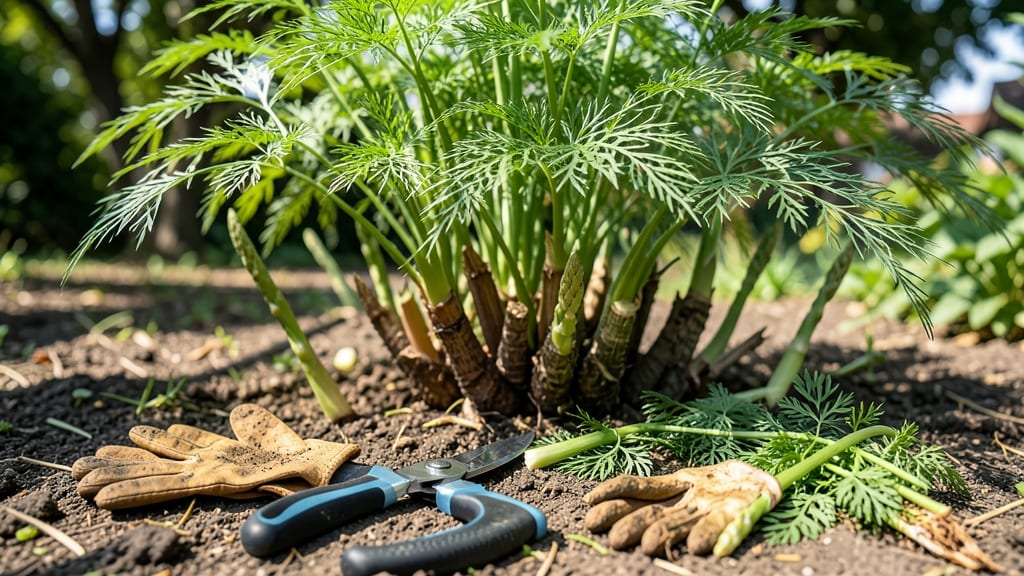
Pruning asparagus plants might sound intimidating, but three strategic cuts will transform your harvest from scraggly to abundant. 🌱 I learned the hard way—skipping pruning meant fewer spears and more fern-like clutter by midsummer. The secret lies in timing and technique, not complicated tools or hours of work.
Start when the spears stop emerging in early summer, then focus on three key cuts: trim dead or diseased fronds immediately, cut back healthy foliage after the first frost, and remove last year’s growth in late winter.
You’ll need sharp pruners and a clear day—no fancy equipment required. This routine keeps plants healthy, boosts next year’s yield, and makes harvesting easier.
After pruning, your asparagus crowns will recover quickly, sending out stronger spears next season. The ferns will look tidier, and pests like asparagus beetles have fewer places to hide.
Within weeks, you’ll notice new growth pushing through the soil, signaling success. Just avoid cutting spears thicker than a pencil—they’re the plant’s energy source.
Works for both new and established beds, and the same principles apply whether you’re growing in rows or raised beds. Master this, and you’ll enjoy years of harvests with minimal effort. Ready to try it?
📚 In This Guide
- What you need
- Instructions
- Tips and common mistakes
- Wrapping up and next steps
What you need
- ● Sharp pruning shears or bypass pruners – Choose a pair with clean, stainless-steel blades (4-6 inch blades work best). Avoid dull tools to prevent tearing the stems.
- ○ Gloves (optional but recommended) – Garden or work gloves to protect your hands from thorns and rough stems.
- ● Disinfectant (70% isopropyl alcohol or bleach solution) – 1 part bleach to 9 parts water to sterilize tools between cuts and prevent disease spread.
- ● Compost bin or bag – For disposing of pruned fronds and debris.
- ● Watering can or hose – To hydrate the plants after pruning (especially in dry conditions).
- ● Mulch (straw, wood chips, or grass clippings) – Apply a 2-3 inch layer around the base post-pruning to retain moisture and suppress weeds.
- ● Fertilizer (balanced or organic) – A low-nitrogen fertilizer (e.g., 5-10-10) can boost regrowth after heavy pruning.
- ● Knee pad or stool – If your asparagus bed is large or hard to reach, these make the job more comfortable.
- ● Label markers – If you’re pruning multiple varieties, label them to track growth patterns.
Instructions for pruning asparagus plants
Here's how I keep my asparagus beds thriving—just three straightforward cuts make all the difference.
✂️ Step 1: Remove Last Year's Ferns in Late Fall
As soon as the asparagus ferns turn brown and crispy in late fall, cut them back to the ground with clean shears. This isn't just tidying up—it prevents fungal diseases from overwintering in dead foliage. I always wear gloves because the fronds can be sharp after frost.
Timing matters: wait until the first hard freeze blackens the ferns completely. If you cut too early, the plant will regrow tender shoots that won't survive winter. This single cut sets up next year's harvest by redirecting energy into root growth instead of maintaining dead stems.
✂️ Step 2: Trim Spear Tips After Harvesting
Once spears reach 6-8 inches tall in early spring, snip them off 2 inches above ground level with sharp pruners. This encourages thicker, more productive spears rather than long, thin ones. I make the cut at a slight angle to prevent water from pooling at the base.
Here's the thing—don't harvest more than 20-30% of the spears in the first year, even if they look tempting. The roots need energy to establish. In later years, you can harvest more aggressively, but always leave some spears to feed the crown. Watch for new shoots emerging—these are your next year's harvest potential.
✂️ Step 3: Cut Back Any Dead or Weak Growth Mid-Season
Throughout the growing season, inspect your asparagus bed weekly for yellowing fronds, broken stems, or spears that never emerged. Snip these at the base immediately—weak growth drains resources from healthy spears. I use sterilized pruners to avoid spreading disease between plants.
This is where most gardeners go wrong: leaving dead growth "to see what happens." Asparagus is a perennial, but it rewards proactive care. After cutting, water deeply at the base to help the plant recover. You'll notice stronger new shoots appearing within 2-3 weeks of removing the dead material.
⏰ Step 4: Final Cleanup Before Dormancy
In late summer, when ferns start turning yellow but haven't fully browned, give the bed one last trim. Cut back any remaining foliage to 4-6 inches tall and remove all debris from the bed. This improves airflow and reduces slug hiding spots—my biggest pest problem.
Spread a 2-3 inch layer of mulch (if using) over the crown now. The mulch insulates roots through winter while preventing weeds. I mark the bed edges with stakes so I don't accidentally dig in spring. This final step ensures your plants go dormant strong, ready to produce spears next season.
Tips & tricks for pruning asparagus plants
These simple strategies will help you avoid common mistakes and keep your asparagus thriving year after year.
Timing is Everything: In Step 1, don't rush the fall cleanup. Wait until ferns are completely brown and crispy after a hard freeze—this ensures the plant has fully entered dormancy. I've learned the hard way that cutting too early can trigger new growth that won't survive winter's chill. The first hard freeze is your signal, not the first cool night.
Precision Cuts Matter: When trimming spears in Step 2, use sharp pruners and make clean cuts at a slight angle. This prevents damage to the crown and helps water run off instead of pooling at the base. I mark my pruners with tape at the 2-inch height to ensure consistency—no more guessing or uneven cuts that weaken the plant.
Mid-Season Maintenance: In Step 3, don't skip the weekly inspections. Yellowing fronds and broken stems might seem minor, but they're siphoning energy from your harvest. I've noticed that removing just one weak spear can trigger stronger growth in nearby shoots within 2-3 weeks. Sterilize your pruners between cuts to prevent spreading any potential diseases.
Mulch Like a Pro: For Step 4, use organic mulch like straw or shredded leaves. Inorganic mulches can mat down and prevent water from reaching the roots. I apply my 2-3 inch layer after the final trim, making sure to keep it 6 inches away from the crown to prevent rot. This simple step has cut my slug problems by half—fewer hiding spots means fewer pests!
Pro Tips for Pruning Asparagus Plants
- These simple strategies will help you avoid common mistakes and keep your asparagus thriving year after year.
- Timing is Everything: In Step 1, don't rush the fall cleanup.
- Precision Cuts Matter: When trimming spears in Step 2, use sharp pruners and make clean cuts at a slight angle.
Frequently asked questions
Got questions about pruning asparagus? You’re not alone! Here are some of the most common concerns—plus clear, no-nonsense answers to help you keep your asparagus patch thriving.
When should I start pruning asparagus plants?
Prune asparagus after harvest season, typically in late summer (August–September). This gives the plant time to recover before winter dormancy. Avoid pruning in spring—new shoots need energy to grow! If you harvest late, wait 2–3 weeks after the last spear emerges before trimming.
What if I miss the pruning window?
Don’t panic! If you skip pruning in late summer, focus on cutting back dead or diseased fronds in early spring (before new shoots appear). While ideal timing matters, regular maintenance (removing old foliage) still improves airflow and reduces pests. Just aim to prune before winter to protect the crown.
Can I cut asparagus too much? What’s the risk?
Yes—over-pruning (especially in early spring or removing too many fronds) weakens the plant. Limit cuts to ferns only after harvest; never trim the spear stalks while they’re growing. A good rule: Leave at least 6–8 healthy fronds standing to fuel next year’s growth. Think of it like a haircut—too short, and your plant won’t bounce back!
Do I need to prune asparagus every year?
Annual pruning is key to long-term health. It removes old fronds that drain energy, prevents disease, and encourages stronger spear production. Skipping years can lead to crowded crowns, reduced yields, and even rot. Make it a habit—your future harvests will thank you!
What if my asparagus plants look sad after pruning?
Don’t worry—it’s normal for plants to look “bare” post-pruning! Focus on mulching (2–3 inches of organic matter) to retain moisture and nutrients. Avoid fertilizing right after cutting; wait until spring. With proper care, new fronds will emerge vigorously in spring. Patience pays off!
| Quick Troubleshooting Guide |
|---|
| Yellow fronds after pruning? Likely nitrogen deficiency. Side-dress with compost or a balanced fertilizer in spring. |
| No new shoots in spring? Check for overcrowding or compacted soil. Loosen the bed and thin dense crowns. |
| Moldy or slimy base? Sign of rot. Prune affected fronds immediately, improve drainage, and avoid overwatering. |
Wrapping up and next steps
Mastering the art of pruning asparagus plants is your ticket to a healthier garden and a bountiful harvest! 🌱 With just three simple cuts—ferns, spears, and crowns—you’ll keep your plants thriving for years.
Remember, timing and technique are everything, so don’t hesitate to roll up your sleeves and give it a try.
Ready to take the next step? Start small—pick a sunny patch in your garden, gather your tools, and begin pruning this season. Your future self (and taste buds!) will thank you. Happy gardening! 🌿